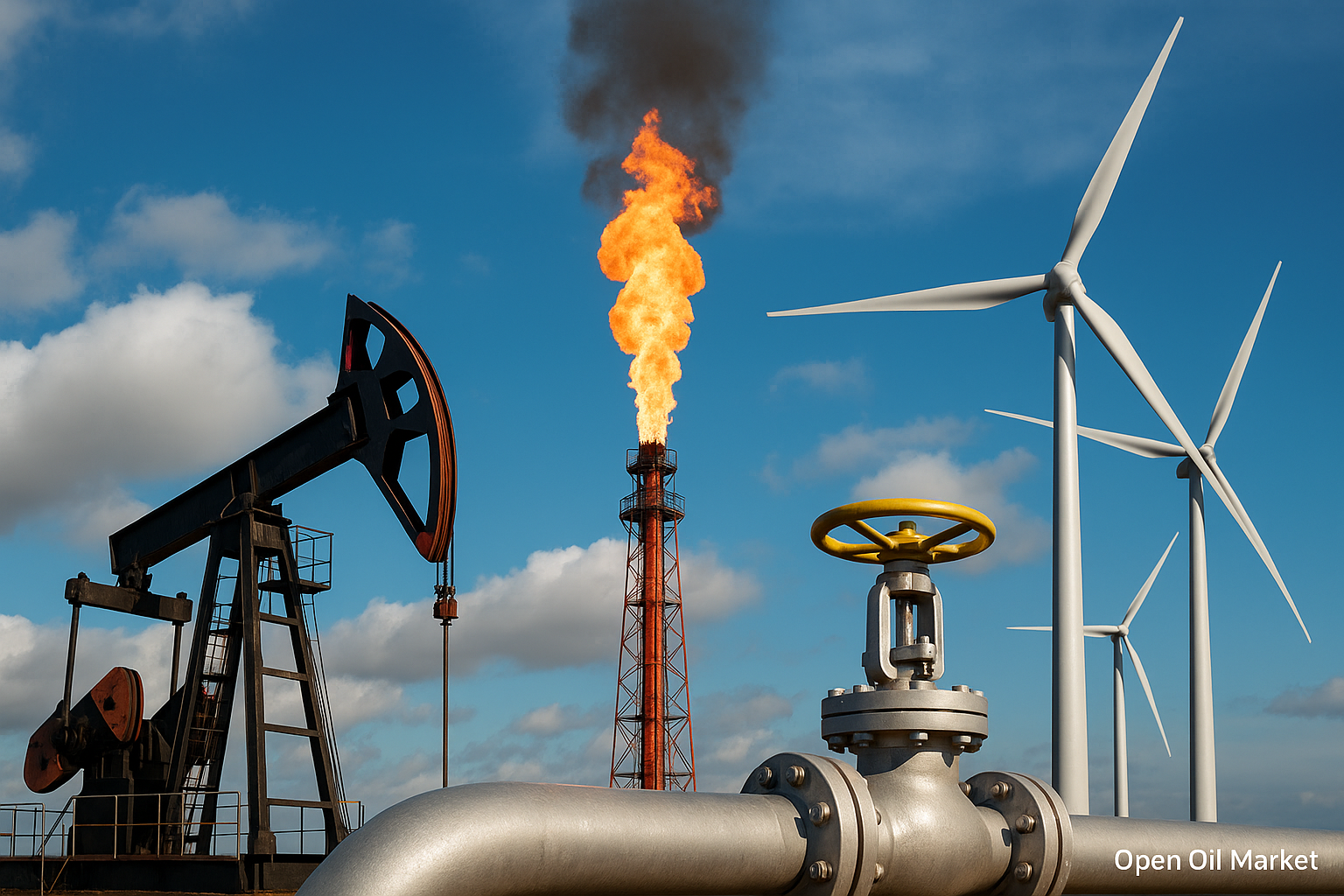
Current News in Oil and Gas and Energy as of December 11, 2025: EU's Rejection of Russian Energy Resources, Oil Market Balance, Global LNG, Russia's Exports to Asia, Renewable Energy, and Energy Sector Forecasts. Analytical Overview for Investors and Industry Companies.
At the forefront are the decisive steps taken by the European Union toward abandoning Russian energy resources, the changes in U.S. monetary policy and their influence on global oil and gas prices, as well as the latest geopolitical events impacting the fuel and energy complex. This overview is intended for investors and stakeholders in the oil and gas, fuel, and energy sectors, as well as those monitoring the dynamics of oil, gas, electric power, and raw material markets.
Global Oil Market: Prices and OPEC+
Global oil prices have stabilized after a recent surge: Brent is trading around $62 per barrel, while WTI hovers around $58. The strengthening of quotes last week was spurred by expectations of interest rate cuts in the U.S. and concerns over supply constraints (sanction risks for Russian and Venezuelan exports). However, overall in 2025, oil prices have declined by approximately 15% as the market faces the threat of oversupply amidst moderate demand growth.
The Organization of the Petroleum Exporting Countries and its allies (OPEC+) maintain a cautious stance. At the latest OPEC+ meeting, it was decided to keep current production quotas unchanged at least for the first quarter of 2026. The alliance continues to keep some capacity idle—roughly 3.2 million barrels per day (about 3% of global demand) remain "in reserve" under existing production limitation agreements. With Brent prices around $60, OPEC+ representatives emphasize market stabilization rather than an immediate increase in market share, considering the deteriorating demand and supply balance forecast.
Key factors currently impacting the oil market:
- Monetary policy of major economies (easing by the U.S. Federal Reserve supports demand prospects).
- Geopolitical tensions (the war in Ukraine, sanctions against the RF and Iran, conflict risks—such as around Venezuela).
- OPEC+ actions (maintenance of production restrictions and readiness to respond to potential oil oversupply in the market).
- Global economic growth rates and demand for raw materials (including recovering demand in China and an accelerated transition to renewable energy sources).
Monetary Policy and Demand for Energy Resources
The U.S. Federal Reserve is easing monetary policy this week: following the December 10 meeting, a 0.25% reduction in the base rate is anticipated. This marks the third rate cut in 2025 aimed at supporting the cooling economy and labor market. Lower rates and a potential weakening of the dollar typically stimulate economic growth and demand for energy resources—from gasoline to electricity—which positively affects the oil and gas market. Industry investors are closely monitoring regulatory signals: the current monetary easing cycle may be approaching an end if inflation stabilizes; however, the very expectations of lower borrowing costs have contributed to the recent rise in oil prices.
Europe's Rejection of Russian Energy Resources
The European Union is taking decisive steps toward complete energy independence from Russia. On December 10, EU ambassadors approved a phased plan to abandon all forms of Russian gas by the end of 2027. European Commission President Ursula von der Leyen described the upcoming embargo as "the beginning of a new era" for Europe—an era in which European energy will permanently rid itself of dependence on Russian energy resources. European Commissioner for Energy Dan Jørgensen added that a law will be proposed in early 2026 to ban all imports of Russian oil to "turn off the tap" for supplies from the RF by no later than 2027.
These measures continue the course set by the EU following the events of 2022: over time, Europe has sharply reduced purchases of Russian pipeline gas (almost to zero) and has introduced an embargo on oil transported by sea. The new initiatives aim to solidify the rupture with the RF at the legislative level and stimulate the development of alternatives—from increasing purchases of liquefied natural gas (LNG) from the U.S., Qatar, and others to accelerating the transition to renewable energy sources. The Kremlin has approached the EU's strategy with skepticism: Kremlin spokesperson Dmitry Peskov warned that abandoning relatively cheap Russian gas in favor of more expensive imports would doom the European economy to rising costs and reduced competitiveness in the long term.
Key elements of the EU's energy strategy:
- Complete rejection of Russian gas: ceasing imports of pipeline gas and LNG from the RF by no later than 2027.
- Embargo on oil and petroleum products: a legislative ban on importing Russian oil and petroleum products is planned by the same date.
- Diversification of supplies: expanding LNG imports from alternative suppliers, increasing domestic renewable generation, and energy conservation to replace Russian hydrocarbons.
Redirecting Russian Supplies to Asia
Russia, facing a contraction of Western markets, is actively redirecting its energy exports to Asia. China has become a key buyer: as recently as late August, the first batch of liquefied gas was dispatched from Novatek's "Arctic LNG-2" project to China, despite the fact that this terminal is under U.S. sanctions. According to traders, Russian LNG supplies to China rose by double digits in autumn, as Beijing eagerly increases purchases of energy resources at a 30-40% discount, ignoring unilateral Western sanctions. The energy cooperation between Moscow and Beijing is strengthening, benefiting both economies: Russia gains an alternative market for sales, while China secures cheap fuel for its needs.
India also remains one of the largest buyers of Russian oil. Following the EU embargo, Indian refineries have increased purchases of Russian Urals oil and other grades at significant discounts to global prices. In recent negotiations, Russian leadership confirmed its readiness to provide India with stable supplies of oil and petroleum products. While New Delhi remains cautious, balancing geopolitical risks, cheap Russian energy resources help meet growing demand and maintain internal fuel prices.
At the same time, Moscow is seeking opportunities to expand export infrastructure to the East. The increase of pipeline capacity to China (the "Power of Siberia-2" project) is being discussed, along with strengthening its own tanker fleet to deliver oil to Asian markets circumventing restrictions. These steps aim to solidify the long-term redirection of Russian energy flows from the West to the East.
Key steps Russia is taking in Eastern markets:
- Launching Russian LNG supplies to China from the new "Arctic LNG-2" project, despite sanction restrictions.
- Increasing oil exports to India at favorable conditions (discounts to global prices), reaffirming readiness to supply the Indian market with fuel.
- Infrastructure development: plans for new pipelines ("Power of Siberia-2") and expanding the tanker fleet for seamless export to Asia.
Kazakhstan and Transit Risks
Instability stemming from the military conflict in Ukraine creates new risks for the transit of energy resources in Eurasia. In early December, an attack by Ukrainian drones on the Caspian Pipeline Consortium (CPC) marine terminal near Novorossiysk forced Kazakhstan to reassess its oil export routes. The Kazakh Ministry of Energy announced that some oil from the Kashagan field will be redirected via an alternative route to China. Previously, Kazakhstan had exported the bulk of its oil through the CPC pipeline, which delivers crude to a Black Sea terminal in Russia. The CPC is crucial for transporting oil from key Kazakh fields (Tengiz, Kashagan, Karachaganak) and remains the country's main export channel.
Although damages from the drone strike did not lead to a complete halt in shipments, the incident demonstrated the vulnerability of this international infrastructure. The Kremlin called the attack on the CPC terminal a flagrant incident, emphasizing the consortium's strategic significance. Kazakhstan has begun to diversify its routes: alongside the Chinese direction, increasing shipments through Caspian ports and other circumvention routes are being considered. In the long term, Astana plans to enhance energy security through refining: plans have been announced for the construction of a new large-capacity refinery with the involvement of foreign investors, which will improve domestic capacities and reduce dependence on imported petroleum products. Experts note that transit risks through Russian territory are increasing—such incidents can impact the global oil market, reminding participants of the geopolitical risk premium in prices.
Global Gas Market and LNG
The natural gas market is experiencing relatively stable conditions compared to the frenzy two years ago. In Europe, despite the approaching winter, the pricing situation is calmer than in previous years: gas stocks in underground storage facilities are at comfortable levels, and spot prices are far from the record levels of 2022. Reductions in supplies from Russia are offset by LNG imports—European terminals are actively receiving gas from the U.S., Qatar, Norway, and other sources. According to analyst estimates, Russian LNG supplies to the European Union fell by nearly 7% year-on-year (to ~18 billion cubic meters) from January to November 2025, reflecting the EU's gradual withdrawal from even liquefied gas from the RF.
LNG supply in the global market continues to grow. In the U.S., new export capacities are coming online: the large Golden Pass terminal in the Gulf of Mexico (a joint project of QatarEnergy and ExxonMobil) is preparing to commence deliveries, expanding America's capacity to export gas. Qatar, as part of its North Field expansion project, will increase LNG production to 126 million tons per year by 2027, signing long-term contracts with European and Asian buyers. Meanwhile, Asian countries are flexibly responding to market conditions: for instance, Pakistan has negotiated with Qatar to redirect LNG shipments originally intended for it to other markets due to a temporary surplus of gas and weak domestic demand. Against the backdrop of new capacities being launched and moderate demand, spot gas prices are held at relatively low levels, though weather factors and potential supply disruptions could still trigger short-term price spikes.
Renewable Energy and Climate
The development of renewable energy is gaining momentum, although the climate agenda faces pushback from the oil and gas sector. Heated debates around the abandonment of fossil fuels unfolded at the November UN climate conference COP30 in Brazil. The final draft of the agreement left the European Union dissatisfied—direct roadmaps for a phased phase-out of oil, gas, and coal were excluded from the text under pressure from a group of countries that are major hydrocarbon exporters. As a result, the agreements reached are of a compromised nature: instead of clear commitments to curtail fossil fuel production, countries focused on increasing funding for climate adaptation and general goals for reducing emissions.
Meanwhile, the energy transition continues to be implemented in practice. The year 2025 has seen unprecedented new solar and wind generation capacities come online in many countries. Major economies—from China and India to the U.S. and EU—are investing in renewable energy, energy storage systems, and hydrogen technologies, seeking to reduce dependence on hydrocarbons. However, in the short term, traditional resources continue to play a vital role: high gas prices forced an increase in coal burning for electricity generation in certain regions in 2025, temporarily halting the decarbonization trend. Experts believe that as the share of renewable sources increases (supported by government initiatives), demand for coal and other fossil resources will begin to decline again, reinforcing the global course toward sustainable energy.
Forecasts: A Look Ahead at Early 2026
Participants in the fuel and energy sector are finishing 2025 with moderate optimism but without excessive illusions. Analysts expect that oil prices may come under pressure in the first quarter of 2026 due to rising stocks: several forecasts indicate a decline in Brent prices to $55-60 per barrel, provided no new shocks occur. At the same time, geopolitical factors—from developments in Ukraine to sanction decisions and local conflicts (including potential escalation in Venezuela or the Middle East)—can sharply affect market conditions. In the gas market, the upcoming months will largely depend on weather: with a mild winter and sufficient reserves, gas prices will remain low, but unexpected cold spells or supply chain disruptions could lead to price surges.
For investors and companies in the sector, adapting to new conditions will be particularly significant. Diversification of supply sources, improved energy efficiency, and the implementation of innovations (including in the renewable energy sector) will be key elements of business sustainability. The outgoing year 2025 has demonstrated the close interconnection between economy, politics, and ecology in shaping oil, gas, and electricity prices. In 2026, this interconnection is likely to strengthen further: the global market will have to balance between oversupply and the risk of shortages, while the global community must search for a balance between energy security and climate goals.




