The Global Energy Market on March 29, 2026: Shaped by Geopolitics, High LNG Prices, Refining Margin Growth, and Changes in Electricity Generation
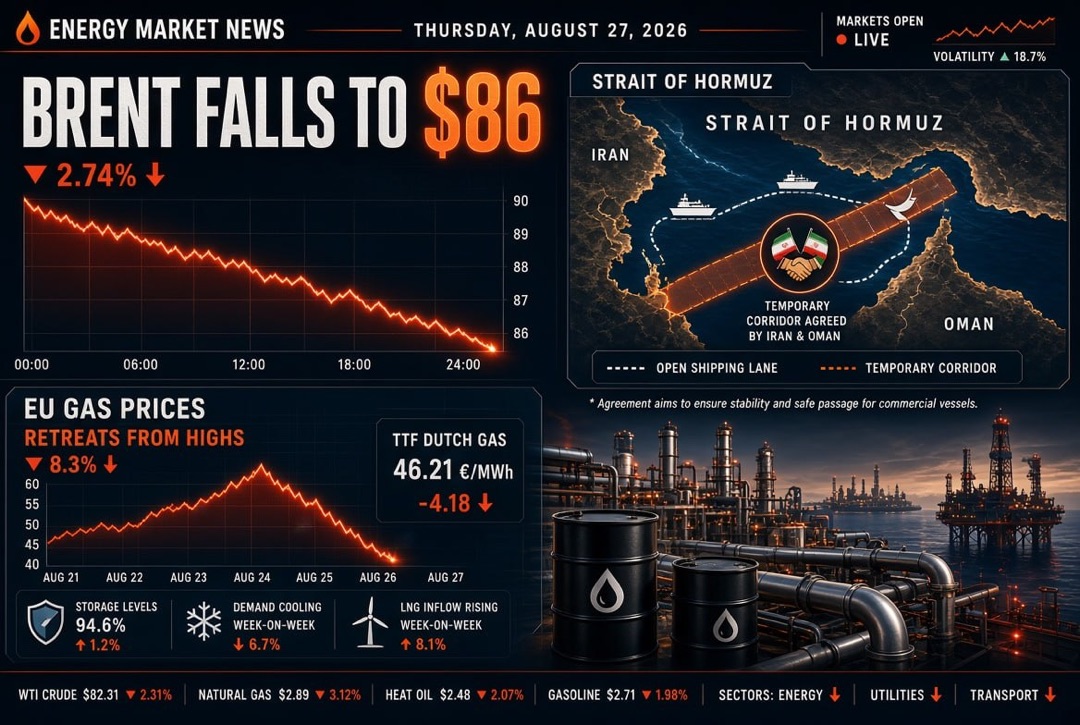
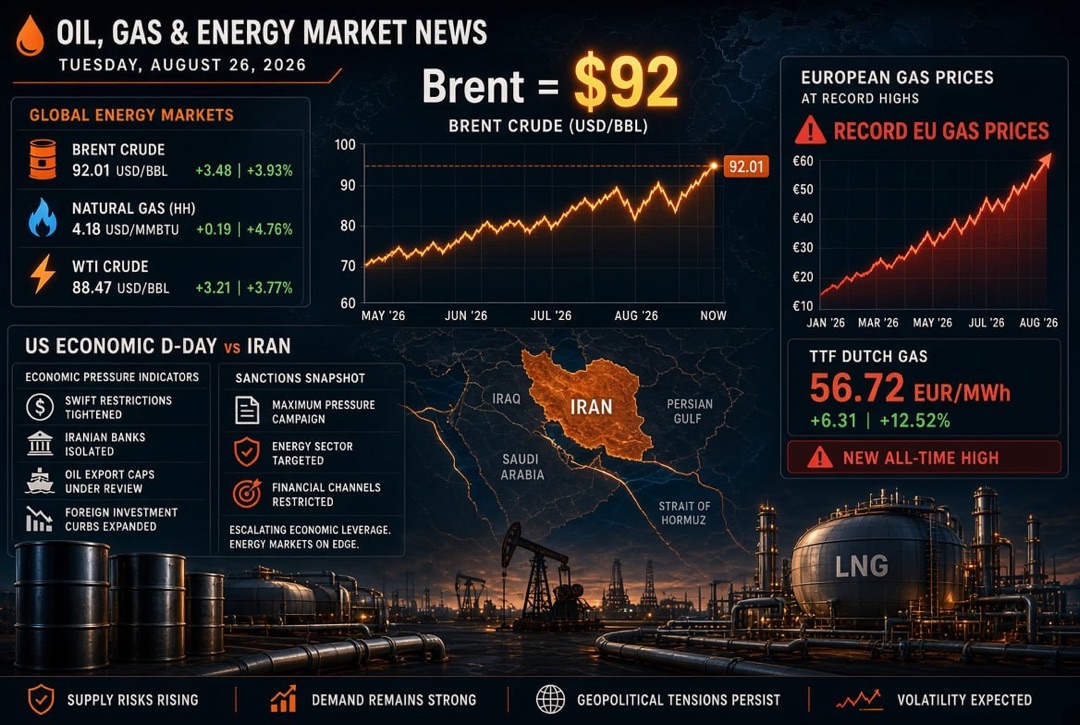
The oil market concludes the week with heightened sensitivity to any signals from the Middle East. For investors and participants in the energy sector, this means that oil prices are currently reflecting not only fundamental balances but also the cost of potential supply disruptions. Even after sharp fluctuations within the week, the oil market maintains a rigid structure: traders factor in the risks of maritime logistics disruptions, export restrictions, and potential new attacks on infrastructure.
Key focal points include:
- the situation surrounding the transportation of crude oil through the Strait of Hormuz;
- the risk of new disruptions in the supply of Middle Eastern oil;
- the behavior of major purchasers in Asia and Europe;
- the impact of high oil prices on inflation, transportation, industry, and refining margins.
For the global oil and gas sector, this creates a complex picture. On one hand, high prices support the upstream segment, exporters, and the cash flow of oil companies. On the other hand, excessively high oil prices begin to exert pressure on importers, the petrochemical industry, transportation, and the electricity sector in regions where generation depends on expensive fuels.
OPEC+ Formally Increases Production, but the Market Focuses on Physical Availability
In a normal market environment, even a moderate increase in production from OPEC+ could alleviate tension. However, under current conditions, investors are assessing not just nominal quotas, but the actual ability of barrels to reach consumers on time and without additional logistical costs. This is an important shift for the commodity market: the physical availability of oil is becoming more critical than the formal level of production.
For oil companies and traders, this means:
- the market remains premium even in the presence of announced supply increases;
- demand for reliable and quickly deliverable grades of oil remains high;
- the premium for safe logistics and sustainable contracts is growing;
- spot deliveries are becoming more sensitive to political and military signals.
For the global energy sector, this reinforces interest in diversifying oil sources, long-term contracts, and new exploration and production projects. This results in a noticeable return of oil and gas companies to the topic of expanding their resource base: supply security is once again taking center stage.
Gas and LNG Become the Second Key Topic of the Week
While oil remains the primary market indicator, natural gas and LNG today represent a major source of systemic tension for the energy sector. The liquefied natural gas segment has faced particularly strong challenges, as Qatari exports and general logistics in the region are critical for both Asia and Europe. For the global market, this means a sharp increase in the cost of flexible gas volumes and heightened competition for available LNG cargoes.
Several trends are already evident in the gas market:
- spot prices for LNG remain high;
- Asian buyers are intensifying their competition for physical volumes;
- Europe is increasingly paying attention to storage levels and the cost of summer filling;
- countries with more sensitive economies are beginning to reconsider a return to coal and other alternatives.
For the oil and gas and energy sector, this is an important signal: gas is no longer viewed simply as a transitional fuel. It is again becoming a strategic resource with a high premium for supply reliability. Under these conditions, companies with a stable portfolio of LNG contracts, access to their own resources, and strong export infrastructure will benefit.
Refineries and the Oil Products Market Gain Support from Rising Refining Margins
Against the backdrop of a strained raw materials market, refining is once again in the spotlight. The growth in margins for diesel, aviation kerosene, and gasoline supports the refining segment, especially where refineries have secured feedstock and do not face severe logistical constraints. For investors, this is one of the most important signals in the raw materials sector: expensive oil is not necessarily detrimental to the industry if refining can successfully pass on rising costs in the prices of oil products.
Key consequences for the oil products market and refineries include:
- diesel and aviation fuel remain among the strongest product segments;
- European and Asian markets are actively restructuring trade flows;
- demand for flexible refining capacities is increasing;
- efficient refineries have the chance to improve financial results faster than upstream companies.
For the global oil products market, this means that attention is shifting from just oil prices to a comprehensive assessment of the product balance: identifying where exactly there are shortages, who can meet them, and which refineries can profit from this scenario.
Electricity and Coal Once Again Take Center Stage
Expensive gas is automatically changing the logic of the electricity sector. In several countries, energy companies and governments are strengthening measures to curb tariffs and are considering expanding coal generation as a temporary crisis tool. While this is not a strategic pivot for the entire global energy landscape, it represents a significant short-term trend for the electricity market.
Current shifts in the global energy market include:
- coal is regaining tactical advantages where it can replace expensive gas;
- electricity companies are increasing their focus on fuel diversification;
- regulators are increasingly discussing limitations on tariff pressure on industry and households;
- high gas prices are directly impacting the industrial competitiveness of certain regions.
For investors in the electricity sector, this means that companies should be evaluated not only by installed capacity but also by generation structure, fuel access, hedging, and their ability to maintain margins during price shocks.
Renewable Energy and Energy Security: Acceleration Exists, but Financing Becomes More Expensive
The renewable energy sector is receiving mixed signals. On one hand, high oil and gas prices strengthen the arguments for the accelerated development of solar, wind, and other low-carbon generation. On the other hand, rising volatility, increasing capital costs, and permitting challenges make some projects less predictable in terms of payback. Therefore, the renewable energy market is currently supported not only by climate agendas but also by a new logic of energy security.
For the global energy sector, this indicates:
- renewable energy remains an important part of the long-term investment cycle;
- projects with clear grid integration and quick implementation gain priority;
- investors are adopting a more cautious approach to capital-intensive projects with long cycles;
- energy security is increasingly becoming a main argument for new capacities.
In practice, this creates a more mature market: the focus is shifting from abstract growth in green generation to the specific resilience of energy systems, project payback, and its ability to reduce regional dependence on expensive imported fuels.
What This Means for Investors, Oil Companies, and Energy Sector Participants
As of March 29, 2026, the global picture for the energy sector favors companies and segments that can capitalize on volatility rather than suffer from it. Notable segments include export-oriented upstream, portions of LNG infrastructure outside of risk zones, flexible refineries, efficient generators, and projects that enhance regional energy autonomy.
The market's immediate focus includes:
- the dynamics of Brent oil prices and reactions to news from the Middle East;
- the stability of LNG supplies and the state of the gas market in Europe and Asia;
- refining margins for diesel, gasoline, and aviation kerosene;
- regulatory decisions regarding tariffs, carbon markets, and consumer support;
- capital plans of oil, gas, energy, and infrastructure companies.
The main conclusion for energy sector participants this Sunday is that the oil, gas, and energy sectors have entered a phase where the value of reliable logistics, dependable supply, fuel diversification, and high-quality refining capabilities has sharply increased. While geopolitical uncertainty remains high, the global raw materials and energy sector will maintain a heightened premium for security, thus increasing sensitivity to any news from key export regions.