Current News in Oil, Gas, and Energy for Saturday, June 13, 2026: Dynamics of Brent and WTI, Gas and LNG Market, Situation with Oil Products, Refineries, Electricity, Renewables, and Coal. An Overview for Investors and Participants in the Global Energy Market
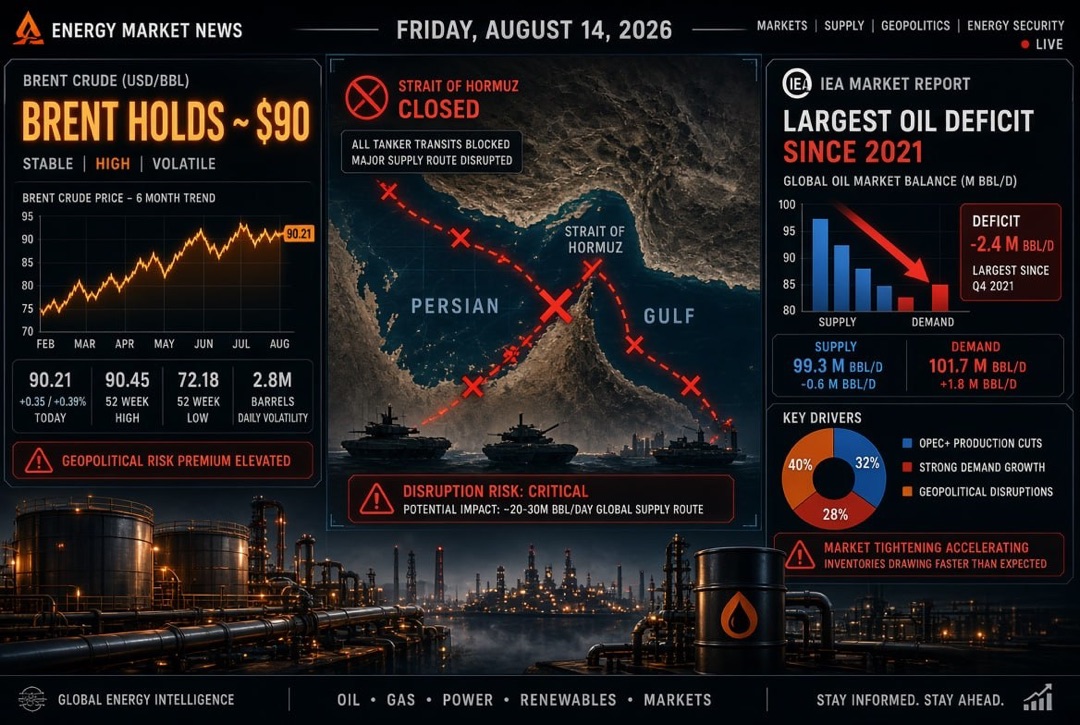
Saturday, June 13, 2026, finds the global fuel and energy complex in a state of heightened caution. After several weeks of significant volatility, oil, gas, oil products, electricity, coal, and renewables remain in the spotlight for investors, oil companies, refineries, fuel traders, and industrial consumers. The main topic of the day is the market's attempt to reassess the geopolitical premium in oil prices following signs of de-escalation in the Middle East, while the physical market for oil products remains tense.
For energy market participants, this means that a short-term correction in oil prices does not equate to a full normalization of energy flows. Global energy enters the summer season with low reserves of certain fuel types, high refinery utilization, sustained demand for diesel, jet fuel, and electricity, as well as an acceleration of long-term investments in LNG, renewables, infrastructure, and energy security.
Oil: Brent and WTI Down, But Risk of Shortage Persists
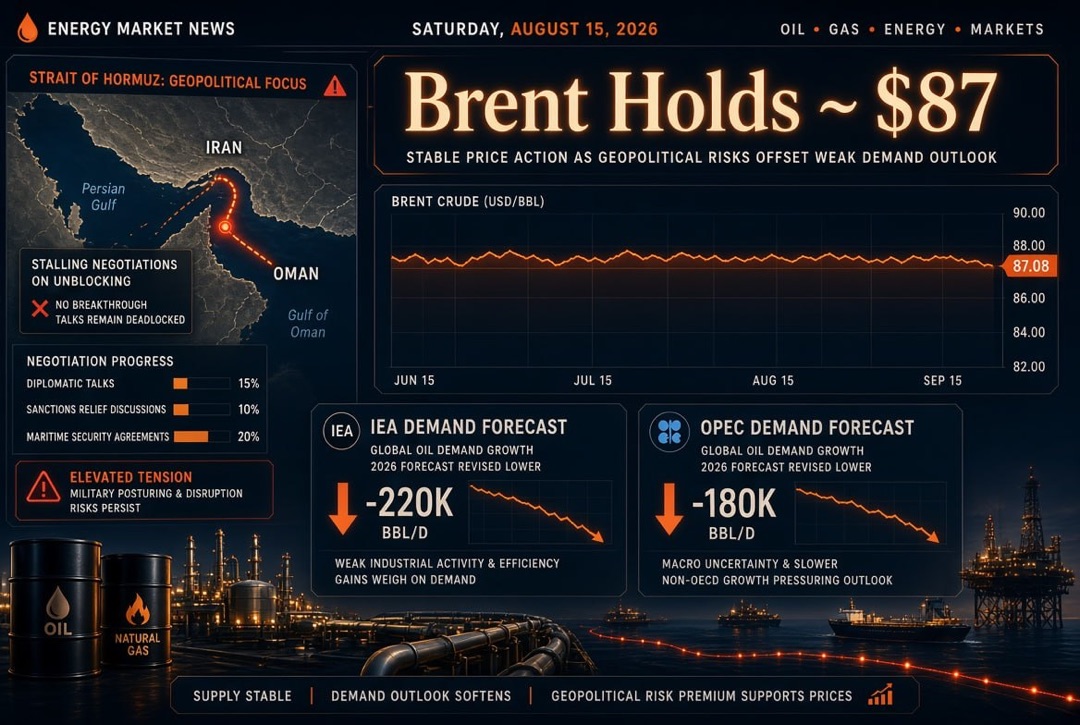
The key event in the oil market is the decrease in oil prices after easing fears regarding further escalation in the Middle East. Brent and WTI have retreated from recent highs as some market participants began locking in profits and factoring in the likelihood of a gradual recovery in marine logistics. However, the fundamental picture remains ambiguous: physical oil deliveries, freight, tanker insurance, and routes through critical straits have yet to return to normal operations.
For investors in the oil and gas sector, three takeaways are crucial:
- The decline in oil prices appears more as a correction of the geopolitical premium rather than a reversal of the long-term trend;
- Oil companies with stable production and low production costs maintain an advantage;
- The market for oil products remains tighter than the raw oil market.
If the recovery of deliveries continues slowly, Brent may remain within a wide volatile range, and oil traders will continue to closely monitor stocks, exports from the Middle East, OPEC+ decisions, and demand dynamics in the USA, China, India, and Europe.
OPEC+ and Demand Forecasts: The Market Shifts from Euphoria to Caution
Fresh forecasts for global oil demand indicate that the energy market is entering a more complex phase. On one hand, high fuel prices and logistical disruptions restrict consumption. On the other hand, global transportation, aviation, petrochemicals, and industry continue to form a significant demand base for oil and oil products.
For oil companies and investors, this creates an important balance: high prices support the revenues of producing companies but simultaneously increase the risk of demand destruction. If gasoline, diesel, and jet fuel remain expensive for too long, consumers start economizing, industries revise their procurement schedules, and regulators intensify pressure on the market.
The main intrigue of the coming weeks will be whether OPEC+ can maintain production discipline amidst divergent interests between exporting countries. While high prices benefit the budgets of oil-producing nations, excessively high oil prices exacerbate inflation, increase logistical costs, and reduce business activity for the global economy.
Gas and LNG: Europe Reinforces its Long-term Bet on American Supplies
In the gas market, one of the key themes remains competition for LNG. Europe continues to bolster energy security through long-term contracts, regasification infrastructure, and new supply routes. Southern European LNG hubs, including Greece, are becoming significant distribution centers for Central and Eastern Europe.
Long-term LNG contracts demonstrate that gas buyers no longer wish to be completely reliant on the spot market. After several years of price shocks, European energy companies prefer to secure volumes for years ahead, even if this reduces flexibility. For LNG suppliers, this creates a stable revenue base, while for investors, it signals the continued role of natural gas as a transition fuel.
For the global gas market, key factors remain:
- The level of fill in underground gas storage in Europe;
- The competition between Europe and Asia for LNG shipments;
- The commissioning of new capacities in the USA;
- The state of maritime logistics and tanker insurance;
- The demand dynamics from the power sector and industry.
Oil Products and Refineries: The Shortage of Gasoline, Diesel, and Jet Fuel Becomes a Central Issue
The oil products market currently appears as one of the most strained segments in the global energy sector. In the USA, the summer driving season has begun against a backdrop of low gasoline inventories, high refinery utilization, and sustained demand. Refiners are increasingly emphasizing diesel and jet fuel, where margins are higher due to the global shortage of middle distillates.
For refineries, this creates a favorable yet risky environment. High margins support refining profitability; however, high equipment utilization increases the risk of unplanned shutdowns, technical failures, and repair delays. Any unforeseen stoppage at a major refinery can quickly reflect on regional fuel prices.
Singapore, one of the key global hubs for oil products, also shows a tense inventory picture. The reduction of heavy and middle distillate stocks underscores the importance of Asian logistics, especially for marine fuel, diesel, and jet fuel. For fuel companies, this means that their procurement strategies must consider not only oil prices but also the availability of specific oil products.
India and Asia: Fuel Demand Remains Strong
India continues to be a key indicator of global demand for oil, oil products, and gas. Restrictions on large purchases of diesel and gasoline at retail gas stations indicate that the domestic fuel market is under pressure due to high prices, subsidies, and risks of shortage. For global energy, this serves as an important signal: demand in developing economies remains resilient even in the face of expensive fuel.
Asia, in general, continues to play a crucial role in the oil and gas balance. China, India, Southeast Asian nations, Japan, and South Korea compete for LNG, oil products, coal, and oil. Moreover, the structure of demand is changing: China is actively developing renewables, electric vehicles, and coal chemistry, India maintains significant growth potential for fuel consumption, while Southeast Asia is emerging as a new center for electricity demand growth.
Coal: Energy Security Strengthens the Role of Traditional Fuels Again
Coal remains an essential part of the global energy landscape despite the rapid development of renewables. China's strategy of expanding the production of synthetic fuels, gas, and chemical products from coal indicates that energy security is once again at the forefront. For China, this represents a way to reduce dependence on imported oil and gas, particularly amid geopolitical risks and unstable maritime logistics.
However, for investors, this trend has a dual nature. On one hand, coal assets and coal chemistry may receive support during periods of high oil and gas prices. On the other hand, such projects face environmental constraints, carbon regulations, and long-term pressure from the energy transition.
As a result, coal in 2026 remains not only a legacy commodity but also a tool for strategic energy resilience for certain countries. This is particularly evident in Asia, where energy security often takes precedence over fast-tracking climate objectives.
Electricity: Demand Grows Faster Than Traditional Energy
The power sector is emerging as a primary avenue for long-term growth in the global energy landscape. The electrification of transport, industry, buildings, data centers, and artificial intelligence is placing increased demands on energy systems. For investors, this implies that the price of electricity, the availability of network infrastructure, and the reliability of generation become crucial macroeconomic factors.
Particularly rapid growth is seen in demand from data centers. For energy companies, this opens opportunities in constructing gas generation, renewables, energy storage, networks, and balancing systems. Yet, this simultaneously creates the risk of localized power shortages, especially in regions with rapid development of digital infrastructure.
In the coming years, companies that can offer the market not just cheap electricity, but a reliable, predictable, and scalable energy model will emerge as winners. This applies to both traditional energy companies and operators of renewables, network companies, and equipment manufacturers.
Renewables: Solar Energy and Storage Become Part of Energy Security
Renewable energy is no longer viewed solely as a climate project. By 2026, renewables are becoming a component of energy security. Solar energy, wind energy, energy storage, and grid modernization enable countries to reduce dependence on imported fuel and the volatility of global oil and gas prices.
However, the renewables market faces its own constraints: capital costs, grid connection shortages, dependence on equipment supply chains, land competition, and the need to balance generation. Therefore, it is crucial for investors to assess not just installed capacity but also a project's ability to sell electricity at sustainable prices.
The most promising prospects lie not in standalone solar or wind projects, but in comprehensive energy platforms: generation, storage, networks, digital demand management, and long-term contracts with industrial consumers.
What Investors and Energy Market Participants Should Pay Attention To
Saturday, June 13, 2026, illustrates that the global energy sector remains in a transitional yet highly tense phase. Oil is correcting after a decline in the geopolitical premium, but oil products remain in short supply. The gas market is betting on LNG and long-term contracts. The power sector is becoming the main growth direction, while coal temporarily reinforces its role in energy security strategies.
Investors, fuel companies, oil companies, refineries, and electricity market participants should focus on several areas:
- The dynamics of Brent and WTI following the correction of the geopolitical premium;
- Inventories of gasoline, diesel, jet fuel, and fuel oil in the USA, Europe, and Asia;
- Refining margins and refinery utilization rates;
- Long-term LNG contracts and the development of gas infrastructure;
- Growth in electricity demand from data centers and industry;
- Investments in renewables, storage, and grid infrastructure;
- The role of coal and coal chemistry in China's and Asia's energy security.
The main conclusion for the energy market is that 2026 is becoming a period when energy security, fuel availability, and energy reliability are once again more critical than short-term price dynamics. For investors, this necessitates a broader perspective beyond just oil prices. The real value of energy assets is increasingly determined by logistics, inventories, refining, networks, contracts, and companies' ability to operate in a state of continuous volatility.