Oil Market: Brent Stabilizes at $90 After Strongest Month Since Spring
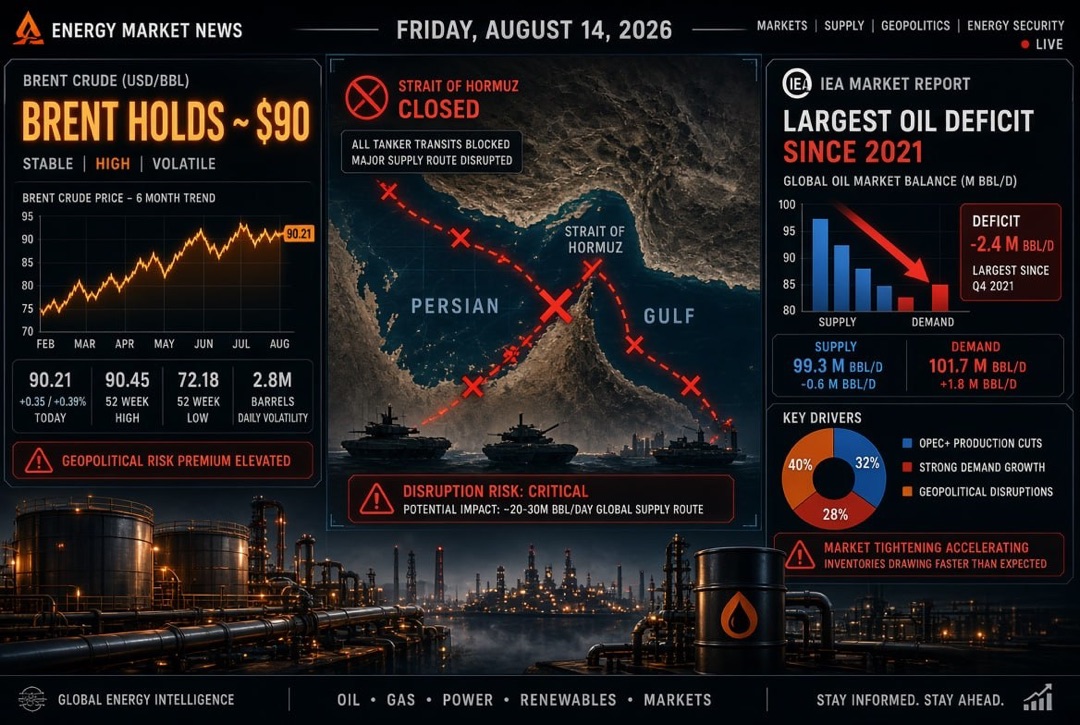
The global oil market finished July on a high note. By the end of Friday's trading, Brent crude rose by 1.3% to $90.12, while American WTI gained 1.5% to reach $84.67. Over the month, the North Sea benchmark increased by approximately 24%, and WTI rose by 21%—the best results since March, when escalating tensions around Iran first drove prices to three-digit levels. The Russian Urals grade is valued at around $85 per barrel, with the discount to Brent narrowing amidst supply shortages in the global market.
Key drivers of oil prices at the start of the week include:
- Geopolitical Premium: The blockade of the Strait of Hormuz and the ongoing military confrontation surrounding Iran maintain a risk premium in prices of several dollars;
- Actual Supply Reduction: Exports from the Persian Gulf are circumventing routes with limited capacity, and part of Iran's volumes has effectively dropped out of the market;
- Sustained Demand: Abnormally high temperatures in the Northern Hemisphere support electricity and fuel consumption, while refineries operate at high capacity during the peak automotive season.
The consensus among analysts from leading investment banks has raised the average price forecast for Brent in 2026 to $85 per barrel. The range of weekly fluctuations remains wide: at the end of July, prices ranged from $84 to $100, reflecting the sensitivity of the oil market to news from the Middle East.
OPEC+: Final Increase in Quotas and Strategic Pause
The central event of the weekend was the OPEC+ "seven" meeting on August 2. Key decisions from the alliance include:
- From September, oil production quotas will increase by an additional 188,000 barrels per day, marking the completion of the phased lifting of a voluntary reduction of 1.65 million b/d that has been in place since 2023;
- After the September step, the alliance will pause production increases to assess the balance of supply and demand;
- Restrictions of about 2 million b/d, implemented in 2022, will remain in place—the decision on their allocation is deferred.
From February to August 2026, the alliance's total quota has increased by approximately 940,000 b/d—a volume comparable to Oman's production. The format of the grouping has changed: following the exit of the UAE from OPEC and OPEC+ as of May 1, decisions are made by the "seven": Saudi Arabia, Russia, Iraq, Kuwait, Kazakhstan, Algeria, and Oman. The cautious strategy of the alliance is understandable: with the Strait of Hormuz blocked, the physical ability to increase exports for several participants is limited, and the nominal increase in quotas does not lead to a proportional rise in supply.
Strait of Hormuz: Tehran Rejects Unblocking, Negotiations with Oman Near Finalization
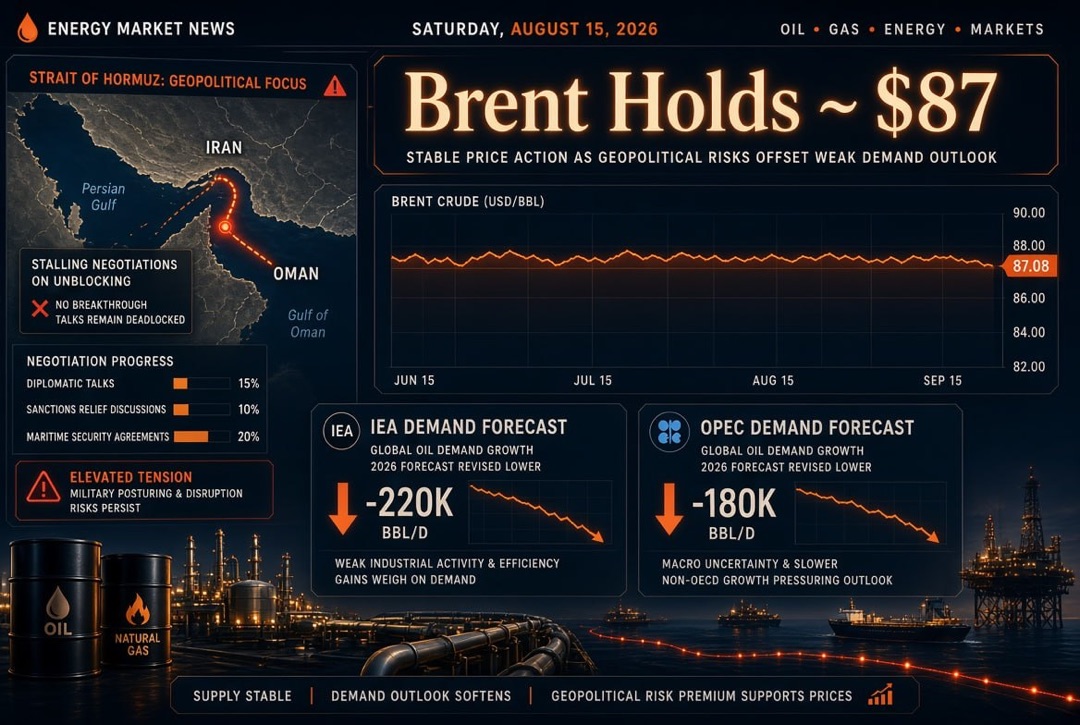
The geopolitical backdrop remains a defining factor for the entire energy sector. On Sunday, Tehran officially denied reports regarding the resumption of shipping through the Strait of Hormuz, deeming them unreliable. However, the Iranian Foreign Minister stated that consultations with Oman regarding the establishment of a joint shipping management mechanism in the area are nearing completion—this is the first tangible signal of possible de-escalation in recent weeks.
The stakes for the global market are exceptionally high: before the crisis, approximately one-fifth of global oil supplies passed through the Strait, while Europe received up to 12-14% of its imported LNG via this route. Investors are also monitoring the idea of a land blockade against Iran being discussed in Washington—its implementation could trigger a new surge in oil and gas prices. Conversely, any progress in the negotiation track could quickly deflate part of the geopolitical premium: experts estimate that if a peace agreement is signed, Brent could return to the $70 range.
European Gas Market: Stocks at a Five-Year Low Ahead of Winter
The European gas market remains the most vulnerable segment of the global energy sector. TTF hub prices rose about 55% in July, consistently holding above $500 per thousand cubic meters. The reasons for this tension are structural:
- The filling of EU underground gas storage (UGS) facilities at the beginning of August barely exceeds 56%—the minimum for this time of year since 2021 and 18 percentage points below the five-year average;
- Following the cold winter of 2025-2026, the drawing season ended with storage filling of less than 28%, and compensating for the lost volumes has proven challenging;
- To meet target levels by the heating season, net injections need to exceed 68 billion cubic meters, but less than half of the plan has been achieved to date;
- Europe is losing the price competition with Asia for available LNG cargoes, and the July heat has increased gas consumption for electricity generation to support air conditioning systems.
Gas injection rates in July were among the lowest in recorded history. If this trend does not reverse in August and September, the winter of 2026-2027 could be the most challenging for European energy since the crisis of 2022, with corresponding consequences for the industry, electricity, and inflation in the Eurozone.
LNG and Asia: $1 Billion in Additional Costs and a Shift to Coal
The five months of conflict in the Middle East have cost South Asian countries over $1 billion in additional expenses on LNG imports. Rising logistics costs and rerouting have hit Pakistan and Bangladesh hardest, where interruptions in gas supply to enterprises and rolling blackouts are reported. Spot prices for liquefied gas in Asia have more than doubled during the crisis, prompting importers to revise their fuel balance in favor of coal. Meanwhile, China is reducing its re-export of Arctic LNG volumes, directing them to replenish its own reserves ahead of the heating season amid anomalous heat and record electricity demand.
Coal: A Quiet Beneficiary of the Gas Crisis
The coal market has emerged as a clear beneficiary of high gas prices. Major Asian economies are increasing coal generation: South Korea has ramped up output at coal-fired power plants by nearly 40%—to a peak not seen since 2019, while Japan has increased it by 11%. Imports of thermal coal are rising across the board: South Korea nearly doubled its purchases of Russian coal from January to May, with significant increases in supplies from Australia. European ARA hub prices are holding in the range of $118-$124 per ton, and the index for Australian metallurgical coal has surpassed $215. For exporters—Indonesia, Australia, Russia, and South Africa—the market remains favorable: stable demand from Asia ensures steady sales and supports prices.
Electricity and Renewables: Renewable Generation Surpasses Coal Globally
Against the backdrop of