Energy and Oil & Gas Sector News for Thursday, February 5, 2026: Oil, Gas, Electricity, Renewables, Coal, Oil Products, and Key Trends in the Global Energy Market.
The global energy market is experiencing a period of heightened volatility, balancing between geopolitical risks and signs of easing sanctions pressure. Investors and stakeholders in the oil and gas sector are closely monitoring price dynamics for oil and gas, as well as decisions from key industry players. Below is an overview of the main events and trends in the oil and gas and energy sectors at this time.
- Oil prices have retreated from recent peaks due to signals of dialogue between the US and Iran; however, persistent tension limits the extent of their decline.
- OPEC+ has extended current production restrictions until March, aiming for market stabilization amid low oil inventories.
- The European gas market is adapting to the phase-out of Russian gas: record LNG imports amid winter cold spells and plans to diversify supplies.
- The electricity sector is under strain this winter – millions of subscribers have faced outages, prompting investments in grids and renewables.
- Geopolitics and sanctions: The US is preparing for the return of Venezuelan oil to the market after a regime change; India is reassessing its purchases of Russian oil as part of a new deal with the US.
- Corporations: Mergers and deals in oil and gas (the largest deal in the US shale sector), as well as asset sales and record refinery margins reflect the restructuring strategies of companies.
- Energy transition: Efforts to reduce carbon emissions continue, but rising energy demand and infrastructure limitations require a balance between traditional and renewable energy sources.
Geopolitics and Oil Prices
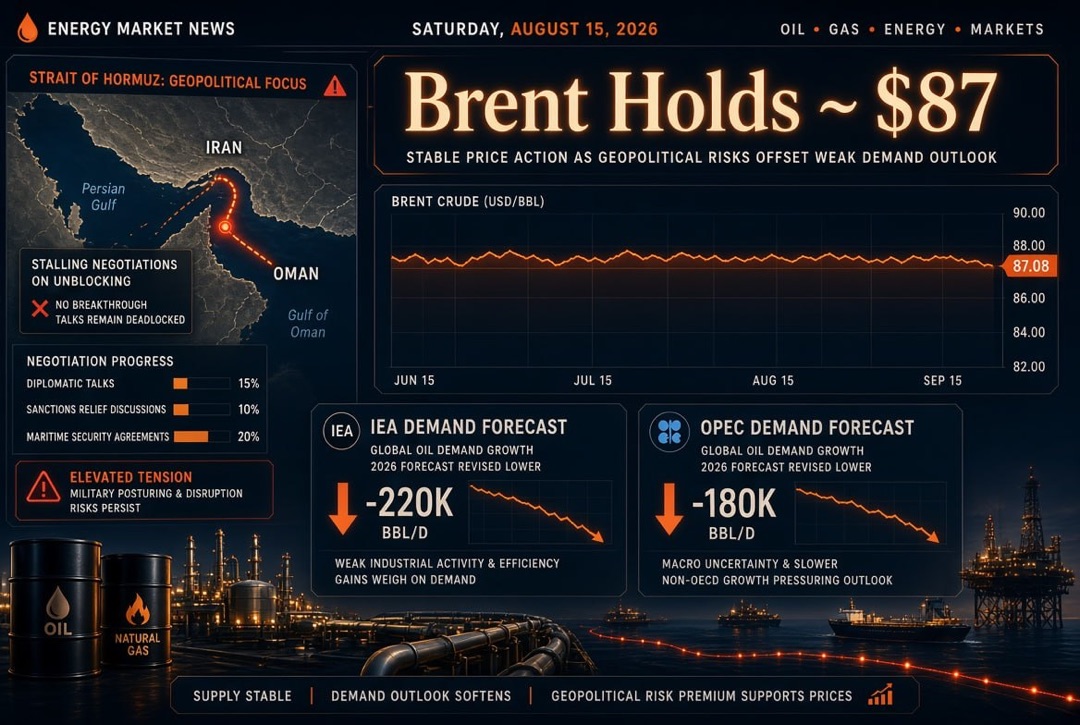
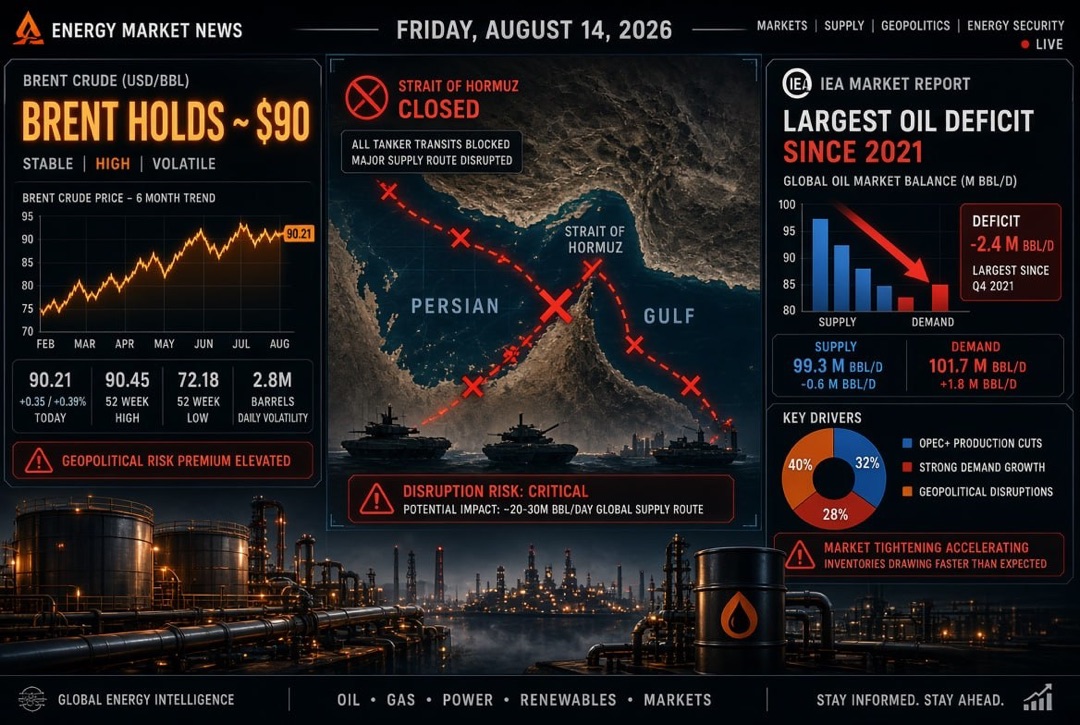
At the beginning of the week, oil prices significantly decreased after reaching a five-month high: investors reacted to signals of potential dialogue between the US and Iran, which alleviated fears of a military conflict in the Middle East. Just last week, tensions in the Persian Gulf had driven Brent prices up to $70 per barrel, but statements from Washington about willingness to negotiate with Tehran quickly reduced some of the geopolitical risk premium. As a result, Brent prices fell back to the $65–66 range on Monday, and American WTI dropped to around $62, indicating a temporary market stabilization.
However, the situation remains fragile: isolated incidents (such as the interception of oil tankers and drones in the region) remind us that the risk of escalation remains high. The market is sensitive to any news – optimism from diplomatic advances may quickly shift to heightened tensions within days. Overall, geopolitical factors continue to dictate the tone of price dynamics, limiting both excessive increases and deep declines in prices.
- Brent: around $69.3 per barrel (+3% in the last 24 hours, ~+12% for the month);
- WTI: around $65.1 per barrel (+3% in 24 hours, ~+12% for the month);
- OPEC Basket: ~$65 per barrel (stable amid production restrictions policy).
OPEC+ Policy and Oil Production
OPEC+ countries maintain a cautious stance regarding increasing production. The alliance confirmed the extension of the pause on raising quotas until the end of March, despite the recent spike in prices. In its official statement, the group noted "healthy fundamental market indicators" – record low commercial oil inventories indicate relative balance between supply and demand. Thus, even with short-term price surges, OPEC+ is reluctant to increase production, considering the traditionally low demand in the first quarter and the possibility of market oversupply.
OPEC+'s decision did not come as a surprise to analysts: early in the year, representatives of Saudi Arabia and Russia had signaled the lack of necessity for a sharp increase in supply. The announced reserve – 1.65 million barrels per day – could gradually return to the market if conditions demand. However, the eight key participants in the agreement (including Saudi Arabia, Russia, the UAE, and Kuwait) share the view that extending voluntary restrictions will support price stability. Many experts point out that the market structure (backwardation – a situation where near-term futures trade at higher prices than long-term) does not support the thesis of a significant oil surplus – rather, it is an indication of ongoing tension in physical supply. Thus, OPEC demonstrates a commitment to proactive market management in an effort to avoid a new price collapse while protecting the interests of oil producers.
Gas Market: Europe and LNG
The European gas market is in a reorientation phase following the EU's historic decision to phase out Russian energy resources. At the end of last year, the European Union legally enshrined a gradual phase-out of Russian gas imports: it aims to completely halt LNG purchases from Russia by the end of 2026, and pipeline gas by the fall of 2027. Recently, the European Council approved these timelines and mandated EU countries to submit national plans for supply diversification and identifying bottlenecks in replacing Russian gas by March. Some countries (such as Hungary and Slovakia) express concern that a full ban will result in price spikes and shortages; however, the overall course to free from dependence on Russian fuel remains unchanged.
In the short term, Europe has significantly increased LNG purchases. January's cold snap resulted in a record volume of LNG imports – according to Gas Infrastructure Europe, EU countries imported approximately 12.7 billion cubic meters of LNG last month, marking a historical maximum. This allowed them to compensate for the reduced pipeline flow and support energy supply amid winter peak consumption. However, gas reserves in storage facilities were depleting at an accelerated pace: by the end of January, the aggregate storage level in the EU had dropped to about 41% (compared to the usual ~50% for this time of year), while in Germany, the largest European market, reserves fell to 32%, significantly below previous years' averages.
The situation is somewhat improving thanks to weather factors. February forecasts have turned out to be relatively mild: expected warming has lowered heating demand and natural gas prices in Europe have gone down. Spot prices at the TTF gas hub have retreated after January's spike, providing consumers with breathing room before the next purchasing season. A similar trend was observed in the US: following an anomalous cold snap at the beginning of the year, which drove internal gas prices (Henry Hub) up to $6.6 per million BTU – the highest in four years – there was a sharp decline of more than 17% due to changing weather conditions. Currently, gas in the US trades at approximately $3.5 per million BTU, and LNG export supplies are recovering as production returns to normal after the cold.
Strategically, Europe is actively preparing to replace falling volumes of Russian gas with new contracts. Germany is negotiating long-term agreements for LNG supplies with Middle Eastern countries, including Qatar (particularly securing agreements with QatarEnergy regarding payments and participation in projects). Concurrently, major Asian importers are also securing resources: for example, Japan's JERA signed a substantial deal with Qatar to ensure LNG supplies for years ahead. Experts note that a complete phase-out of the EU from Russian energy sources requires not only renegotiating contracts but also significantly expanding infrastructure – from LNG receiving terminals to tanker fleets. According to estimates by Vortexa analysts, to meet the needs of Europe as the second-largest gas importer (after Asia) under the embargo, the world will require at least 30 new gas carriers. Already, shipping companies are experiencing heightened demand for LNG tankers, with charter rates remaining high. The European energy market is entering a new era characterized by more diversified yet more complex gas supply chains.
Electricity and Renewables
Extreme winter weather events at the beginning of the year have highlighted the vulnerabilities of electricity infrastructure in various regions worldwide. In late January, a severe storm led to widespread power outages: in several countries, over a million consumers were temporarily left without electricity or heating. These events exposed the issues of inadequate reliability in power grids and a lack of backup capacity, particularly against the backdrop of a growing share of renewable energy sources. The storm, informally dubbed "Fern,” served as a wake-up call for the industry: investors and regulators have begun to discuss the necessity for accelerated investments in upgrading energy networks and energy storage systems to prevent similar outages in the future.
Governments and companies are already responding to these challenges. For instance, Siemens announced plans to increase investments in American power grid infrastructure – a large-scale program to modernize the US power grid aims to enhance the network's resilience to climate stresses and facilitate the integration of renewable generation. Projects are also underway in Europe and China to strengthen energy systems: additional networks are being constructed, intelligent load management systems are being developed, and high-capacity battery storage is being enhanced to smooth out peaks. Concurrently, the global transition to "green" energy continues. Renewable energy sources (RES) – primarily solar and wind generation – are adding capacity at record speeds. Nonetheless, businesses are forced to adapt to new conditions: for example, the largest Danish company Ørsted decided to sell its European onshore wind business for $1.7 billion to optimize its portfolio and focus on offshore wind farms and other strategic directions. This move reflects a consolidation process in the RES sector, where companies aim to enhance efficiency and concentrate resources on key projects.
The growth of the RES share is accompanied by the need to address energy balance issues. With unstable generation (solar and wind), reserves play a crucial role – gas and hydroelectric plants remain necessary to offset fluctuations in output. In some recent instances of gas price spikes, some countries even had to temporarily increase generation from coal-fired power plants to avoid electricity shortages during peak demand periods. Despite a short-term return to coal in critical situations, the overall direction of the industry remains focused on reducing carbon footprints. Achieving this requires not only new RES generating capacities but also the localization of their supply chains. Currently, Europe, for instance, still depends on imports of components for solar panels and wind turbines from Asia. Recognizing this issue, the European Union is taking steps to stimulate domestic production of key elements for "green" energy and reduce dependency on Chinese supplies. Similarly, the US has established a strategic reserve of critical minerals worth $12 billion, while India is investing over $10 billion in developing rare earth element deposits – all aimed at ensuring a raw material base for the energy transition. In the medium term, such measures should strengthen global supply chains for RES equipment and accelerate the deployment of clean energy solutions.
Sanctions and Changes in the Global Oil Market
The geopolitical shifts at the beginning of 2026 are leading to significant adjustments in the global oil market. One of the most notable events is the return of Venezuela to the attention of international oil companies. In January, Venezuela experienced a change in leadership: long-time leader Nicolas Maduro was ousted, and the US actively supported the formation of a new government. A few weeks later, Washington took steps to ease oil sanctions, aiming to revive production in a country with the largest proven oil reserves. According to sources, the US Treasury is ready to issue an expanded general license this week, allowing foreign oil companies to resume oil production in Venezuela for the first time in several years. This development complements measures taken earlier: at the end of January, the US already permitted international firms to purchase, transport, and process Venezuelan oil provided that transactions were conducted through sanctioned American structures. Essentially, this involves a partial restart of Venezuela’s oil industry under external control after many years of sanctions, infrastructure decay, and underinvestment.
Washington's strategy pursues several objectives. Firstly, stabilizing Venezuela's economy through the restoration of oil production should support the new government in Caracas and reduce humanitarian risks. Secondly, bringing heavy Venezuelan oil back to the market is advantageous for the US itself: local refineries (especially along the Gulf Coast) have traditionally been tailored to process heavy grades, and restoring supplies will allow them to operate on cheaper feedstock. In the coming weeks, a rise in Venezuelan oil exports is anticipated – tankers, which had previously been idle due to partial maritime blockades, are resuming shipments. Notably, main routes are now being redirected: while previously discounted Venezuelan oil was mainly absorbed by China, the current increased oversight by the US has cooled Asian buyers’ interest. Instead, American and European refiners are evidently becoming the primary recipients of deliveries. Nevertheless, experts warn that the revitalization of Venezuela's oil sector will face significant obstacles. Years of sanctions and chronic underfunding have led to pipeline corrosion, equipment wear, and production fall to levels below 800,000 barrels per day (down from over 2 million barrels per day previously). Industry consultants estimate that restoring infrastructure and ramping up production to previous levels may require over $180 billion in investments and take decades. Furthermore, although oil companies show interest in Venezuela's rich resources, they remain cautious due to political risks and uncertainties regarding the long-term stability of the new leadership.
Another potential factor for easing global sanctions is the dialogue surrounding Iran's nuclear program. Hopes for renewed negotiations between Washington and Tehran leading to an "acceptable deal" brought optimism to the market at the start of the year. The US President stated that Iran has begun to "seriously engage" with the American side, defusing tensions and sparking speculation about possible partial sanctions relief for the Iranian oil sector. However, the situation surrounding Iran remains contradictory: amid diplomatic signals of readiness for compromise, hardline statements and incidents in the Persian Gulf still occur. Iranian military vessels have approached US-flagged tankers in the Strait of Hormuz, and Western intelligence has reported attempts by Iran to transfer combat drones closer to US aircraft carriers. These events undermine trust and could derail fragile de-escalation efforts. As a result, the prospects for the return of Iranian oil to the global market in significant volumes remain uncertain – many traders prefer not to bet on an imminent easing of sanctions on Tehran.
The changes also extend to the Asia-Pacific region, particularly India, one of the largest oil importers. A recently concluded trade deal between New Delhi and Washington has brought energy cooperation to the forefront: the US and India agreed on collaboration, including oil supplies. Under the new agreement, India gains expanded access to American technologies and markets, but according to insiders, has committed to reassessing the scale of its purchases of Russian oil. Indian refiners, who actively increased the import of discounted Russian Urals oil from 2023 to 2025, must now evaluate the possible implications of the deal. On the one hand, continuing cooperation with Russia offers India advantageous crude prices; on the other hand, excessive reliance on sanctioned oil could complicate relations with Western partners. Some Indian refineries have already indicated a willingness to gradually reduce the share of Russian oil in their procurement basket, diversifying sources by incorporating Middle Eastern and American grades. If this trend strengthens, Russia may face the necessity to redirect additional oil volumes to China and offer buyers even more substantial discounts to maintain competitiveness. Regardless, a global reconfiguration of trade flows is evident: in 2026, traditional "producer-consumer" relationships are transforming under the influence of sanctions and political agreements, creating new alliances and points of tension on the energy map of the world.
Investments and Mergers in the Oil and Gas Sector
Oil and gas companies worldwide are adapting their strategies to new market conditions, leading to major deals and structural changes in the industry. In the US, one of the most extensive mergers in recent years has occurred: independent oil and gas producers Devon Energy and Coterra Energy announced their merger, forming a new shale giant with a market capitalization of about $58 billion. The combined company will consolidate assets in key shale plays (Permian Basin, Bakken, and others) and become one of the leaders in oil production in the States. This mega-deal reflects a consolidation trend in the American production sector: after a period of rapid growth, smaller shale firms are seeking synergy and efficiency through consolidation to reduce costs, improve returns for shareholders, and better withstand periods of low prices.
Amid moderate oil prices (around $60–70 per barrel), many oil and gas corporations are focusing on optimizing portfolios and returning cash to shareholders. However, the current environment necessitates a reassessment of plans. Norway's Equinor, for example, announced a reduction of its share buyback program for 2026 – the company is compelled to adjust its financial policy due to declining revenues from oil and gas sales. At the same time, Equinor is reevaluating its geographical focus: the Norwegians have decided to completely exit the Argentinian shale project "Vaca Muerta," selling their stake (approximately $1.1 billion) to local company Vista Energy. This allows Equinor to free up capital for investments in more prioritized directions and regions with lesser risks. Similarly, other European majors are conducting "fine-tuning" of their assets, focusing on the most profitable projects and low-carbon initiatives.
Refining and oil products marketing are also experiencing an interesting period. American Marathon Petroleum – one of the largest independent refiners – reported profit exceeding expectations, buoyed by high refining margins on oil products. The end of 2025 saw a spike in refinery margins: reduced feedstock prices amid stable demand for gasoline, diesel, and jet fuel enabled refiners to significantly enhance profitability. Analysts observe that sustained demand for oil products persists even with the rise of electric vehicles, particularly in aviation and freight transportation, which supports the profitability of traditional refineries.
In oil production regions of the Middle East, there continues to be an active expansion of capacities. Kuwait has resumed operations at the largest refinery in the country – the Al-Zour refinery, resulting in a sharp increase in the export of fuel oil and other oil products from Kuwait. Additional volumes are being directed both to meet domestic demand in the region and for export to Asia, strengthening Kuwait's position in the global oil products market. Concurrently, the state-owned Kuwait Petroleum Corporation has reached out to international oil and gas companies to invite cooperation in the development of offshore fields. For the first time in decades, Kuwait is considering the participation of foreign majors in its offshore projects – this move is intended to attract technology and investment to enhance production in challenging deepwater areas. This openness demonstrates that even resource-rich nations are willing to partner for developing new projects, especially amid the need to compensate for natural declines in production at aging fields.
Simultaneously, large international companies are facing pressure from shareholders demanding clarity in strategic direction. Shareholders of BP have recently urged management to demonstrate that the company’s bet on the transition to low-carbon energy will yield financial returns. This underscores the complexity of the situation for oil and gas giants: they are required to balance the need to invest in “green” projects (renewable energy, hydrogen, carbon capture) while ensuring sufficient profits from traditional business operations. Thus, the corporate sector of the oil and gas industry in 2026 is characterized by a simultaneous pursuit of stability through mergers and optimization, alongside preparation for the impending transformation of the industry influenced by climate factors.
Energy Transition and Outlook
The transition to a low-carbon economy remains one of the main long-term goals of the global energy community. At the beginning of the year, initiatives that could accelerate decarbonization are being discussed again. For instance, a number of countries have proposed the idea of a global carbon tax, which would make the use of oil, gas, and coal more costly and stimulate investment in clean energy. Although a unified global tax rate is a debatable issue, these discussions are pressuring oil and gas companies: major emitters realize that in the future their costs related to CO2 emissions might rise. This is already reflected in strategies: companies are increasing spending on carbon capture and storage projects, biofuels, and hydrogen, seeking to reduce their carbon footprint and mitigate potential financial risks from climate policies.
However, the energy transition is not a straightforward process. The economic reality is that global energy demand continues to grow, driven by both developing markets and new technological trends. For example, the rapid development of artificial intelligence and cloud computing is leading to an explosive increase in electricity consumption by data centers. According to expert estimates, the rapid rise in energy consumption in the IT sector by the end of the decade could create additional demand for gas for electricity generation, especially if renewable sources do not keep up with new loads. Therefore, even in the 2030s, natural gas, along with oil, will play a substantial role in the energy balance alongside the expansion of renewables.
There is a sort of "energy transition paradox": while states and corporations declare goals for achieving carbon neutrality (Net Zero) by 2050, maintaining economic growth in the coming years necessitates continuing investment in traditional energy. Countries in Europe have already encountered enormous estimates for the total cost of a complete transition to clean energy – some calculations suggest that achieving Net Zero goals may cost the UK an astronomical £7.6 trillion. Such figures raise questions about how to distribute the burden of costs among governments, businesses, and consumers without jeopardizing economic stability.
For investors and market participants, this means that the coming years will be characterized by the coexistence of two paradigms. Traditional sectors of oil, gas, and coal continue to generate cash flows and remain in demand in the market – especially in regions where alternative capacities are still insufficient. Simultaneously, the renewable energy sector, energy storage, electric transportation, and supporting infrastructure are rapidly growing, offering new growth points. In practice, many major oil and gas companies are opting for a hybrid strategy: investing in renewable projects while not abandoning the exploration of new oil and gas fields where economically feasible. This approach allows them to remain profitable today while preparing for tomorrow’s realities.
As a result, the global fuel and energy complex at the start of 2026 is entering a phase of transformation, where the state of the industry is simultaneously influenced by immediate factors (geopolitics, weather, sanctions) and long-term trends (technological innovations, climate agenda). Commodity and energy markets are likely to maintain volatility, and the key to success for market players will be the ability to adapt to rapidly changing conditions. Balancing interests – between energy security and environmental sustainability – will determine the sector's development in the coming years, both globally and regionally.