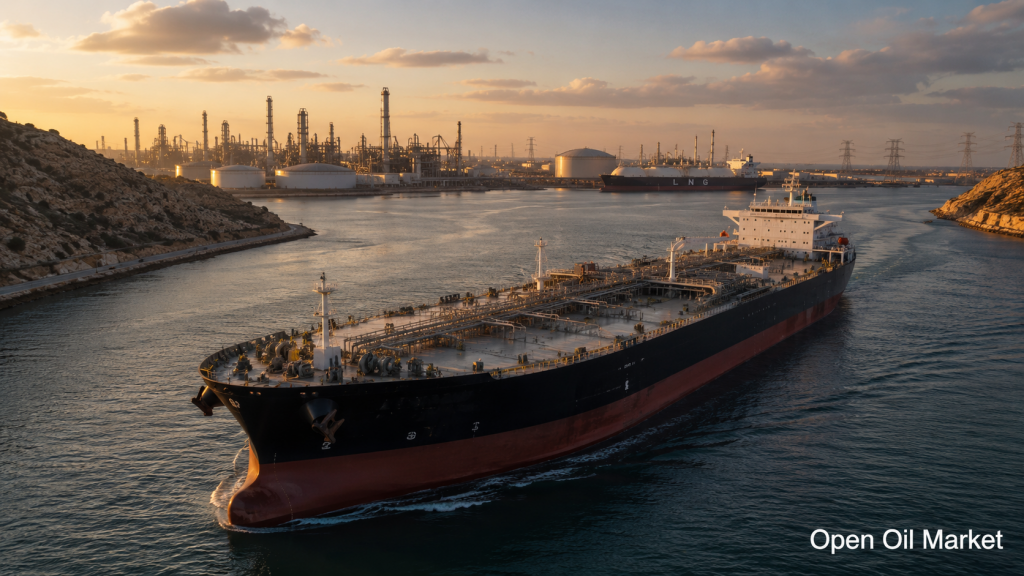
Oil and Gas and Energy News for Thursday, July 2, 2026: Oil Loses Geopolitical Premium, OPEC+ Prepares for Production Increase, LNG Market Remains Tense, Diesel and Refineries Under Investor Spotlight
The global fuel and energy complex enters a new phase of risk reassessment on Thursday, July 2, 2026. After months of heightened volatility due to the conflict surrounding Iran and shipping risks through the Strait of Hormuz, the oil market is gradually returning to a more fundamentals-driven logic: the balance of supply and demand, OPEC+ policies, dynamics of Chinese imports, inventory levels of oil products, and logistics costs are becoming pivotal factors for investors once again.
However, it is premature to speak of a full normalization. Brent crude has stabilized around the low $70 range per barrel, but transportation risks, shortages of specific oil products, tensions in the LNG market, and high costs of backup generation continue to present significant uncertainty premiums for the energy sector. In the coming weeks, oil companies, fuel traders, refineries, electricity market participants, and investors will be influenced not just by crude oil pricing but also by the state of the entire energy supply chain—from extraction and refining to the supply of diesel, gas, coal, and electricity.
Oil: Market Reduces Geopolitical Premium, But Hormuz Risks Remain
The main event of the day for the oil and gas sector is the further reduction of the geopolitical premium in oil prices. Successful negotiating signals between the U.S. and Iran have alleviated concerns about new supply disruptions. Brent is trading around $72 per barrel, while WTI is below $70, sharply contrasting with spring peaks when the market priced in scenarios of prolonged disruptions in shipping through the Persian Gulf.
For investors, this signifies a shift from the "shortage at any cost" scenario to a more complex landscape:
- Physical oil supplies are recovering, but unevenly;
- Freight and insurance costs remain above pre-crisis levels;
- A portion of Asian buyers continues to cautiously build inventories;
- The oil products market is recovering more slowly than the crude oil market.
A key takeaway for oil companies is that the current Brent price no longer reflects a panic scenario, but it still does not indicate a complete return to a normal market. For energy sector participants, it is crucial to monitor not only futures but also data on tanker traffic, regional differentials, premiums on physical oil, and refining margins.
OPEC+: Cautious Production Increase Instead of Hard Price Support
OPEC+ finds itself in the spotlight once again. Market expectations indicate that key members of the alliance may agree on a further increase in target production levels from August by approximately 188,000 barrels per day. This continues the trend of gradually reversing previous cuts, illustrating that producers are trying to regain market share while avoiding a sudden collapse in prices.
For the oil and gas sector, this approach sends mixed signals. On one hand, the increase in supply limits the potential for Brent and WTI prices to rise. On the other hand, actual production in several countries remains below target levels due to logistical, technical, and political factors. Thus, announced quotas do not always translate into actual barrels on the market.
Investors should pay attention to three indicators:
- Actual production levels in Saudi Arabia, Russia, Iraq, and the UAE;
- Rate of recovery of exports through Middle Eastern routes;
- Response of Asian demand, primarily from China and India.
If OPEC+ increases supply faster than demand recovers, oil may remain under pressure. Conversely, if logistics encounter limitations again, the market might quickly reinstate some risk premium.
Gas and LNG: Europe Buys Time, but Winter Balance Remains Vulnerable
The focus in the gas market is shifting toward Europe and Asia. The European TTF has stabilized around €43–44 per MWh, which is below the panic levels of spring but well above the comfortable range for energy-intensive industries. The Asian LNG benchmark JKM remains around $16 per MMBtu, sustaining competition between Europe and the Asia-Pacific region for flexible liquefied natural gas shipments.
The situation in the gas market appears less acute than in March–April, yet fundamental risks persist:
- European storage remains below the desired trajectory ahead of winter;
- The LNG market relies on the recovery of supplies from the Middle East;
- The U.S. remains a key supplier of flexible LNG shipments;
- Asia may ramp up purchases amid hot weather and increasing electricity demand.
For gas companies and traders, this means that the summer injection season will operate under pressure. Even in the absence of new shocks, Europe will have to compete for LNG, and any worsening of weather, incidents at export terminals, or increased consumption in Asia could quickly return volatility.
Oil Products and Refineries: Diesel Becomes the New Risk Center
While the crude oil market gradually calms, the oil products segment remains more jittery. Diesel, jet fuel, and gasoline are recovering slowly due to refining restrictions, low inventories, and supply disruptions. The diesel market is particularly sensitive, where any export ban or reduction in refinery load could swiftly trigger a new price shock.
Risks for refineries are now distributed across several areas:
- High capacity utilization increases operational risks and the likelihood of accidents;
- Postponing maintenance keeps current margins stable but creates risks for future disruptions;
- Demand for diesel remains robust from logistics, industry, and agriculture;
- Jet fuel is supported by the summer travel season and the recovery of international flights.
For refining companies, the period remains favorable in terms of margins, especially for facilities with a high share of medium distillates output. However, for fuel companies and industrial consumers, this indicates a sustained risk of high procurement prices and the need for more precise inventory management.
Electricity: Increased Demand from Data Centers Alters Investment Landscape
The electricity sector is becoming one of the main investment directions in the global energy landscape. The rising consumption from data centers, artificial intelligence, transportation electrification, and industrial electrification is increasing demand not only for renewable energy sources but also for gas generation, grids, storage systems, and backup capacities.
In the U.S., investments in gas and coal power plants in 2026, according to industry experts’ estimates, may exceed those in China for the first time in decades. This is an important signal: even with the acceleration of renewable energy, the market demands reliable base and peak capacity. For investors, this opens opportunities in several segments:
- Gas turbines and equipment for peak power plants;
- Construction and modernization of electricity grids;
- Energy storage systems;
- Power supply contracts for data centers;
- Load balancing infrastructure.
Electricity is gradually transforming from a utility sector into a strategic asset of the digital economy. This enhances the investment appeal of grid companies, equipment manufacturers, and flexible generation operators.
Renewables: Generation Records Highlight Grid Issues and Negative Pricing
Renewable energy continues to set records. In Germany, the share of renewables in electricity consumption reached a record 58% in the first half of 2026. Across Europe, solar generation is increasingly covering a significant portion of daytime demand, particularly in Germany, Spain, and France.
However, the rapid growth of renewables reveals a new issue: producing cheap green electricity no longer equates to high profitability. In hours of peak solar generation, electricity prices can drop to zero or even enter negative territory. Grid limitations compel operators to curtail output, and the profitability of solar projects depends on the availability of storage, flexible demand, and long-term contracts.
For renewable energy investors, the key question is changing. Previously, building capacity was paramount. Now, ensuring monetization is key:
- Access to grids;
- Energy storage;
- Power Purchase Agreements (PPAs) with industrial consumers;
- Managing generation profiles;
- Integration with hydrogen, data centers, or industrial clusters.
Renewables remain a structurally growing sector, but the market is becoming more selective: projects with flexibility, contractual basis, and grid accessibility will command a premium.
Coal: Asia Supports Demand Despite Energy Transition
The coal market continues to show resilience thanks to Asia. Imports of thermal coal in the region notably increased in June amid purchases by China, Japan, and South Korea. The reason lies in a combination of seasonal electricity demand, expensive LNG, and the need to maintain stable generation during periods of heat.
China simultaneously remains the world leader in renewable energy capacity expansion while also being the largest consumer of coal. This is not a contradiction but rather a reflection of the country's energy strategy: it is building solar and wind capacities while retaining coal as a tool for energy security and industrial resilience. India, on the other hand, is attempting to reduce imports through domestic extraction and growth in renewables, but coal generation remains the backbone of its energy system.
For coal companies, the current environment is moderately positive. Prices for thermal coal remain significantly below the crisis peaks of 2022 but above last year's levels. For investors, the sector remains contentious: cash flows are stable, but ESG restrictions, regulatory pressure, and long-term decarbonization limit valuations.
What’s Important for Investors and Energy Market Participants
Thursday, July 2, 2026, demonstrates that the global energy sector is emerging from the acute phase of the oil shock but is not reverting to previous stability. Risks have become more diversified: oil is decreasing in price, but diesel remains tense; LNG is stabilizing, yet Europe lacks complete winter reserves; renewables are growing, but the grids are lagging; coal is losing long-term appeal but remains essential for Asia.
For investors, oil companies, refineries, fuel traders, and energy holdings, the key metrics for the coming days are:
- Brent and WTI: Holding prices around current levels will show how much the market believes in a sustainable de-escalation.
- OPEC+: The decision on August quotas will determine the supply balance for Q3.
- Strait of Hormuz: Actual tanker traffic and freight costs are more important than announcements.
- Diesel and Jet Fuel: Refinery margins remain an indicator of the real shortage of oil products.
- European Gas Storage: Injection rates will influence winter TTF prices.
- LNG in Asia: An increase in JKM above European levels could redirect flexible shipments from Europe to the Asia-Pacific.
- Electric Grids and Renewables: The investment focus is shifting from simple capacity additions to flexibility and storage.
The main investment takeaway of the day: the energy market is no longer evaluated solely through the price of a barrel. In 2026, returns in the energy sector increasingly depend on companies' ability to manage infrastructure, logistics, refining, electricity balancing, and supply contracts. The winners will be those players who control not just one asset but the entire value chain—from raw materials to the end consumer.




