Current Oil, Gas, and Energy News as of February 27, 2026: OPEC+ Decision, Brent and WTI Dynamics, Gas and LNG Market, Electricity and Renewable Energy Sources, Coal, Oil Products, and Refining Margins. A Global Overview for Investors and Energy Market Participants
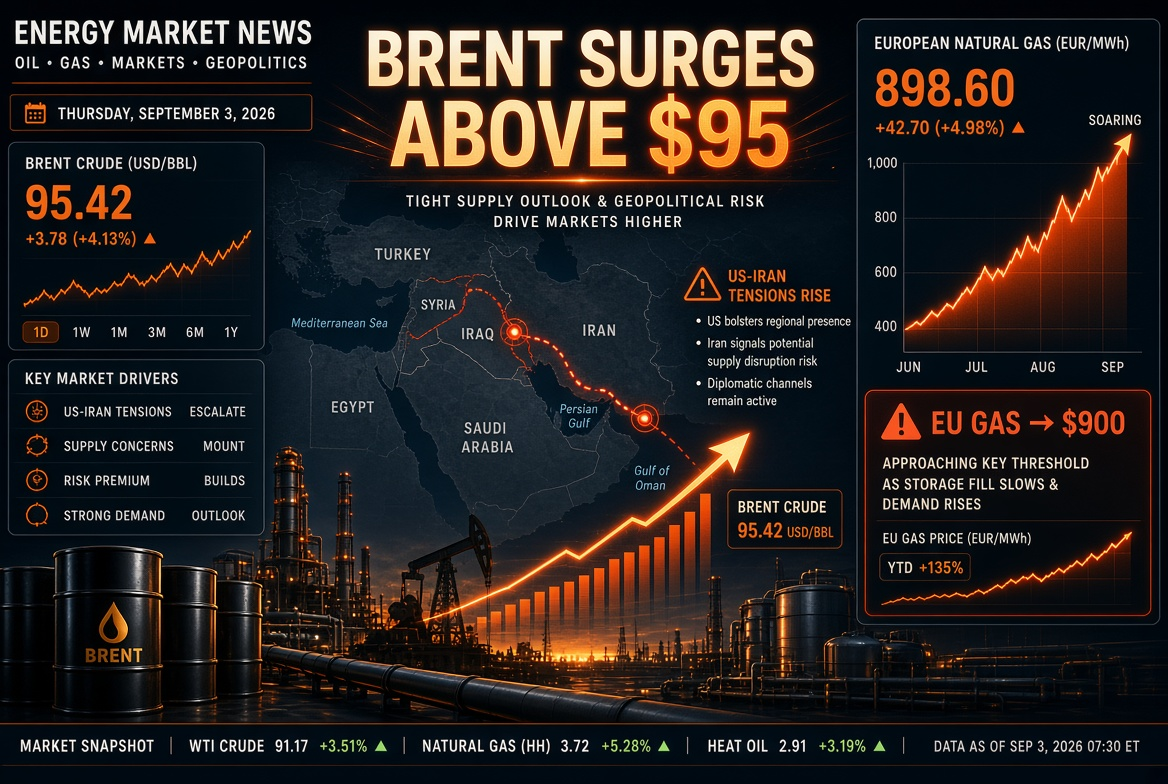
As the week comes to a close, the oil market enters a "two-speed" mode: on one hand, the risk premium remains elevated due to tensions in the Middle East and threats of supply disruptions; on the other hand, fundamental statistics (stocks and refining) can quickly temper growth. For global investors, the key question is: Will geopolitics support Brent and WTI oil prices, or will inventory and demand data push the market back to a more neutral range?
- Bullish Factor: The likelihood of short-term supply disruptions along Persian Gulf routes (including the Strait of Hormuz) and increased caution among traders.
- Bearish Factor: Unexpected fluctuations in U.S. commercial oil inventories and "noise" in balances, which amplify intraday volatility.
- Neutral Factor: Seasonal demand and the transition to spring maintenance periods for refineries in the Northern Hemisphere.
As a result, oil is trading with heightened sensitivity to headlines: short impulses can be strong, but establishing a trend requires fundamental confirmation — primarily in the dynamics of inventory and demand for oil products.
OPEC+: April Production and the Price of "Market Share Return"
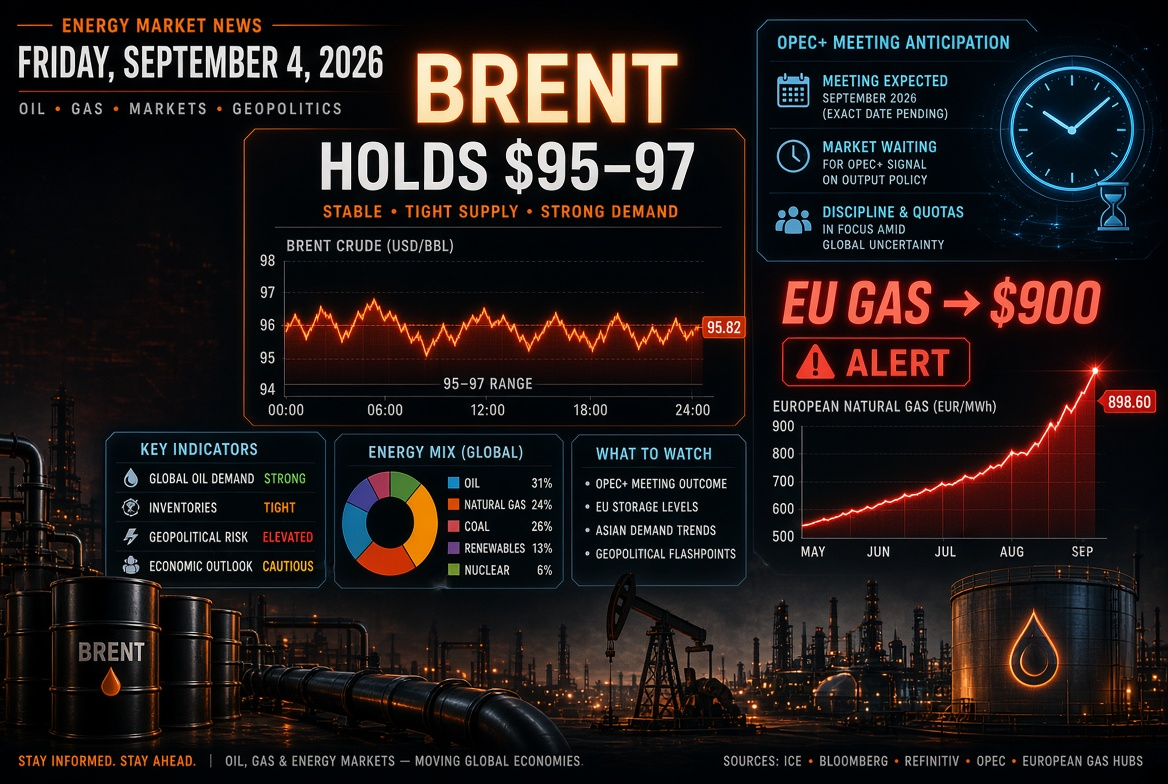
The focus of the week is the expectations around the OPEC+ decision regarding production parameters for April. A discussion on a symbolic increase in production is on the table, which markets perceive as a test: to what extent is the cartel willing to "softly" restore volumes without disrupting the supply balance?
- If increase is confirmed: The market may interpret this as a signal of confidence in oil demand for the second quarter and readiness to manage supply disruption risks without a sharp price rise.
- If they maintain a pause: The risk premium may solidify, and Brent oil prices could receive additional support in anticipation of a tighter balance.
- If the rhetoric is "hawkish": Volatility will increase across the entire futures curve, especially in the near term.
For energy market participants, not only the final volume matters but also the phrasing: it sets the framework for expectations regarding supplies, spreads, and hedging strategies until the beginning of the summer season.
Oil Products and Refineries: Maintenance Season, Diesel, and Gasoline, Refining Margins
By the end of February, the oil products segment is entering a phase of scheduled refinery maintenance in Asia, Europe, and the U.S. This traditionally shifts the balance: crude processing decreases, and local gasoline and diesel markets become more sensitive to logistics and inventories.
- Diesel (gas oil): After the winter demand peak, margins may normalize, but with reduced refinery utilization, diesel spreads may hold better than expected.
- Gasoline: The market is gradually transitioning from winter to spring specifications, and traders are preemptively assessing the onset of seasonal growth in automotive demand.
- Aviation Fuel: Stability in air transport supports demand, but key risks lie in logistics and regional imbalances.
For downstream asset owners, the main benchmark is refining margins and supply chain resilience. Against a backdrop of volatile oil prices, refineries and petrochemicals can either serve as a "buffer" or a source of additional risk — depending on the structure of the oil product basket and raw material availability.
Gas and LNG: Europe Receives More LNG, but the Market Remains "Nervous"
The global gas market remains at a significant crossroads: Europe is increasingly reliant on LNG, which keeps spot prices within a narrow corridor, but sensitivity to weather and inventory levels remains high. Importantly, for EU energy, the growth of renewable energy generation in certain periods reduces gas consumption in power generation but does not eliminate structural demand from industry and heating.
Key insights for investors:
- Europe: A high influx of LNG supports the physical balance, but the "insurance" of reserves is still limited by seasonal factors.
- Asia: Competition for LNG cargoes creates premiums/discounts between European and Asian benchmarks.
- Logistics: The cost of freight and the availability of LNG carriers directly impact arbitrage and the final price of gas.
For portfolios exposed to gas, not only prices matter, but also the shape of the forward curve: it determines the economics of storage and "roll" strategies.
Electricity and Renewable Energy Sources: Wind and Sun Pressure Prices, but Systemic Risks Remain
The European electricity market continues to operate under the logic of "weather = price." During periods of increased wind and solar generation, wholesale prices decrease, and gas generation is pushed out of marginal pricing. At the same time, the importance of system flexibility is growing: energy storage, demand management, network constraints, and inter-zonal transfers.
- RES: The rising share of wind and solar increases volatility within the day and the value of balancing capacity.
- Gas Generation: Remains a key "insurance" resource, so gas and electricity are still closely linked.
- Networks and Storage: The investment focus is shifting from megawatt-hours to flexibility and resilience.
For the global audience of investors, this means that companies that can manage generation profiles, pricing peak risks, and infrastructure constraints are likely to win in the energy sector.
Coal: Asian and European Benchmarks Depend on Logistics and Stock Levels
The coal market demonstrates resilience amid supply constraints, transportation factors, and uneven demand. For the power sector in regions with a high share of coal generation, energy coal prices and supply availability are crucial, while the dynamics of coking coal are key for metallurgy.
Market watch points:
- Levels of stock at generation facilities and terminals;
- Logistical bottlenecks (railroads, ports, freight);
- Weather risks and seasonal production constraints.
Amid rising volatility in gas and oil, coal often becomes an "alternative" fuel, but long-term prices are influenced by decarbonization trajectories and the pace of RES integration.
Geopolitics, Sanctions, and Logistics: The Risk Premium Remains Part of the Price
For oil, gas, and energy, geopolitics is once again becoming a significant pricing factor. Supply chain risks include:
- Disruptions in key nodes: The Strait of Hormuz as a systemic risk for oil, oil products, and LNG;
- Sanction restrictions: Impacting supply routes, insurance, payments, and fleet availability;
- Realignment of flows: The increasing role of "grey" arbitrage and extended logistics legs.
The consequence for the market is higher logistical costs and an expansion of regional spreads: the same barrel "on paper" may yield different economics depending on the delivery point and infrastructure availability.
What Should Investors and Energy Companies Do: Scenarios and Practical Checklist
In the coming weeks, the base scenario involves trading oil and gas within ranges characterized by heightened short-term volatility. Key forks include the OPEC+ decision, news from the Middle East, inventory dynamics, and refinery utilization.
Scenarios
- Scenario 1 (tensions escalate): Brent oil receives an additional premium, spreads on oil products widen, and LNG prices rise in Europe due to a logistics insurance premium.
- Scenario 2 (de-escalation + inventory growth): Oil and gas prices retract, and refining margins become more dependent on seasonal demand for gasoline and diesel.
- Scenario 3 (soft OPEC+ policy): The market receives a managed increase in supply, volatility decreases, but regional imbalances persist.
Checklist for the Week
- Monitor OPEC+ decisions and rhetoric (production parameters and signals regarding future steps).
- Assess risk headlines regarding the Strait of Hormuz and supply chains for oil, gas, and oil products.
- Track refinery utilization and the state of the diesel/gasoline market amid seasonal maintenance.
- Compare gas, LNG, and electricity: the growth of RES changes gas consumption in generation and impacts spot prices.
- Keep an eye on logistics and freight: these often explain why regional prices diverge more significantly than fundamentals would suggest.
In conclusion, for the global energy market, the end of February 2026 represents a combination of managed supply (via OPEC+), seasonal factors (refineries and demand for oil products), and geopolitical premiums that quickly "activate" in response to any risk signals. It is prudent for investors and companies in oil, gas, and energy to focus on scenario management and disciplined hedging.