Current News in the Oil, Gas, and Energy Sector as of January 7, 2026: Oil, Gas, Electricity, Renewable Energy, Coal, Oil Products, and Key Events in the Global Energy Market. Analysis for Investors and Energy Market Participants.
The current events in the fuel and energy complex (FEC) as of January 7, 2026, capture the attention of investors and market participants due to their contradictory nature. The beginning of the new year is marked by an unprecedented geopolitical move – the United States has effectively taken control of the situation in Venezuela by arresting President Nicolás Maduro; however, oil prices have reacted to this shock surprisingly calmly. The global oil market continues to face pressure from an oversupply and moderate demand: benchmark Brent prices are hovering around $60 per barrel after the most significant annual decline since the 2020 pandemic. The European gas market enters the middle of winter without signs of hype: gas reserves in storage remain at comfortable levels, and prices have stabilized at moderate levels. In Russia, which experienced a surge in fuel prices last year, authorities continue to manually regulate the oil products market to contain domestic prices. Below is a detailed overview of key news and trends in the oil, gas, electricity, and raw materials sectors as of this date.
Oil Market: Oversupply and Cautious Demand Lead to Low Prices
Global oil prices remain under pressure from fundamental factors of oversupply and cooling demand. In the early days of 2026, North Sea Brent trades around $60–62 per barrel, while West Texas Intermediate (WTI) ranges from $55 to $58. By the end of 2025, oil prices fell by approximately 18%, marking the sharpest annual decline since 2020 – reflecting both increased production and a slowdown in the global economy. The OPEC+ alliance decided in November to suspend a planned production increase for early 2026, citing an "overly saturated market" and aiming to prevent further price declines. Major exporters, primarily Saudi Arabia and Russia, are focusing on maintaining market share: Riyadh has lowered official prices for Asian buyers for the third consecutive time, signaling a willingness to compete for sales. Despite geopolitical upheavals – such as the crisis in Venezuela – oil traders are assessing the prospects with caution: without a significant deficit in the market, prices are unlikely to gain sustainable upward momentum. Several analysts predict further moderate declines in prices and do not rule out Brent dropping to $50 per barrel by mid-year if current trends continue.
Gas Market: Comfortable Reserves in Europe Keep Prices in Check
The gas market remains focused on the situation in Europe, which is experiencing winter much more calmly than the previous year. EU countries have successfully accumulated large gas reserves: by early January, Europe’s underground storage facilities were still more than two-thirds full, which is significantly above the historical average for mid-winter. Thanks to this and stable supplies of liquefied natural gas (LNG), gas prices are maintained at moderate levels: February futures at the TTF hub are quoted around €28–30/MWh, several times lower than peak crisis values of 2022. The active inflow of LNG continues: by the end of 2025, LNG imports to Europe reached a record 100 million tons, helping to compensate for reduced pipeline supplies from Russia. As of early 2026, additional volumes of LNG are entering the global market, increasing competition. Experts warn that without a demand increase from Asia, the oversupply of gas may intensify – some exporters may have to reduce sales due to falling margins. For now, the balance in the European gas market appears stable: moderate prices ease the burden of energy costs for industry and the public, while ample gas reserves instill confidence in the region's energy security.
Geopolitics: Venezuelan Crisis and OPEC+ Split Do Not Undermine Market Stability
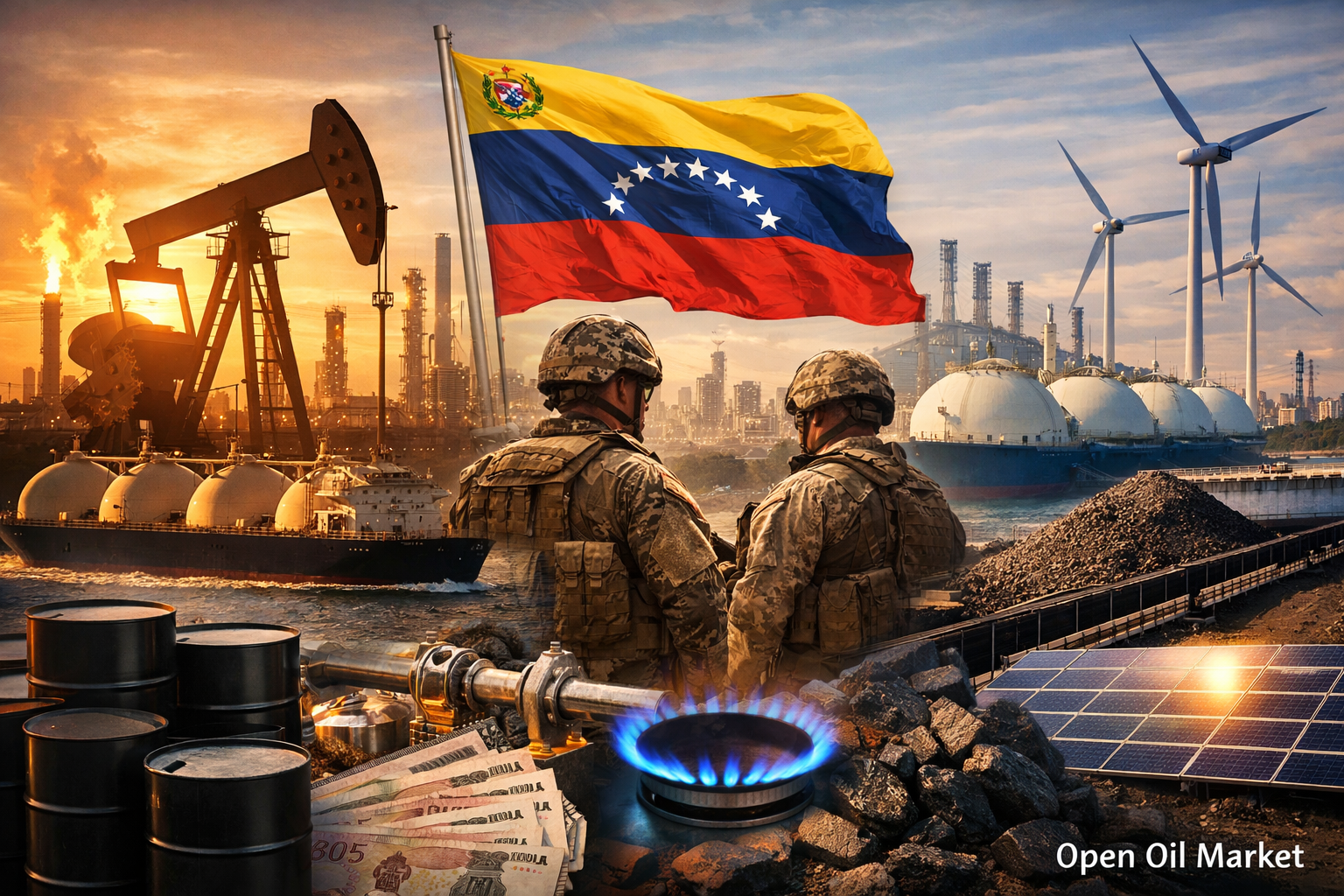
Two major political events have emerged at the forefront of the global energy sector. Firstly, Venezuela is facing an unprecedented crisis: on January 3, the United States announced the detention of President Nicolás Maduro and the intent to effectively take over the management of the country until a transitional government is formed. U.S. President Donald Trump stated that he would engage American oil companies to restore Venezuela's dilapidated oil infrastructure and increase production. Investors reacted to these moves without panic: although Venezuela possesses the largest oil reserves in the world, its current production is minimal, and even with an influx of investments, growth in supply will take years. Secondly, within OPEC+ itself, disagreements have surfaced among key participants: Saudi Arabia and the UAE entered into a sharp conflict over the situation in Yemen, leading to the most serious split among allies in decades. However, the January meeting of the eight OPEC+ countries concluded without drama – participants unanimously supported maintaining current production quotas, demonstrating commitment to a common strategy for market stability.
Asia: India and China – Balancing Imports and Domestic Production
-
India: In its efforts to secure energy security, India continues to actively procure available energy resources from abroad. Russian oil and oil products remain key to the Indian market due to substantial discounts (about $5 off the Brent price), which helps keep domestic fuel prices in check. At the same time, the country is trying to increase its own production, but large-scale projects (for instance, deepwater exploration started in 2025) are progressing slowly due to a lack of investment and technology. The Modi government is committed to diversifying the energy balance: renewable energy is being developed, and petroleum refining capacities are being expanded to gradually reduce dependence on imports.
-
China: In 2025, China imported record volumes of oil and natural gas, comparable to the levels of the previous year, actively taking advantage of discounts on raw materials from Russia, Iran, and Venezuela to replenish its strategic reserves. Domestic oil and gas production in the country also saw a slight increase (about 1–2%), but it is insufficient: China's economy still relies on imports for about 70% of its oil consumption and up to 40% of its gas. Beijing is investing significant resources in exploring new fields, enhancing oil recovery technologies, and accelerating the development of renewable energy projects; however, even with these efforts, in the coming years, China, like India, will remain one of the largest global importers of traditional energy resources.
Energy Transition: Growth in Renewable Energy Accelerates, but Traditional Generation Remains Vital
The global shift to clean energy is noticeably accelerating. Many countries set new records in 2025 for power generation from renewable sources (RES) – solar and wind power plants. In Europe, total generation from solar and wind sources exceeded output from coal and gas-fired plants once again, reinforcing the trend toward gradually phasing out coal. The largest energy companies in the world are announcing large investments in "green" projects – from offshore wind farms to energy storage systems – aiming to meet tightening environmental regulations. However, as the share of RES grows, so does the burden on infrastructure: energy systems must adapt to unstable outputs. Countries maintain a reserve of traditional generation – gas, coal, and nuclear power plants continue to provide base load and network balancing. Experts expect continued active construction of both renewable capacities and energy storage systems in the coming years to ensure that the energy transition does not compromise the reliability of energy supply.
Coal: Demand Remains High Despite Decarbonization Efforts
Despite efforts to reduce carbon emissions, global coal demand remains high – primarily due to Asian countries. In 2025, worldwide coal consumption approached record levels as China and India continued to rely on this fuel resource to meet growing electricity needs. International coal prices have stabilized following the peaks of 2022, while several developed countries have reduced its use due to increased generation from RES. Nevertheless, in the near term, coal will remain a significant part of the global energy balance, especially in regions where alternative energy sources are not sufficiently developed.
Russian Oil Product Market: Government Regulation Stabilizes Prices
In Russia, following last year's fuel crisis, authorities continue manual regulation to stabilize prices. The government has extended a ban on gasoline exports and restrictions on diesel exports introduced in the fall of 2025, which, along with sales of fuel from reserves, has helped saturate the domestic market – the deficit has been eliminated even in remote regions by January 2026. Wholesale prices for oil products have stabilized, and at the end of the year, a first decline in retail gasoline prices in a long time was noted – a testament to the effectiveness of the measures taken. Market control will be maintained to prevent new spikes: a mechanism for floating export duties and compensation for refiners ("safety net") is being discussed. Representatives of the Ministry of Energy have suggested a gradual lifting of restrictions in the second half of 2026, provided stability is maintained, but recent experience has shown that the government is ready to intervene promptly to protect the domestic market if necessary.
Telegram Channel OPEN OIL MARKET – Daily Analytics on the FEC Market
To stay updated on the most important events and trends in the global oil, gas, and energy industry, subscribe to our Telegram channel OPEN OIL MARKET. Daily operational analytics, exclusive reviews, and insider information on the oil, gas, electricity, and other raw material markets are published there. Join us to be the first to receive fresh news from the FEC and stay a step ahead in understanding global energy markets.