Oil and Gas News for Sunday, July 19, 2026: Geopolitical Premium in Oil, Risks in the Strait of Hormuz and Red Sea, Tension in the LNG Market, Fuel Product Shortages, Refining Margins, Electricity, Renewables, and Coal in the Global Energy Landscape
The global fuel and energy complex is entering a phase of heightened volatility on Sunday, July 19, 2026. The primary concern for investors, market participants in the energy sector, oil companies, fuel operators, refineries, and traders is not only the price of oil but also the resilience of the entire supply chain: extraction, maritime logistics, processing, product exports, the gas market, electricity, coal, and renewables.
Following renewed escalation regarding Iran, the market is once again factoring in a risk premium for Brent and WTI prices. Shipping constraints through the Strait of Hormuz, potential threats in the Red Sea, tension in the diesel and gasoline markets, rising refining margins, and high competition for LNG are creating a complex backdrop for the global energy sector. For investors, this implies that the commodity market is no longer a linear story of supply and demand — access to shipping routes, refinery capacities, and supply chain insurance has become a critical factor.
Oil: Brent and WTI Receive Geopolitical Premium Again
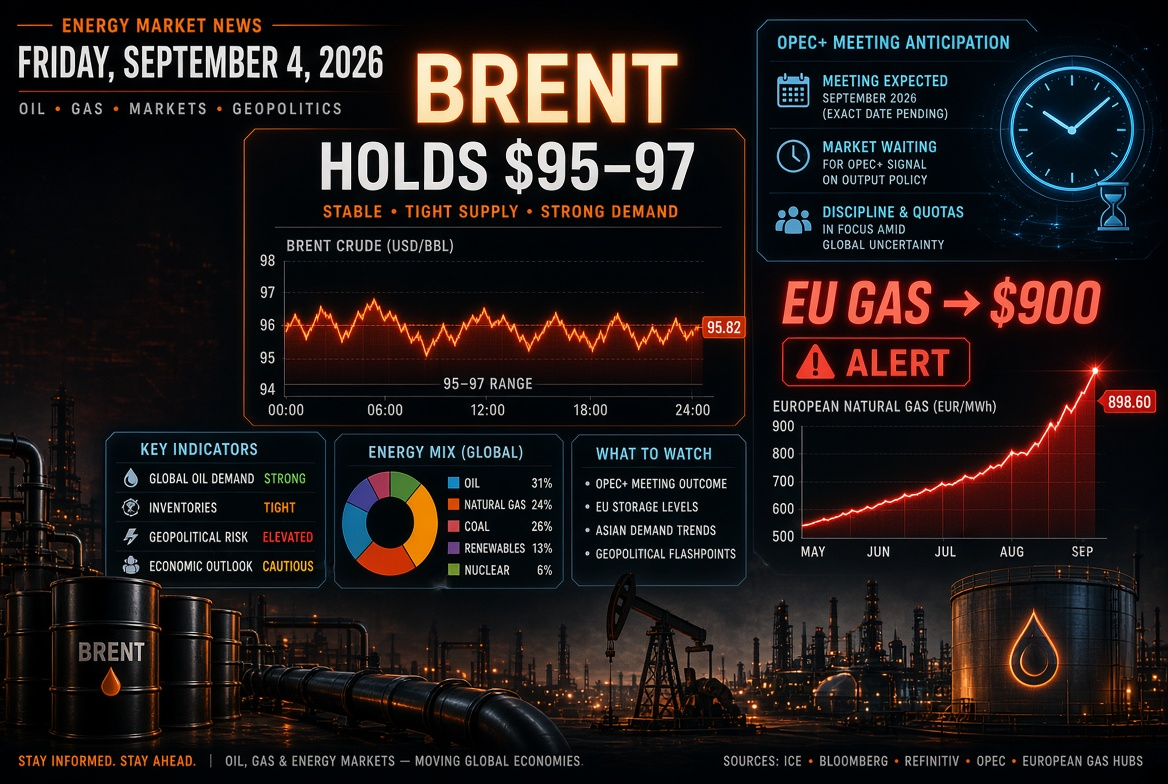
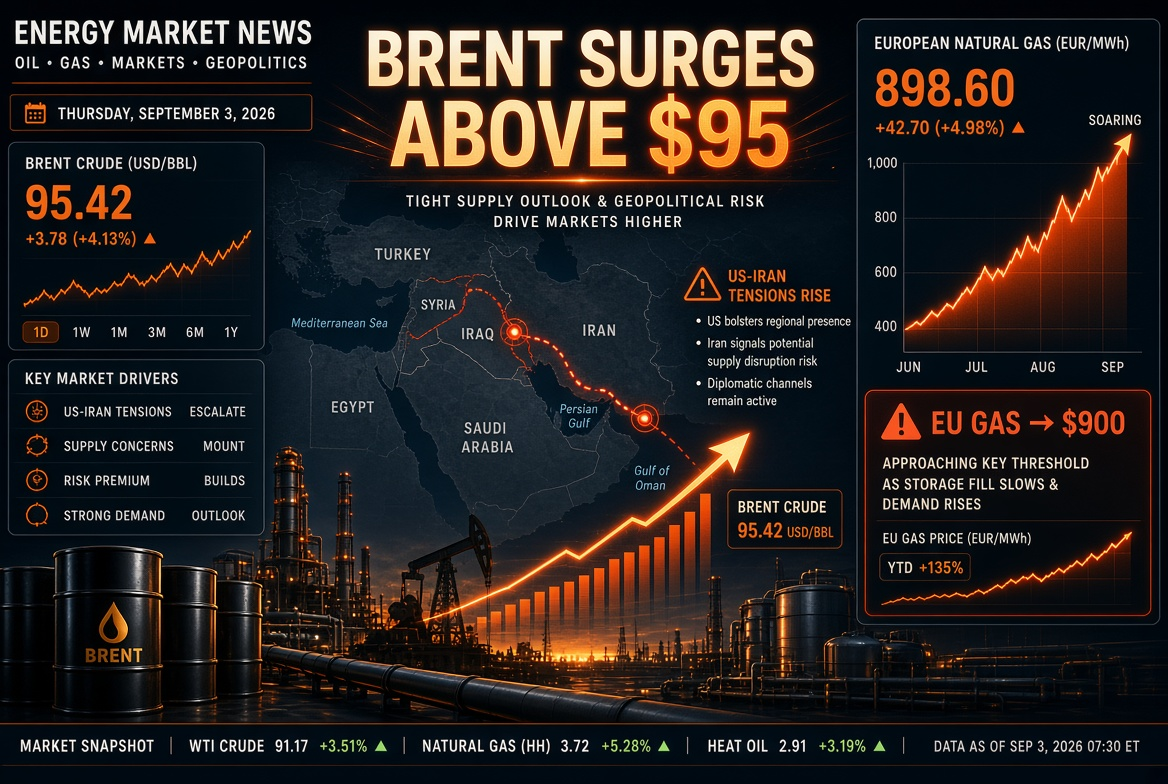
By the end of the week, the oil market had shifted dramatically. Brent climbed to above $88 per barrel, while WTI surpassed $82 per barrel. This rise was driven not so much by a classic shortage of crude but by fears that limited transit through the Strait of Hormuz could again impact exports from the Persian Gulf.
For oil companies and traders, three factors are crucial:
- Shipping risk — tankers, insurance rates, and freights are becoming significant price drivers;
- Alternative routes — pipelines bypassing Hormuz are gaining a strategic premium;
- Stocks and reserves — the market is closely evaluating how long consuming countries are willing to offset disruptions from reserves.
Oil remains sensitive to any news from the Persian Gulf, the Red Sea, and Middle Eastern infrastructure. If the conflict extends, Brent may secure a foothold in a higher range. Conversely, should logistics stabilize, part of the risk premium could quickly dissipate from pricing.
Hormuz and the Red Sea: Logistics Become the Main Asset in Energy
The key lesson from July for the global energy sector is that it’s not only the barrels in the ground that matter but also the routes by which these barrels can reach the market. Prior to the conflict, a significant share of global oil and LNG supplies traversed Hormuz. Now, investors are assessing not just extraction assets but also companies' ability to control export infrastructure.
Against this backdrop, interest is growing in projects that allow for the circumvention of bottlenecks in global energy logistics. Iraq, the United States, and Western oil companies are discussing new agreements on oil fields and pipelines, including routes that could reduce dependence on the Strait of Hormuz. For the market, this signals a long-term trend: infrastructure is becoming just as critical as extraction.
Fuel Products and Refineries: Shortages Shift from Oil to Gasoline and Diesel
The most acute issue in the energy agenda pertains to fuel products. The global market may appear sufficiently stocked with crude oil, but there is a deficit of gasoline, diesel, and aviation fuel. The reasons include processing limitations, disruptions at Middle Eastern export refineries, reductions in Russian refining capacity, and low fuel stocks in the United States and Europe.
For refineries, the current situation looks favorable: refining margins are at extremely high levels. However, for end consumers, transportation companies, the agriculture sector, and industries, this means increased costs. The diesel market remains particularly sensitive as it is directly tied to logistics, agriculture, construction, and industrial production.
Key Consequences for Fuel Companies
- The cost of working capital rises due to expensive fuel product inventories.
- Competition intensifies for stable supplies of gasoline, diesel, and jet fuel.
- The premium is awarded not just for crude extraction but also for access to refining, storage, and distribution.
Gas and LNG: Europe Balances Sanctions, Prices, and Competition for Shipments
The gas market remains the second key direction for energy investors. European gas prices have surged amid concerns over LNG supplies, summer electricity demand, and political discussions surrounding Russian energy resources. Of particular interest is the discourse on a new package of EU sanctions, including restrictions on transactions involving Russian LNG.
For Europe, the dilemma is complex: increased sanctions should reduce Russia's revenues, but overly harsh restrictions might hand over part of the market to competitors from the U.S., China, Japan, and others. Greece, one of the largest players in global LNG shipping, has already highlighted risks for European businesses and shipping.
For the global LNG market, this means maintaining high competition between Europe and Asia. Any heat wave in the U.S., disruptions at export terminals, or increased demand in Asia could swiftly alter the balance and push gas prices higher.
China: Oil Demand Restructures Under Transportation Electrification
China remains a pivotal question for the global oil market. Oil imports into the country have significantly decreased compared to the average levels of recent years. Part of the decline is attributed to stockpiles, part to a weaker economy, but a growing structural factor is becoming important: transportation electrification.
The share of electric vehicles and hybrids in new car sales in China has reached record levels. This shifts the long-term demand model for gasoline and diesel. Should electrification of freight transportation accelerate, oil companies may face a faster decline in demand for traditional fuels than previously anticipated.
For investors, this is an important signal: China is no longer simply the largest oil importer but also a significant uncertainty factor for future oil demand.
Electricity: Gas Generation and Data Centers Become Demand Drivers
The electricity sector is increasingly intertwined with the oil and gas market. The rising consumption from data centers, artificial intelligence, industry, and air conditioning is boosting demand for reliable generation. In the U.S. and Europe, gas power plants are regaining investment interest as energy systems require capacity that can operate independently of weather conditions.
For gas companies, this opens a new niche: supplying fuel not only to the municipal sector but also to large tech consumers. Deals centered on "energy close to data centers" are becoming part of a new architecture in the energy sector. Oil and gas companies are increasingly viewing electricity as an extension of their business rather than a separate market.
Renewables and Coal: Energy Transition Continues, but Supply Security Is a Priority Again
Renewable energy continues to increase its share in the global energy balance. Solar and wind generation remain the fastest-growing sources of new capacity, especially where large consumers sign long-term power purchase agreements. However, events in 2026 indicate that the energy transition does not negate the need for reserve capacity.
Coal retains significance in Asia, where energy security and industrial growth often take precedence over accelerated abandonment of traditional generation. Vietnam and several other developing economies consider coal capacity as insurance in the face of expensive LNG and unstable logistics. For investors, this means that the coal sector remains a politically contentious yet economically significant element of the energy balance.
What Matters to Investors and Energy Market Participants
As of Sunday, July 19, 2026, the global market for oil, gas, electricity, renewables, coal, fuel products, and refineries has entered a phase where commodity prices are determined not solely by extraction but by the resilience of the entire supply system. Key focal points for the coming days include:
- Dynamics of Brent and WTI after the rise of the geopolitical premium;
- The situation in the Strait of Hormuz and risks for the Red Sea;
- Stocks of gasoline, diesel, and jet fuel in the U.S., Europe, and Asia;
- Refining margins and the availability of processing capacities;
- EU policies regarding Russian LNG and the impact of sanctions on LNG logistics;
- Chinese demand for oil, electric vehicles, and fuel product exports;
- Growing electricity consumption from data centers and industry;
- Balance between renewables, gas generation, and coal in developing economies.
For oil companies and fuel operators, gaining control over logistics, processing, and end customers is becoming a key advantage. For energy investors, companies with diversified assets in extraction, gas, LNG, refineries, fuel products, infrastructure, electricity, and stable cash flows remain the most attractive. In an environment of new energy volatility, it is not merely those who extract resources that win but those capable of delivering them to consumers at the right moment and at a predictable price.