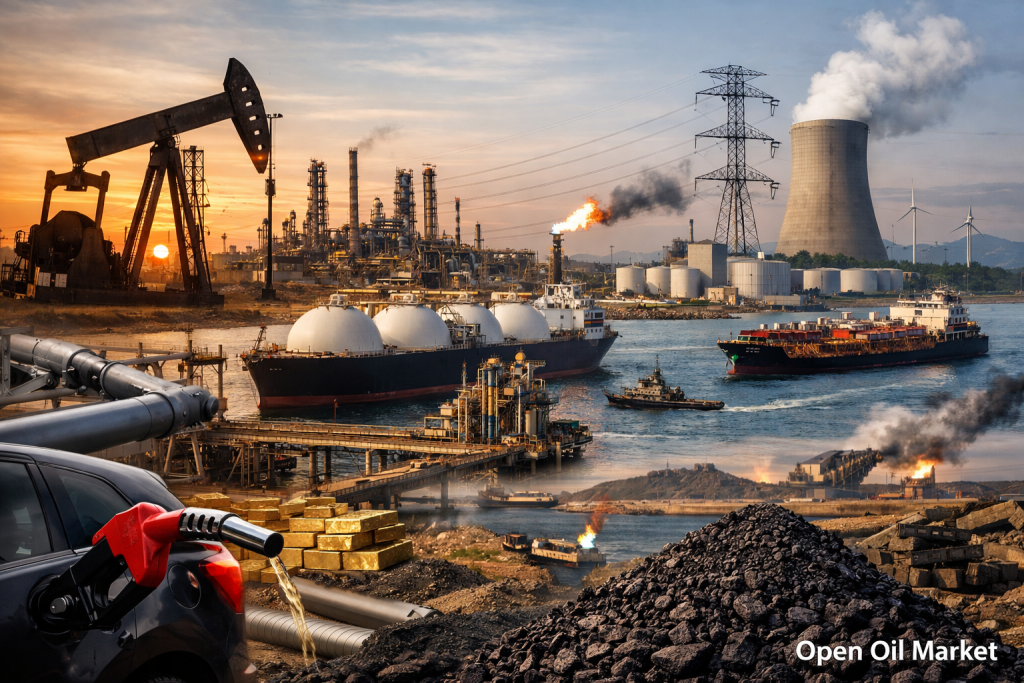
Current Energy Sector News as of September 23, 2025: Stability in Oil and Gas Prices, Surge in Imports from India and China, Renewable Energy Milestones, High Demand for Coal, and Fuel Market Stabilization Measures in Russia. A Comprehensive Review for Investors and Energy Sector Participants.
The latest events in the fuel and energy sector as of September 23, 2025, showcase a simultaneous stabilization of commodity markets amidst persistent geopolitical pressures. Western countries are preparing further restrictions against the Russian energy sector, maintaining a stringent sanctions regime without visible easing. Meanwhile, the global oil market remains relatively calm: an oversupply coupled with moderate demand keeps Brent prices around the upper $60 per barrel. The European gas market is well-prepared for autumn, with underground gas storage facilities nearly full (over 90% of capacity), ensuring a high level of energy security and keeping prices at a moderate level.
At the same time, the largest economies in Asia—China and India—continue to actively ramp up purchases of oil, gas, and coal, upholding their energy security strategies in the face of external pressures. The global transition to clean energy is accelerating: many countries are reporting record generation from renewable sources, although traditional fuels are still employed to ensure the reliability of energy systems. In Russia, following a recent spike in gasoline prices, authorities are extending and strengthening measures to stabilize the domestic market—from correcting the damping mechanism to prolonging temporary restrictions on the export of petroleum products. Below is a detailed overview of key news and trends in the oil, gas, energy, and commodities sectors as of the current date.
Oil Market: Stable Prices amid Oversupply and Weak Demand
As September comes to a close, global oil prices show restrained dynamics after summer fluctuations. The benchmark Brent trades around $66–68 per barrel, while American WTI is in the range of $62–64. These levels are approximately 10% lower than prices a year ago, reflecting a gradual retreat from the peaks of the 2022–2023 energy crisis. Several fundamental factors are influencing the current situation:
- OPEC+ production is rising. The oil alliance continues to systematically increase supply in the market, gradually lifting previous restrictions. Starting in October, OPEC+ countries are permitted to produce an additional approximately 140,000 barrels per day (after an increase of around 550,000 b/d the previous month). Despite relatively low prices, key exporters are striving to reclaim lost market shares. Overall, since spring, production quotas have increased by more than 2.5 million b/d, intensifying market saturation. In mid-September, delegates at the OPEC+ technical committee meeting in Vienna discussed methods for assessing maximum production capacities—this step may anticipate future quota adjustments. A full ministerial meeting of the alliance is set for October 5, where the question of maintaining current production growth rates will be addressed.
- Weak demand and rising inventories. Global oil consumption is increasing noticeably slower than in previous years. The International Energy Agency (IEA) forecasts that in 2025, global demand will rise by less than 1 million barrels per day (compared to a growth of over 2.5 million the previous year). OPEC also anticipates a modest increase in consumption of around 1.2 million b/d. This slowdown is attributed to the global economic deceleration (notably the decline in industrial growth in China) and the effect of high prices in previous years that stimulated energy conservation. Additionally, high inflation and stringent monetary policies in several countries are suppressing demand. Simultaneously, commercial inventories outside OPEC are rising: for example, in the U.S., an unexpected increase in oil reserves was recorded in September, signaling a burgeoning surplus. American companies are maintaining production near record levels (approximately 13 million b/d), and U.S. authorities are not rushing to replenish strategic reserves to avoid creating additional demand. Other non-OPEC producers, from Brazil and Canada to various African nations, are also increasing production. Saudi Arabia, following the high domestic consumption period in the summer, sharply increased raw oil exports, reclaiming its market share.
- Geopolitics and finance. The sanctions standoff between Russia and the West continues to elevate levels of uncertainty: oil prices carry a certain "risk premium" accounting for potential supply disruptions. At the same time, some diplomatic contacts (such as the summer summit of Russian and U.S. leaders in Alaska) maintain hope for a gradual easing of tensions, which mitigates a sharp price surge. On financial markets, central bank policies play a significant role: in September, the U.S. Federal Reserve lowered the key rate by 0.25 percentage points for the first time in a year, due to economic slowdown. This resulted in a slight weakening of the dollar, temporarily supporting commodity prices, including oil. However, concerns over excess supply and sluggish demand outweigh these factors, preventing oil prices from entering a sustainable rally.
Collectively, these factors keep the oil market in a state close to surplus. Prices fluctuate within a narrow range, lacking any preconditions for either rapid growth or a significant drop. Many analysts believe that if current trends persist, oil will remain relatively cheap: by 2026, the average price of Brent may fall closer to $55 per barrel. However, market participants are factoring in risks of unforeseen shocks—such as escalations of conflicts in the Middle East or natural disasters capable of disrupting production. For now, the oversupply and cautious demand compel oil companies and investors to act prudently.
Gas Market: Full Storage Facilities and Comfortable Prices in Europe
The main focus in the gas market remains on Europe, which is confidently preparing for the winter season. EU countries rapidly filled underground gas storage facilities throughout the summer, and by the end of September, total stocks surpassed 92–95% of storage capacity—significantly above the intermediate target levels. Near-full gas reserves provide the European energy system with a substantial buffer ahead of the heating season. As a result, exchange prices are maintained at relatively low levels: futures prices at the Dutch TTF hub are around €30 per MWh (about $380 per 1000 cubic meters), significantly lower than the peaks of the past winter. This pricing plateau indicates that the balance of supply and demand in the European market has stabilized by autumn.
Additionally, record imports of liquefied natural gas (LNG) from various regions have further contributed to price stability. Following the turbulence of 2022–2023, European importers diversified their supply sources: significant volumes of LNG are coming from the U.S., Qatar, African countries, and continue to indirectly arrive from Russia through intermediaries. In summer 2025, the EU took advantage of relatively low spot prices and decreased competition from Asia to increase LNG purchases—terminals operated at record capacity during a lull in Asian demand. These steps allowed for accumulated additional gas volumes, ensuring a winter with no signs of shortages. As the heating season approaches, the European gas market appears resilient, and current price levels are comfortable for consumers and industry.
However, experts warn that the favorable situation is not guaranteed for the entire winter. In the event of extremely cold weather or unforeseen interruptions in LNG imports, the pricing situation could change. Europe remains dependent on external fuel supplies: domestic production within the EU is steadily declining, and pipeline supplies of Russian gas have been minimized due to sanctions and geopolitical factors. Nevertheless, accumulated reserves, LNG import diversification, and energy conservation measures provide grounds to believe that even in adverse scenarios, acute shortages can be avoided. EU regulators are also working on new initiatives—from extending the mechanism for joint gas purchases to accelerating the development of renewable energy—to strengthen energy security and reduce price volatility in the future.
International Politics: Intensifying Sanctions Standoff
The geopolitical situation surrounding the energy sector remains tense. Despite summer signals of willingness for dialogue, no significant breakthroughs have occurred. On the contrary, by September, Western allies are only increasing their sanctions pressure on Moscow. The United States is considering new restrictions against the Russian energy sector—including sanctions against major oil and LNG exporters, as well as foreign companies aiding in circumventing existing restrictions. The European Union, having postponed the introduction of the 19th sanctions package (originally expected to be announced on September 17), intends to refine measures in conjunction with G7 partners. According to European media reports, the European Commission may propose a new package by the end of September or early October. It is expected to target Russian oil and gas companies and banks, as well as, for the first time, third countries: foreign oil refineries in India and China processing Russian oil, effectively bypassing established sanctions, may be affected. At the same time, it has become known that no new direct restrictions on importing Russian oil into the EU are planned—several countries in the bloc (including Hungary) vehemently oppose moves that may undermine their energy security.
For its part, Moscow is attempting to adapt to the realities of sanctions. Russian oil and gas exports are rapidly being reoriented from Europe to Asia and the Middle East. Shipments of raw materials are increasing primarily to India, China, Turkey, and several African countries—often at substantial discounts to global prices in order to retain market share. According to authorities, despite sanctions, revenues to the Russian budget from oil and gas exports remain acceptable due to relatively high raw material prices and the weak ruble. However, restrictions are noticeably affecting the long-term prospects for the industry: access to modern technologies and equipment for developing hard-to-reach fields is limited, and foreign investors are reducing their participation in new projects. This creates risks of slowing technological development in the Russian energy sector in the future.
An additional source of uncertainty is the heightened threats to energy infrastructure. In recent weeks, there has been an increase in drone attacks on Russian energy sector facilities. For instance, on the night of September 18, a large petrochemical plant in Bashkortostan was attacked by drones, igniting a fire; days earlier, drone strikes were carried out on refineries in Leningrad and Saratov regions. While air defense intercepts most drones, the mere occurrence of such incidents heightens market nerves and compels authorities to prioritize the protection of energy facilities. Overall, the sanctions conflict and associated risks remain key sources of uncertainty for global energy. Markets are pricing in a protracted standoff, and energy companies consider these threats in their planning. Even brief pauses in escalation—such as delays in new sanctions or targeted diplomatic agreements—can temporarily improve sentiment, but serious prerequisites for de-escalation do not appear to be in sight.
Asia: India and China Increase Imports and Domestic Production
Asian giants continue to play a pivotal role in global energy resource markets, compensating for decreased demand in the West. India and China are simultaneously ramping up hydrocarbon purchases and developing domestic production, aiming to meet the needs of their economies and insulate themselves from external shocks. Their policies combine a pragmatic approach to supplier selection with significant investments in domestic energy production, noticeably impacting global flows of oil, gas, and coal.
- India. Despite pressure from the U.S. and Europe, New Delhi clearly indicates that it does not intend to sharply reduce purchases of Russian hydrocarbons. Russia remains one of the largest oil suppliers to the Indian market, providing a significant share of consumption. According to traders, Indian refineries continue to actively purchase Russian Urals oil at a discount of about $4–5 to Brent prices, helping to contain raw material costs. As a result, India is not only maintaining a high level of Russian oil imports but is also increasing the import of petroleum products from Russia (for example, diesel) to meet domestic demand. At the same time, the government is accelerating programs to reduce dependence on imports in the strategic long-term perspective: significant investments are being made in developing domestic oil and gas production. For instance, in August, Prime Minister Narendra Modi announced the launch of an extensive deepwater exploration program—the state corporation ONGC has already commenced drilling ultra-deep wells in the Andaman Sea in hopes of uncovering new reserves. These steps aim to gradually enhance India's energy self-sufficiency, although in the coming years the country will still remain approximately 80% dependent on oil imports and 40% on gas.
- China. The world’s second-largest economy is increasing imports of energy resources while simultaneously investing in boosting domestic production. Beijing has not joined sanctions against Moscow and is leveraging the situation to purchase Russian oil and gas on favorable terms. Official data indicates that in 2024, China imported over 212 million tons of oil and around 246 billion cubic meters of natural gas, surpassing previous year levels. In 2025, import growth continues, although at a slightly slower pace due to the high base. Concurrently, Chinese oil and gas corporations are achieving record production levels: over the first eight months of 2025, approximately 145 million tons of oil (+1.5% year-on-year) and 175 billion cubic meters of gas (+5% year-on-year) were extracted in China. Domestic production covers only a portion of rising demand; thus, China remains dependent on imports for about 70% of consumed oil and 40% of gas. To bolster long-term energy security, Beijing is expanding cooperation with Moscow. Purchases of pipeline gas via the “Power of Siberia” have already been increased, and key parameters for the future Power of Siberia-2 gas pipeline have been agreed upon, which will significantly boost Russian gas exports to China in the coming years. It is noteworthy that China is willing to ignore external restrictions for its own interests: in recent months, Chinese companies have purchased several cargoes of liquefied gas from the new Arctic LNG-2 project, despite U.S. sanctions against it. A separate terminal for receiving this fuel has been designated in the Beihai port, used exclusively for Russian LNG—this scheme minimizes sanction risks. Thus, both India and China demonstrate a willingness to secure energy on their own terms, even if it runs counter to Western positions. Their activity remains a driving force for global demand for hydrocarbons and the redistribution of trade flows.
Energy Transition: Records in Renewable Energy and the Role of Traditional Resources
The global transition to low-carbon energy in 2025 is entering a new phase. In various regions of the world, record levels of capacity being installed and electricity generation from renewable sources—primarily solar and wind—are being achieved. In 2024, total generation from solar and wind power plants in EU countries for the first time exceeded generation from coal and gas-fired power plants. This trend continues in 2025: thanks to the aggressive construction of new solar parks and wind farms, the share of "green" electricity in the EU continues to rise, at times exceeding 50% of consumption. Renewable energy has also reached a record share of over 30% in the electricity generation mix in the U.S., with total generation from wind and solar already surpassing that from coal-fired power plants. China, the global leader in installed renewable energy capacity, annually brings dozens of gigawatts of new solar and wind power plants online, continually breaking records in "green" generation.
Investors and energy companies are increasing their investments in low-carbon projects. According to IEA estimates, total investments in the global energy sector will exceed $3 trillion in 2025, with more than half directed toward renewable projects, power grid modernization, and energy storage systems. Traditional oil and gas powers in the Middle East are also starting to invest in solar and wind power plants, preparing for a gradual decline in demand for fossil fuels. Simultaneously, major oil and gas companies are diversifying their businesses: they are setting up divisions for the production of "green" hydrogen and biofuels, and launching carbon capture and storage (CCS) projects. These steps are driven by societal and investor demands for decarbonizing the economy.
However, the rapid growth of the share of renewable energy presents new challenges for energy systems. As solar and wind generation increases, variability in generation rises—reserve capacity is required on windless days and night hours. Many countries still rely on traditional sources—gas, coal, and nuclear plants—to balance loads and ensure reliable supply during peak periods. Active construction of energy storage systems (such as industrial battery farms and pumped storage hydropower stations) and the implementation of smart grids designed to enhance the flexibility of energy supply are underway. Experts project that by 2026–2027, total generation from renewable sources may rank first globally, finally surpassing coal in terms of electricity output. Nevertheless, in the coming years, traditional resources—natural gas, coal, and nuclear energy—will continue to play a critical role as a "safety net" for the stability of energy systems. This current phase of the energy transition is about finding an optimal balance, where "green" energy is achieving record growth while classic hydrocarbons remain necessary for reliable demand coverage.
Coal: High Demand in Asia Supports Market Stability
Despite the climate agenda, the global coal market is operating at historically high consumption levels in 2025. Global demand for coal remains close to record levels from 2022–2023, primarily driven by Asian countries. China continues to be the largest producer and consumer of coal: over 4 billion tons are extracted annually, with almost all being burned in Chinese power plants. During peak demand periods (such as summer heat and the rise in air conditioning usage), even these colossal volumes are sometimes insufficient—Beijing ramp up coal imports to prevent electricity shortages. India generates approximately 70% of its electricity from coal-based power plants, and absolute consumption continues to rise with the economy’s development. Major developing countries in Southeast Asia (Indonesia, Vietnam, Thailand, and others) are also commissioning new coal-fired power plants to meet the rising electricity demand.
Key coal-exporting countries—Indonesia, Australia, Russia, South Africa, and several others—have ramped up production and deliveries in recent years, capitalizing on the period of high prices. After price peaks in 2021–2022, global prices for thermal coal have stabilized at moderate levels. For example, Australian thermal coal is trading at $130–150 per ton—significantly lower than the extremes of two years ago but still above the average levels of the previous decade. This price range remains advantageous for coal mining companies and acceptable for electricity consumers. While many countries announce plans to gradually reduce coal usage in line with climate commitments, this resource remains irreplaceable for reliable energy supply for hundreds of millions of people in the short term. Even in Europe, where decarbonization is proclaimed a priority, authorities are compelled to keep some coal plants on standby; for instance, Germany, Poland, and other countries retain certain coal plants in reserve to counter gas supply interruptions or insufficient "green" generation. Thus, the global coal sector currently finds itself in a state of relative equilibrium: demand remains consistently high thanks to Asia, supply is sufficient, and prices are predictable. In the long term, the share of coal in the energy balance will gradually decline as climate policies strengthen, but in the coming years, coal will maintain a significant role, serving as a safeguard for energy security during peak loads and price shocks in the gas market.
Russian Fuel Market: Continuation of Emergency Stabilization Measures
A crisis erupted in the Russian domestic fuel market in late summer to early autumn, triggered by a sharp spike in petroleum product prices. In August, wholesale exchange prices for gasoline and diesel reached historical highs, which soon reflected on retail prices. By mid-September, the price of AI-95 gasoline at the St. Petersburg International Commodity and Raw Materials Exchange climbed to a record 73,000 rubles per ton, even exceeding August peaks; diesel fuel also saw rapid increases. This price surge was due to a combination of factors:
- Seasonal demand and the agricultural sector. The summer period is traditionally characterized by increased fuel consumption. In 2025, the peak in car trips and large-scale harvesting campaigns in agriculture led to a rise in demand for gasoline and diesel. These seasonal factors coincided with the depletion of stocks among independent fuel traders, exacerbating market tension and triggering panic buying.
- Repairs and emergencies at refineries. Over the summer, several large oil refineries underwent planned and unplanned maintenance, reducing fuel output. Adding to the situation were extraordinary incidents: on September 14, a drone attack on the Kirishi Oil Refinery in the Leningrad region was thwarted—fire disabled a key unit (up to 40% of the plant's power) for several weeks, further reducing the supply of gasoline and diesel to the market.
- Lucrative exports and gaps in the damping mechanism. High export prices for petroleum products, especially diesel, incentivized oil companies to redirect products abroad at the expense of domestic supplies. At the same time, the damping mechanism failed: exchange prices for gasoline surpassed the threshold set in the tax code (approximately 66,500 rubles/ton for AI-92), causing budget compensations to oil refineries to become null and void. In other words, with such high domestic prices, selling fuel abroad became more profitable, exacerbating the shortage in the domestic market.
The government promptly responded to the fuel crisis by implementing a comprehensive set of emergency measures. As of late August, a temporary export ban on petroleum products was enacted: major oil companies are instructed to refrain from exporting gasoline and diesel until September 30, while independent traders are prohibited from doing so until October 31, 2025. Refineries were directed to prioritize saturating the domestic market—boosting supplies to problem regions (in particular, additional fuel volumes have been directed to Primorsky Krai and Crimea to eliminate local shortages). Meanwhile, authorities adjusted the damping mechanism: the maximum allowable deviation of exchange fuel prices from the base indicator at which compensations to refineries are paid was increased—essentially raising the "ceiling" for triggering damping from 10% to 20% for motor gasoline, and from 20% to 30% for diesel fuel. This will allow refiners to receive budget payouts even at higher domestic prices, reducing the incentive to send fuel for export.
The measures taken have already begun to show effects. After the price peaks of mid-August, wholesale fuel quotes have retreated by about 7–8%. However, in the second half of September, price pressure intensified again: exchange prices for gasoline and diesel began to rise once more amid still high demand and persisting temporary factors (not all refineries have completed repairs, and the export limitation alone was insufficient for full stabilization). As a result, since the beginning of the year, retail prices for motor fuels have risen over 6%, significantly outpacing inflation (approximately 4% during the same period). Nevertheless, authorities assert that the situation is under control: gas stations are supplied with necessary volumes of gasoline and diesel, and new batches from refineries are regularly arriving. It is expected that as harvesting operations conclude and all plants return to normal operations, the rate of price growth at fuel stations will slow down. The government emphasized that the resumption of petroleum product exports is only possible after the complete normalization of the domestic market and stable reductions in exchange prices. If necessary, restrictions are ready to be extended further, utilizing additional resources to keep fuel prices within acceptable limits and to prevent shortages of gasoline and diesel in autumn 2025.