Oil Market: Brent Between $84 and $87 Amid Attacks on Tankers
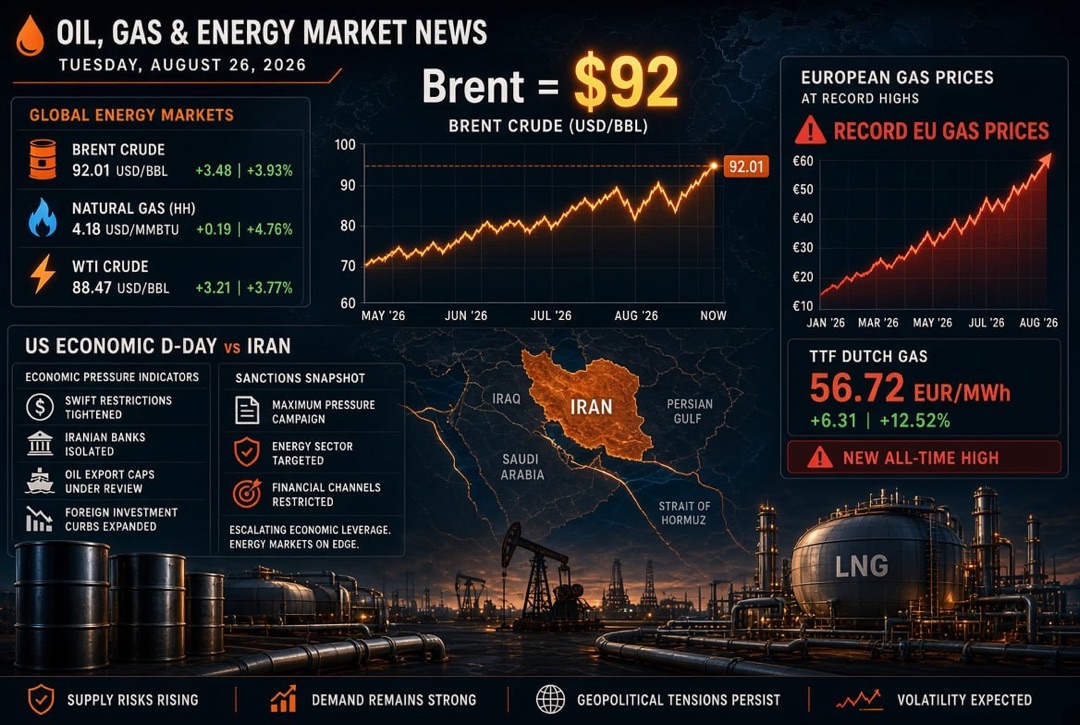
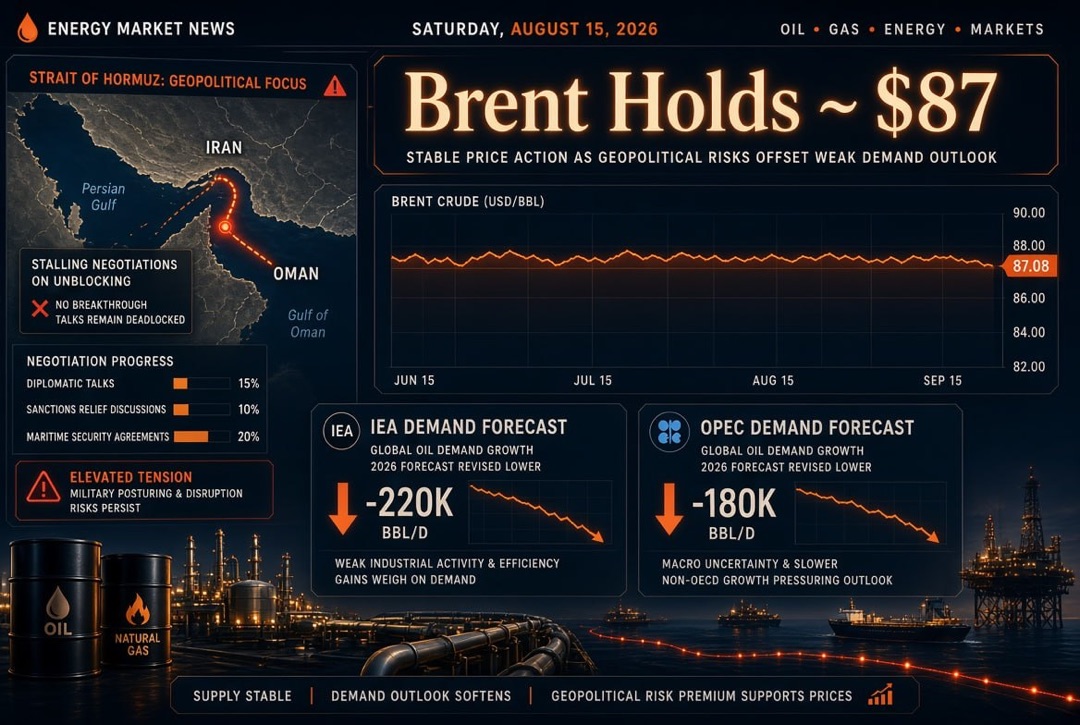
Oil prices are exhibiting heightened volatility. After plummeting nearly 5% at the beginning of the week—falling to $84 per barrel for Brent—the market rebounded on Wednesday, with September Brent futures rising above $87 and WTI trading around $82. Several events propelled this upward movement:
- Attacks on Tankers in the Strait of Hormuz: Iran's IRGC announced strikes on three oil tankers navigating "unapproved" routes. Transit between the Persian Gulf and the Gulf of Oman remains severely restricted, with parts of the route being mined.
- Strikes on Military Targets: Iran launched missile strikes on American bases in the region, while the U.S. and Saudi Arabia conducted joint operations in Iraq. Iraqi oil exports are decreasing due to shipment disruptions.
- Logistical Reevaluation: Saudi Arabia is redirecting some shipments to avoid hot spots—exports through the Suez Canal have significantly increased, while the Houthis threaten shipping in the Bab-el-Mandeb Strait.
A number of analysts do not rule out Brent reaching $100 per barrel in the event of further escalation. Counteracting factors include a slowdown in global oil demand, a strong dollar, and sell-offs in Asian stock markets.
OPEC+: The 'Seven' Completes Recovery in Production
The OPEC+ alliance, now without the UAE which left the organization in May, continues its strategy of gradual supply increases. For August, the quotas for the 'Seven' (Saudi Arabia, Russia, Iraq, Kuwait, Kazakhstan, Algeria, Oman) have been raised by 188,000 barrels per day, bringing the total target level to 36 million bpd. A decision is expected on August 2 to approve the final step—an additional 188,000 bpd for September, effectively abolishing the package of voluntary cuts of 1.65 million bpd. From February to August, the total quota has increased by approximately 940,000 bpd. However, the actual production levels of several participants significantly lag behind the allowed thresholds due to the Middle Eastern conflict, which mitigates the impact of the quota increases on market balance.
Gas Market: TTF at March Highs, EU Gas Storage Only 55% Full
The European gas market is entering an increased risk zone ahead of the heating season. TTF hub prices reached €64/MWh (approximately $750 per 1,000 cubic meters) at the end of July—the highest since mid-March. Key issues facing the EU include:
- Record Low Stocks: EU gas storage is approximately 55.3% full—its lowest for this date since 2021 (compared to 76.2% a year ago and 83.7% in 2024).
- Slow Filling Rates: Daily filling rates are 20% lower than last year; to meet the 90% target by winter, a net injection of at least 68 billion cubic meters is required.
- LNG Shortage: Daily imports of liquefied natural gas in July fell to the lowest level in 22 months as Asia bids for available volumes amid the Middle Eastern crisis and supply risks from the Persian Gulf.
- Heat and Power Demand: Extreme temperatures in Europe are increasing output from gas-fired power plants to meet air conditioning demands.
Forecasts indicate that by the onset of winter, stocks may not even reach 75%, laying the groundwork for high price volatility in the fourth quarter. Meanwhile, a new daily record for pipeline supplies of Russian gas to China has been reached in the eastern direction.