Global Oil and Gas Market Update for July 21, 2026: Oil and LNG Tankers in the Strait of Hormuz, Refineries, Oil Products, Solar Panels, and Wind Generators
The global fuel and energy sector is entering Tuesday, July 21, 2026, under conditions of high geopolitical premiums, restricted tanker movements through the Strait of Hormuz, and intensifying shortages of oil products. For investors and market participants, the key question is shifting from the availability of crude oil to the ability of global refining to ensure sufficient volumes of gasoline, diesel fuel, and jet fuel.
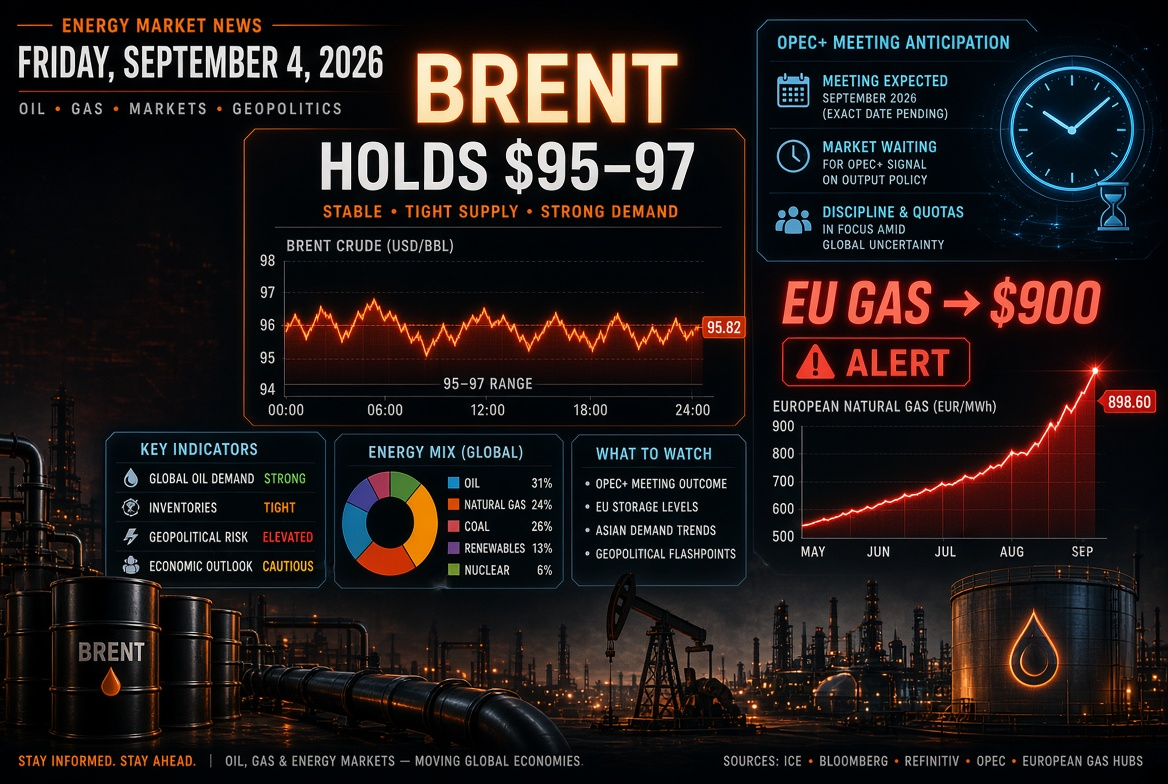
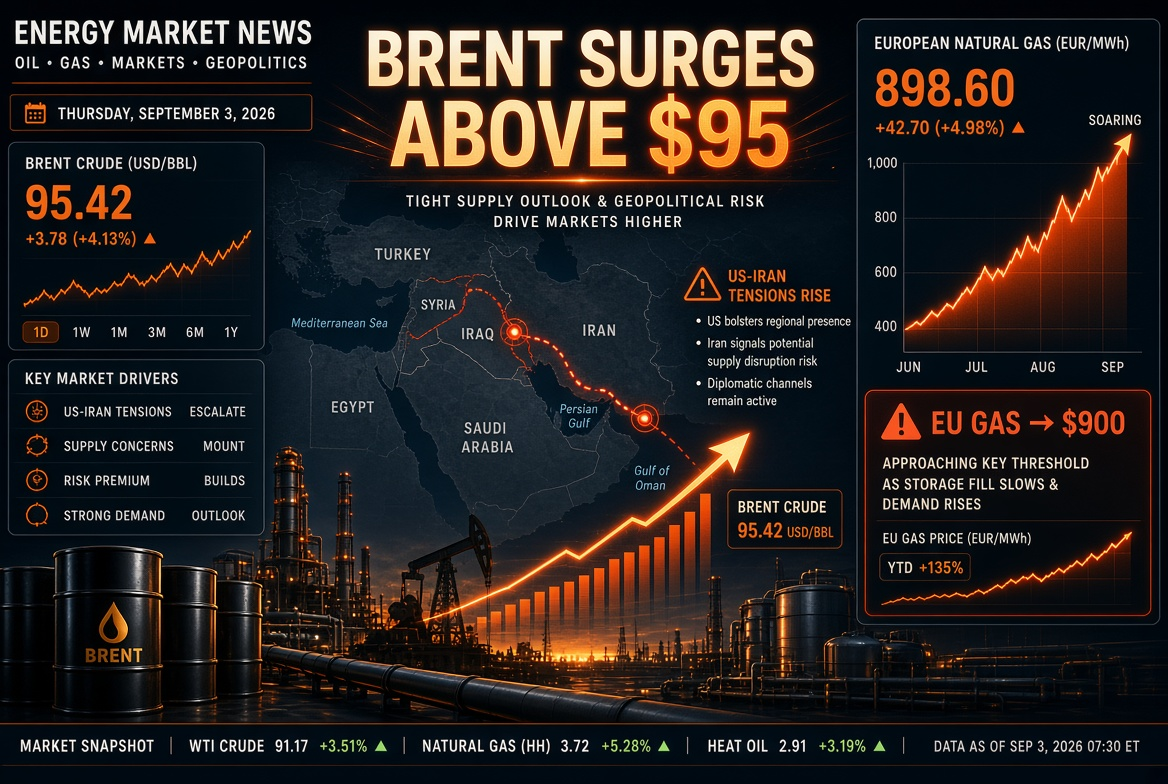
Brent oil closed Monday near $88 per barrel, while WTI hovered around $82. Intraday highs were significantly higher; however, expectations of a new diplomatic window between the US and Iran partially restrained growth. At the same time, shipping restrictions, risks to routes through the Red Sea, low fuel inventories, and the depletion of strategic reserves in the US maintain the possibility of sharp price movements.
Oil: Market Assesses Risks in the Strait of Hormuz and Red Sea
The primary factor for the oil market remains the security of supply from the Persian Gulf. On Sunday, only four vessels passed through the Strait of Hormuz, compared to eight the previous day. For a shipping route that previously served about one-fifth of global oil trade before the escalation, these figures indicate a continued physical limitation on exports.
- Brent peaked above $91 per barrel on Monday before retreating to $87.9.
- WTI reached approximately $85.4 but then returned to around $82.1.
- The Red Sea has once again become a separate source of risk following Houthi claims regarding a blockade of Saudi supplies.
- The Negotiation Factor limits growth: markets are assessing the possibility of a short-term ceasefire and restoration of shipping.
For oil companies, the current situation supports realization prices; however, it increases costs for insurance, freight, and logistics. Therefore, the rise in Brent prices does not necessarily indicate a proportional improvement in cash flow for producers, especially for companies reliant on Middle Eastern routes.
API Crude Oil Inventories in the US: Key Event of the Evening
On Tuesday at 23:30 Moscow time, the American Petroleum Institute (API) will release its weekly assessment of crude oil and petroleum product inventories in the US. The API statistics will serve as the first indicator of the American market balance before the official report from the US Energy Information Administration (EIA) on Wednesday.
Investors need to evaluate not only the change in commercial oil inventories but also four related indicators:
- crude oil inventories at the Cushing hub;
- gasoline stocks;
- distillate inventories, including diesel fuel;
- refinery utilization rates and export dynamics.
The backdrop prior to the release remains tense. The US Strategic Petroleum Reserve has decreased by another 5.1 million barrels in the last reporting week, down to 311.4 million barrels, its lowest level since 1983. Combined commercial and strategic inventories previously fell to a level not seen since 1984. A significant reduction in API stocks could amplify rises in Brent, WTI, and petroleum products, while an unexpected increase in inventories might temporarily dilute the geopolitical premium.
OPEC+ and Global Supply Balance
OPEC+ continues to cautiously increase quotas. Starting in August, targeted production levels are expected to rise by about 188,000 barrels per day. However, actual supply is determined not only by quotas but also by the ability to export raw materials from the Persian Gulf countries.
The International Energy Agency estimates the recovery of global production in June at 4.1 million barrels per day, reaching 98.8 million barrels per day. Nonetheless, supply remains approximately 9.4 million barrels per day below pre-war levels. Consequently, the OPEC+ decision to increase quotas has limited impact until shipping through the Strait of Hormuz normalizes.
The market is forming two opposing scenarios:
- De-escalation could quickly return accumulated volumes to the market and lower oil prices;
- Continuation of the Conflict would maintain a shortage of physical supplies and support the risk premium.
Refineries and Oil Products: Fuel Shortage is More Important than Crude Prices
The most strained part of the global energy market is refining. The production of gasoline, diesel, and jet fuel is recovering significantly slower than the export of crude oil. In the second quarter, global refining was approximately 5 million barrels per day lower than the year-ago level due to constraints in the Middle East, lower utilization rates in Asian refineries, and damages to Russian refining infrastructure.
Signs of oil product shortages are becoming systemic:
- gasoline and diesel inventories are close to multi-year lows;
- the margin for US refiners based on the 3-2-1 model neared $70 per barrel;
- refining margins in Northwestern Europe approached $30 per barrel;
- diesel margins in Europe reached approximately $65 per barrel;
- the average price of gasoline in the US has once again exceeded $4 per gallon.
For refining companies, high margins create growth potential for profits. Meanwhile, fuel companies, carriers, airlines, and industry face the risk of further increases in procurement costs.
Gas and LNG: Qatari Volumes Accumulate in the Gulf
The natural gas market is closely monitoring LNG supplies from Qatar and the UAE. Since Thursday, no LNG tankers have been reported passing through the Strait of Hormuz. However, production and loading have continued, leading to rising volumes of gas in floating storage within the Persian Gulf.
According to industry analysts, seven loaded Qatari tankers are holding about 0.57 million tons of LNG, while the total capacity of gas carriers in the Gulf reached approximately 1.9 million tons. Once shipping normalizes, these volumes could quickly enter the global market. Until then, Europe and Asia will compete for supplies from the US, Africa, and other available sources.
European authorities do not currently see an immediate threat to supplies during the winter of 2026–2027 but acknowledge that the pace of filling gas storage and injection costs remain sensitive to the duration of the crisis.
Electricity and Coal: Heat Supports Thermal Generation
Rising temperatures and electricity consumption are increasing demand for gas and coal power generation. In India, peak load approached 270 GW, with the government expecting to reach 280 GW within the year. Coal stocks at power plants are around 42.8 million tons, sufficient for about 14 days of operation at high load.
Coal and lignite accounted for about 69.5% of India's electricity in the second quarter and up to 75% of generation during hours when solar plants cannot meet the evening peak. This indicates that the global energy transition has yet to eliminate the need for traditional backup capacity. Demand for Asian coal companies remains supported, especially given the high cost of LNG and weak hydro generation.
Renewable Energy and Grids: Solar Generation Sets New Records
Amid the oil and gas crisis, renewable energy continues to expand. In June, solar power plants for the first time accounted for a quarter of all generation in the European Union, producing a record 52 TWh. In Germany, the share of renewables in electricity consumption during the first half of the year reached a record 58%.
However, the growth of solar and wind energy amplifies the need for investments in storage systems, inter-system connections, and controllable generation. Key investment areas in the power sector include:
- industrial battery systems;
- gas power plants for balancing;
- upgrading grid and transformer infrastructure;
- digital load management for data centers;
- long-term electricity supply contracts.
In the US, electricity consumption in 2026 may reach a record 4,269 billion kWh, primarily due to data centers, artificial intelligence, and electrification. This supports demand for natural gas, renewables, nuclear generation, and grid equipment.
What Investors Should Watch on July 21
On Tuesday, participants in the oil, gas, and energy markets should monitor several key signals:
- 23:30 Moscow time — API Oil Inventories in the US: special importance will be given to gasoline and distillates.
- Tanker Movements through Hormuz: even a minor increase in the number of passings could prompt a correction in oil and LNG prices.
- US-Iran Negotiations: confirmation of a ceasefire would reduce the geopolitical premium.
- Refinery Margins: maintaining record levels will indicate a continued shortage of oil products.
- Asia's Power Sector: heat, coal stocks, and evening peaks will influence demand for coal and LNG.
The base scenario for July 21 suggests a continuation of high volatility. Oil remains dependent on geopolitical factors; however, the most powerful fundamental signal is coming from oil products: limited refining and low stocks create a risk for rising fuel costs even with stabilization in Brent prices. For investors, the priority is to analyze the entire energy supply chain—from production and maritime logistics to refineries, electricity, coal, and renewable energy.