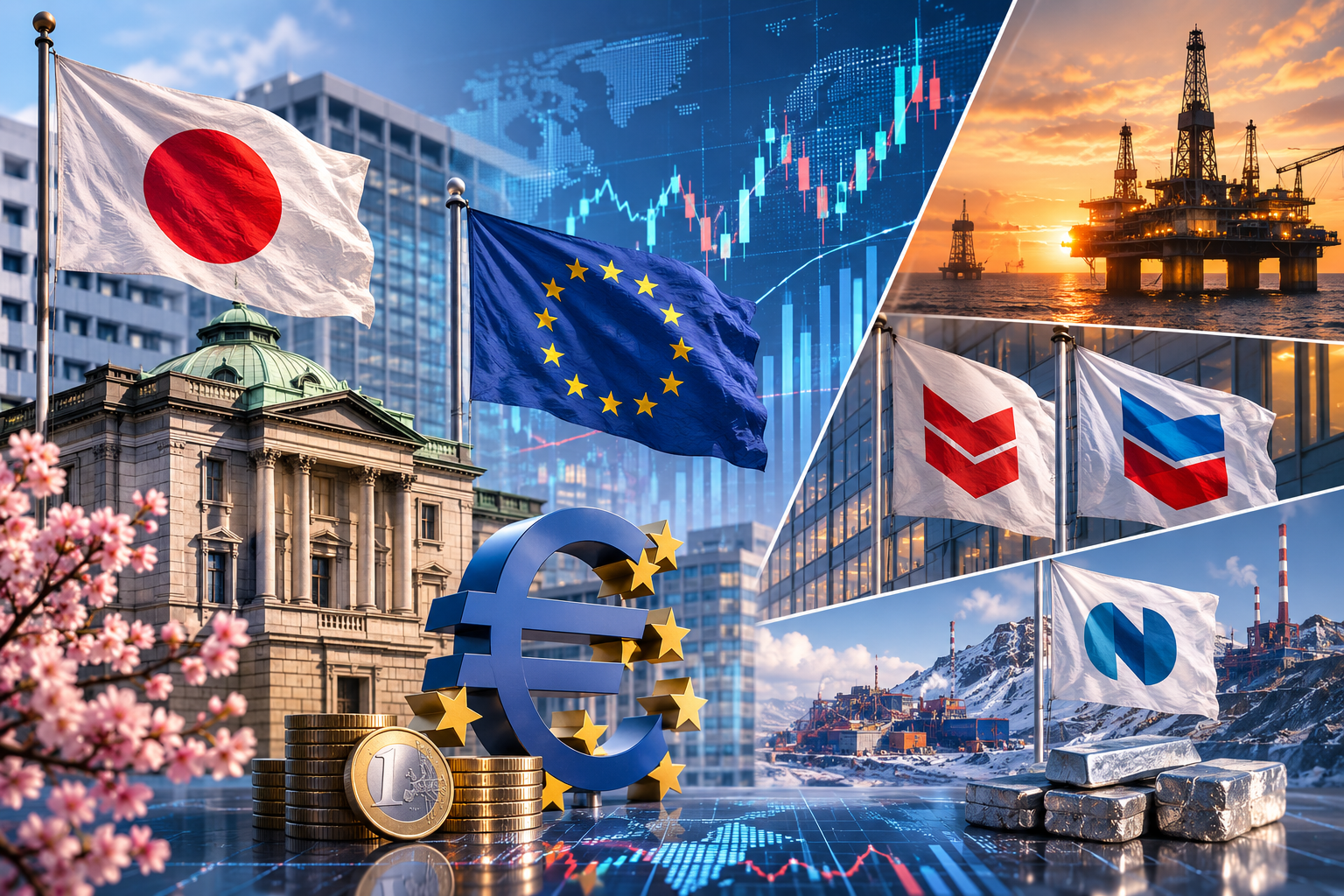
Economic Events and Corporate Reports: Friday, July 31, 2026 – Bank of Japan Decision, Eurozone Inflation, ExxonMobil, Chevron and Norilsk Nickel Reports
Friday, July 31, 2026, marks the end of one of the busiest weeks on the summer business calendar. The week has seen the Federal Reserve's meeting led by new Chair Kevin Warsh, the first estimate of U.S. GDP for the second quarter, and earnings reports from tech giants Apple, Microsoft, Meta, and Amazon. The final highlight of the week is equally significant: investors are awaiting the Bank of Japan's interest rate decision, preliminary Eurozone inflation data for July, business activity indices from China, as well as quarterly reports from oil majors ExxonMobil and Chevron. In the Russian market, the spotlight is on Norilsk Nickel's semi-annual IFRS report. The last trading day of the month is traditionally accompanied by portfolio rebalancing, which increases volatility in global equity markets.
Key Events of the Day: A Brief Overview
- The Bank of Japan's interest rate decision, updated forecast report and press conference from Kazuo Ueda.
- Preliminary estimate of consumer inflation (CPI) in the Eurozone for July.
- Official business activity (PMI) indices from China for July.
- Employment Cost Index (ECI) for Q2, Chicago PMI, and final consumer sentiment index from the University of Michigan in the U.S.
- Q2 earnings reports: ExxonMobil, Chevron, AbbVie, Linde, Colgate-Palmolive, Eaton, Sony Group, Moderna, and others.
- Publication of Norilsk Nickel's consolidated IFRS report for the first half of 2026.
Bank of Japan: Rate, Forecasts, and Yen at 40-Year Lows
The main macro event on Friday is the outcome of the Bank of Japan's two-day meeting. The consensus expects the key rate to remain at 1% per annum, but the intrigue lies in the details: along with the decision, the regulator will publish its quarterly forecast report, and Governor Kazuo Ueda will hold a press conference. The yen is hovering near a four-decade low — around 163–164 per dollar — increasing pressure on the regulator and raising risks of currency interventions. Any hint at accelerating the rate hike cycle could trigger a strengthening of the yen, a retracement of global carry trade, and a correction in the Nikkei 225 index, which is sensitive to currency factors due to the high share of exporters.
Eurozone Inflation: Testing the ECB’s Course
At 12:00 MSK, Eurostat will release the preliminary estimate of consumer price growth for July. After annual inflation dropped to 2.8% in June, economists expect a rebound to around 2.9–3.0% amid rising energy prices resulting from renewed tensions in the Middle East. Core inflation is expected to remain near 2.4%. This publication will be a key argument in the discussion about a possible rate increase by the ECB at its meeting on September 10 — the market is already pricing in a high likelihood of tightening. Stronger data will support the euro but put pressure on the Euro Stoxx 50 and DAX indices.
U.S. Statistics: Labor Costs and Consumer Sentiment
The American calendar on Friday is noticeably lighter than in previous days, but several key releases will not go unnoticed:
- Employment Cost Index (ECI) for Q2 — a crucial indicator for the Federal Reserve regarding wage pressures on inflation.
- Chicago PMI for July — a leading signal ahead of the ISM release in early August.
- Final read of the University of Michigan consumer sentiment index, including households' inflation expectations.
Following the Fed's decision to maintain rates and the release of PCE deflator data the day before, these releases will clarify the trajectory of monetary policy for the fall, with inflation still exceeding the target of 2%.
China: PMI Indices to Set the Tone for Commodity Markets
Official business activity indices for China for July, covering the manufacturing and services sectors, will be released in the morning. After a recent Politburo meeting outlining measures to support domestic demand, investors will look for confirmation of stabilization in the world's second-largest economy. The PMI data has a direct influence on oil prices, industrial metals, and shares of commodity companies — from the European mining sector to Russian exporters.
ExxonMobil and Chevron: A Day for Oil Giants on Wall Street
Before the U.S. market opens, ExxonMobil and Chevron will report their quarterly results. ExxonMobil has already signaled to the market that its Q2 profit could be approximately $5 billion higher than in the first quarter, driven by a spike in oil prices (the average Brent price for the quarter was about $96.70 per barrel, up 23% from the first quarter) and a recovery in refining margins. Investors will assess the resilience of the $20 billion annual buyback program and the dividend history that boasts 43 years of continuous growth. For Chevron, the focus will be on the integration of Hess assets, production in Guyana and the Permian Basin, and the ability to generate free cash flow amid volatile commodity prices.
Other Reports in the U.S.: Pharma, Consumer Sector, and Industry
In addition to the oil majors, several other companies will report before the market opens:
- AbbVie — sales dynamics of the immunology portfolio Skyrizi and Rinvoq;
- Linde — an indicator of the state of the global industry through demand for industrial gases;
- Colgate-Palmolive — pricing policies and organic growth in the consumer segment;
- Eaton — orders related to electrification and data center construction;
- Dominion Energy, Cameco, Cboe Global Markets, T. Rowe Price, Moderna, AutoNation — a wide cross-section of sectors from energy to finance.
The earnings season is shaping up strongly overall: according to FactSet, S&P 500 companies' profits for Q2 rose nearly 25% year-on-year — the second consecutive quarter with growth rates above 20%.
Asia and Europe: Sony and the End of the Earnings Peak Week
In Asia, the key corporate publication will be the report from Sony Group — investors will evaluate results from its gaming, music, and semiconductor segments, as well as the impact of the weak yen on the exporter's revenue. In Europe, the peak of the earnings season occurred in the middle of the week when heavyweights such as EssilorLuxottica, GSK, Rio Tinto and others reported; on Friday, attention will shift to macro statistics and the final weekly dynamics of the Euro Stoxx 50 amid the inflation report.
Russian Market: Norilsk Nickel and the Wave of Semi-Annual Reports
On the Moscow Exchange, on July 31, Norilsk Nickel will publish its consolidated financial report according to IFRS for the first half of 2026. The market will assess the impact of palladium, nickel, and copper prices, capital expenditure dynamics, and the company’s debt load — these factors will determine the prospects for the return to dividend payments. Additionally, the end of the month traditionally brings a wave of semi-annual reports under Russian Accounting Standards (RAS) from a wide range of issuers on the MOEX index, as investors continue to react to reports from Sberbank, Yandex, VTB, and Ozon released in the last days of July.
What Investors Should Focus on July 31, 2026
The last trading day of July brings together several risk factors and opportunities. The day's priorities are as follows:
- Bank of Japan's Rhetoric. Even with rates maintained, strong signals from Ueda could lead to a sharp strengthening of the yen and a global unwinding of carry trade — with repercussions for developing market currencies and risk assets.
- Eurozone Inflation. A rebound above 3% will heighten expectations for a September rate hike by the ECB and may exert pressure on European stocks and bonds.
- ExxonMobil and Chevron Reports. Management comments on oil prices, drilling activity, and buybacks will set the tone for the entire energy sector, including Russian oil companies.
- China's PMI. Weak data will signal risks for commodity currencies, metals, and exporters; strong data will support global risk appetite.
- End-of-Month Effect. Rebalancing by large funds can amplify movements in both directions, so increased volatility unrelated to fundamental news may occur in the last hour of trading.
The combination of central bank decisions, inflation statistics, and reports from commodity giants makes July 31 a day when risk management discipline is more critical than chasing short-term returns. A balanced approach, diversification across currencies and sectors, and attention to companies' forecasts for the second half of the year will help investors navigate the month-end close without excessive losses.