Key Economic Events and Corporate Reports for Sunday, December 14, 2025: China's Industrial Production Data, FOMC and ECB Meetings, and Corporate Decisions from Investment Holding SFI. A Comprehensive Overview for Investors in the CIS.
On Sunday, global financial markets are experiencing a relative lull as major exchanges remain closed. Investors are digesting recent decisions from the Federal Reserve and gearing up for the upcoming European Central Bank meeting. The start of the new week will be marked by the release of key macroeconomic statistics from China, which could set the tone for trading in Asian and commodity markets. In Russia, market participants are focusing on a corporate event—the shareholder meeting of investment holding SFI, where significant dividend and asset sale matters will be discussed. Overall, the sentiment among CIS and global investors remains cautious: key global indices (S&P 500, Euro Stoxx 50, Nikkei 225, and MOEX index) wrap up the week without sharp changes, as they concentrate on forthcoming signals for their strategies.
Federal Reserve: Rate Cut Effect and Market Reaction
The Federal Reserve, in its meeting on December 9–10, cut the key rate by 0.25 percentage points to a range of 3.5%–3.75% per annum. This move was anticipated by the market and marks the fourth rate cut in 2025 amid slowing inflation in the U.S. In its accompanying statement, the Fed signaled a more cautious approach going forward; any further monetary policy easing will depend on incoming economic data. The U.S. stock market (S&P 500 and Nasdaq indices) reacted with moderate growth to the regulator's decisiveness in supporting the economy, although the increase was restrained—as investors assess whether the easing cycle is approaching a pause. U.S. Treasury yields stabilized following the decision, while the dollar weakened slightly against major currencies, reflecting expectations of lower rates. On Sunday, market participants are reevaluating the Fed's outcomes: next week, speeches by the regulator's representatives and the release of meeting minutes may provide additional hints regarding policy direction in 2026.
ECB and European Policy: Expectations Ahead of December 18 Decision
In the focus of European investors is the upcoming European Central Bank meeting scheduled for Thursday, December 18. After a series of interest rate hikes throughout the year, the ECB is likely to maintain the refinancing rate at its current level (4.00%) amid signs of slowing inflation in the Eurozone (around 2.2% YoY) and fragile economic growth. The ECB leadership, led by Christine Lagarde, is balancing the need to decisively tame inflation with support for an economy showing signs of cooling. Investors in Europe (Euro Stoxx 50 index) will be looking for hints in the regulator's rhetoric regarding plans for 2026: potential pauses or termination of the tightening cycle, or readiness to resume rate hikes if price pressures intensify. The eurozone bond market is already priced in for rate stabilization—government bond yields have fallen in anticipation of a dovish tone from the ECB. The ECB's decision and comments at the end of the week could impact the euro's exchange rate and the performance of European stocks, which may keep trading activity subdued until Thursday.
China's Economy: November Data to Indicate Trends
On Monday morning, December 15, China will release a set of key macroeconomic indicators for November, drawing investors' attention ahead of the Asian trading session. A moderate increase in industrial production of around +5% YoY is expected, comparable to previous months and indicating sustained but not accelerating activity in the manufacturing sector. Retail sales figures are forecasted to be around +3% YoY—consumer demand in China remains positive, albeit without sharp jumps, reflecting a gradual recovery in domestic consumption. Statistics on fixed asset investment and the real estate market will also be closely monitored for signs of stabilization in troubled sectors. Any deviation of actual data from expectations may trigger a notable reaction in Asian markets: stronger-than-forecast figures will bolster investor optimism, pushing regional indices and commodity prices higher, while weaker results could heighten concerns about the slowdown of the world's second-largest economy. Commodity currencies (AUD, NZD) and prices for industrial metals are particularly sensitive to Chinese statistics.
Japan: Business Climate and Bank of Japan's Stance
On Sunday at 23:50 GMT (01:50 Moscow time Monday), the Bank of Japan will release results from its quarterly Tankan survey for the fourth quarter of 2025. A slight improvement in business sentiment among major manufacturers and stable positive assessments in the services sector is anticipated. Preliminary forecasts indicate that the business optimism index among large manufacturers could rise by several points compared to the previous quarter, reflecting Japanese companies' adaptation to the weakening yen and the recovery of external demand. At the same time, confidence among major non-manufacturing (services) companies remains high due to robust domestic consumption. This data comes ahead of the Bank of Japan's meeting scheduled for December 18–19. According to a Reuters survey, most experts expect the Bank of Japan to raise its interest rate from the current 0.5% to 0.75%—this would be the second policy tightening of the year, given that inflation in Japan has risen above the 2% target. The Tankan survey will be an important indicator for the Bank of Japan: confirmation of strengthening business confidence could enhance the regulator's resolve to gradually move away from the era of zero rates. For the Nikkei 225 index and the yen's exchange rate, the prospects for a higher rate carry a dual effect: the financial sector would benefit from margin growth, while exporters may face a stronger yen if the Bank of Japan's decision exceeds expectations.
Corporate News and Reports
- SFI (Russia) – Investment holding company (PJSC "SFI"), whose shares are traded on MOEX, is holding an extraordinary shareholders' meeting in absentia on December 14. The agenda includes major corporate decisions: shareholders will consider the board of directors' proposal for an interim dividend distribution for the first nine months of 2025 at 902 rubles per share, which will total approximately 43.9 billion rubles. Additionally, a proposal for the sale of 87.5% of the shares of the leasing company "Europ-lan" (a key asset of SFI) to Alfa-Bank will require shareholder approval, as it concerns more than half of the holding's assets. Furthermore, SFI plans to approve the redemption of the remaining 3.2% of treasury shares. These decisions signal the company's intention to increase shareholder returns and focus on key business areas. Russian investors will closely monitor the meeting's outcomes: generous dividends make SFI an attractive dividend story in the Russian market, and the sale of "Europ-lan" could significantly alter the structure of the holding's business.
- Nike (NKE, USA) – one of the world's largest manufacturers of sports clothing and footwear, will release its financial results for the second quarter of the 2026 fiscal year on Thursday, December 18 (after the U.S. market closes). Investors in the U.S. and Europe are keenly awaiting this report to assess consumer demand in the retail sector at year-end. Analysts anticipate a moderate decline in Nike's profits compared to the previous year due to increased costs and currency fluctuations, but any positive surprises (such as sales growth in North America or China) could support the company's stock and the consumer goods sector within the S&P 500 and Euro Stoxx 50 indices.
- FedEx (FDX, USA) – a global leader in logistics and express delivery, will report its financial results for the second quarter of 2026 at the end of the week (December 18, after market close). FedEx's results serve as a barometer for business activity and global trade: an increase in delivery volumes typically reflects strengthening economic activity. The market expects FedEx to report increased revenues amid the pre-holiday season and effective cost-cutting measures. Strong FedEx results could positively influence sentiment in the industrial and transportation sectors, while disappointment may heighten concerns regarding global economic slowdown.
- Oracle (ORCL, USA) – a major technology corporation, which already reported its quarterly results (fiscal Q2 2026) last week, deserves mention due to the considerable market reaction. The company posted double-digit year-on-year profit growth; however, weaker revenue forecasts in the cloud segment disappointed investors. Oracle's shares have dropped by approximately 12% in recent days, putting pressure on the Nasdaq technology sector. This example underscores the selective nature of market sentiments: even strong financial results can lead to stock declines if expectations are not met. Investors will continue to analyze statements from Oracle's management, especially regarding cloud service demand and developments in artificial intelligence sectors, to adjust their assessments of IT sector prospects.
Geopolitical Factors
- Presidential Elections in Chile: On Sunday, December 14, the second round of presidential elections is taking place in Chile. Latin America is drawing the attention of global investors, as the outcome of this race could influence the economic trajectory of one of the largest regional players. Chile is a leading global supplier of copper and lithium, so candidates' preferences regarding mining and foreign investment are especially important. The victory of a pro-market candidate could stimulate investment inflows and ensure regulatory stability, positively affecting Chilean mining stocks and copper prices. In contrast, a more left-leaning rhetoric from the winner could raise concerns about increased government influence in strategic sectors, which theoretically could limit metal supply in global markets. In the short term, the election results will reflect on the dynamics of the peso and quotations of Chilean stocks on Monday; indirectly, the reaction may also be felt in other emerging markets, including CIS markets, through changes in commodity prices and investor risk appetite.
- International Trade and Sanctions: No major events are scheduled for December 14; however, investors continue to monitor the background of trade negotiations and sanction policies. The focus is on the potential continuation of dialogue between the U.S. and China regarding trade issues after a series of mutual steps toward de-escalation, as well as news from Europe about sanctions against specific countries and companies. Any sudden statements from officials over the weekend could trigger market movements on Monday morning. Meanwhile, geopolitical uncertainty remains a restraining factor: market participants are pricing in a risk premium for sensitive assets. For example, CIS markets continue to factor in sanction risks and news regarding geopolitical conflicts, although no concrete escalations have occurred in recent days.
Commodity Markets
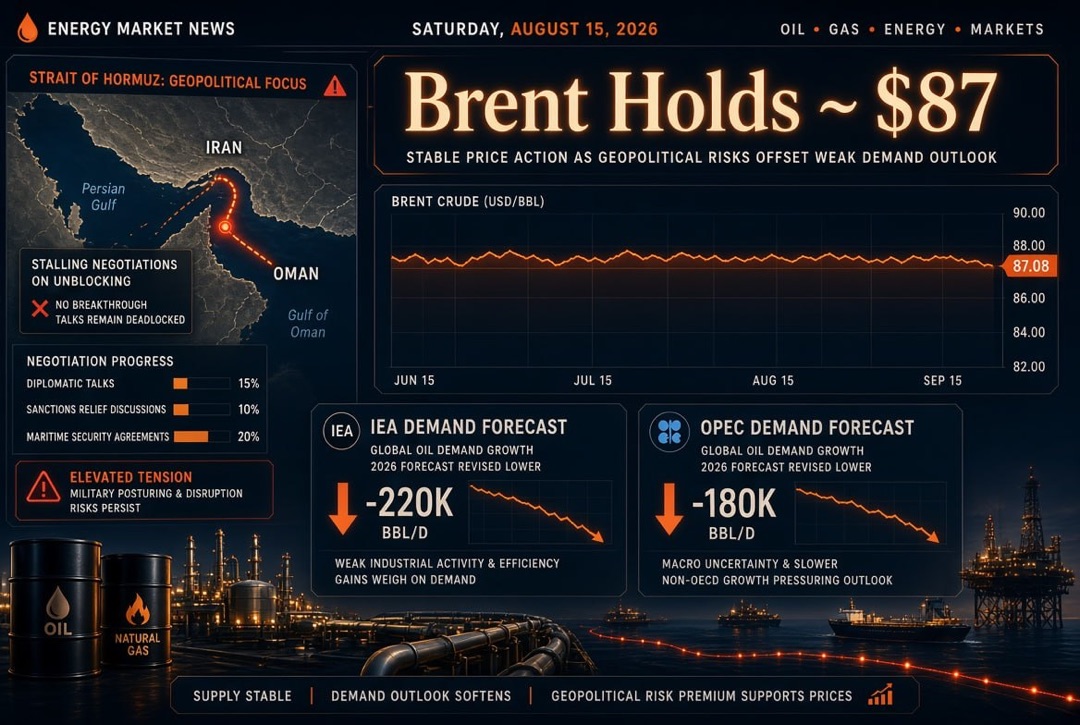
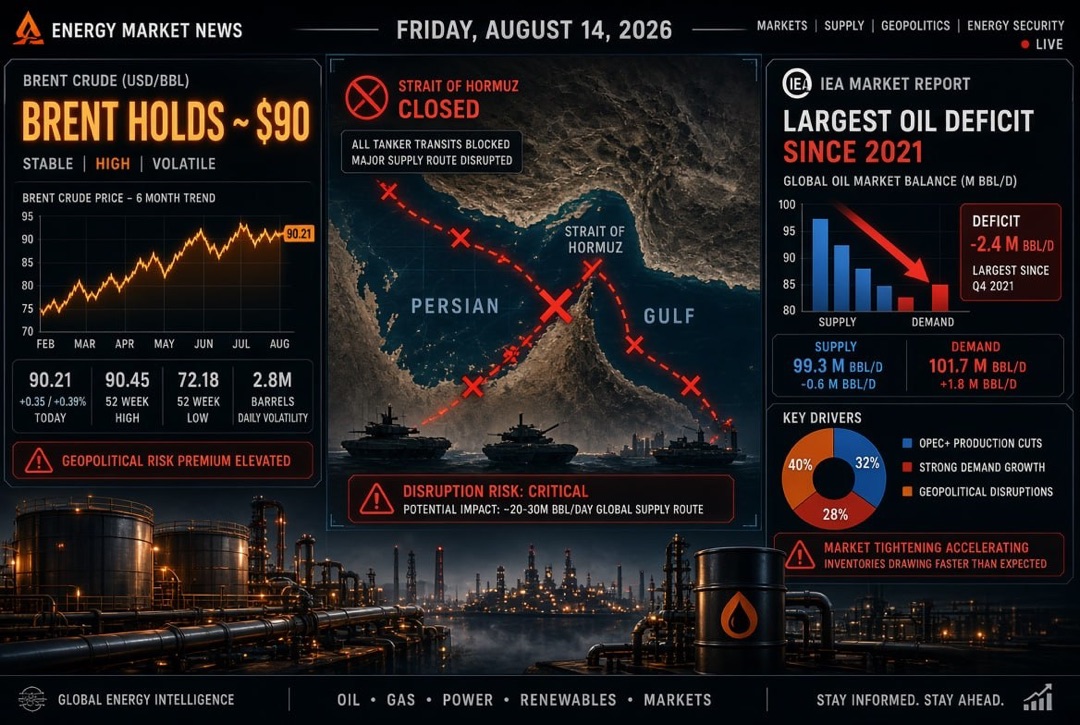
- Oil: Brent crude prices ended the past week around $78 per barrel, showing a slight decrease amid profit-taking by investors. In the absence of new drivers, oil traders are focused on upcoming macro data from China and signals from central banks. Chinese data on industrial production and retail sales could significantly impact the oil market: stronger economic growth in China will be interpreted as a sign of increased energy demand, potentially pushing oil prices higher. An additional factor will be the tone from the Fed and ECB: if the regulators confirm the easing of financial conditions and rate cuts, the U.S. dollar may weaken, supporting commodity prices. Next week, the market is also anticipating the monthly OPEC report on supply and demand, which may clarify the cartel’s plans after its recent decision to cut production. Overall, the price range for oil remains relatively narrow as market participants await clearer guidance, and volatility has somewhat decreased following the November rally.
- Precious Metals: Gold continues to trade near its highest levels in recent months—around $2050 per troy ounce—benefiting from expectations of a more dovish monetary policy. The Fed's decision to lower its rate and signals of a pause in tightening from other central banks support gold's appeal as a safe-haven asset against inflation and currency risks. Investors still view precious metals as a “safe haven”: capital inflow into gold ETFs increased last week. However, short-term dynamics in gold may be volatile—if central bank comments turn out to be less dovish or the dollar unexpectedly strengthens, a correction in metal prices is possible. Silver and platinum also show resilience, following gold; the industrial demand component for them will depend on data from China. For CIS markets, gold prices are particularly relevant in the context of export revenues and foreign exchange reserves, thus sustaining high gold prices supports the economies of the region.
Day’s Summary: Key Points for Investors
- Monetary Policy in Focus: The implications of the U.S. Fed's rate cut decision are already reflecting in the market—it's essential for investors to evaluate the regulator's comments and ascertain whether further easing will continue. In the forthcoming days, the tone from the Fed and expectations ahead of the ECB meeting (December 18) will set direction for currency rates (particularly the euro/dollar pair) and global bond dynamics.
- China's Macroeconomic Data as a Driver: Early Monday morning, data from China (industrial production and retail sales) could set the mood for trading in Asia and the commodity market. Stronger statistics will support oil and industrial metal prices, while weaker figures may amplify concerns regarding the pace of global economic recovery.
- Corporate Events and Reports: In the local CIS market, a key event is the SFI shareholders' meeting, which may result in record dividends and a major transaction. This will attract investors' attention to the Russian stock market and financial sector. On the international front, important reports from Nike and FedEx (December 18) are ahead, providing signals about consumer spending and the state of global trade ahead of the holidays. In the technology sector, sentiments remain sensitive to company forecasts, as evidenced by market reaction to Oracle's report—investors should approach such stories selectively.
- Risks and Opportunities Over the Weekend: Despite the holiday, investors do not lose vigilance. Geopolitical surprises (e.g., the outcome of elections in Chile) or sudden statements could disrupt market calm ahead of the week opening. It is advisable to pay attention to Sunday evening news to respond promptly to potential changes in conditions in Asia on Monday morning. As the year-end approaches and market liquidity declines, maintain caution: even small news can provoke disproportionately strong price fluctuations.