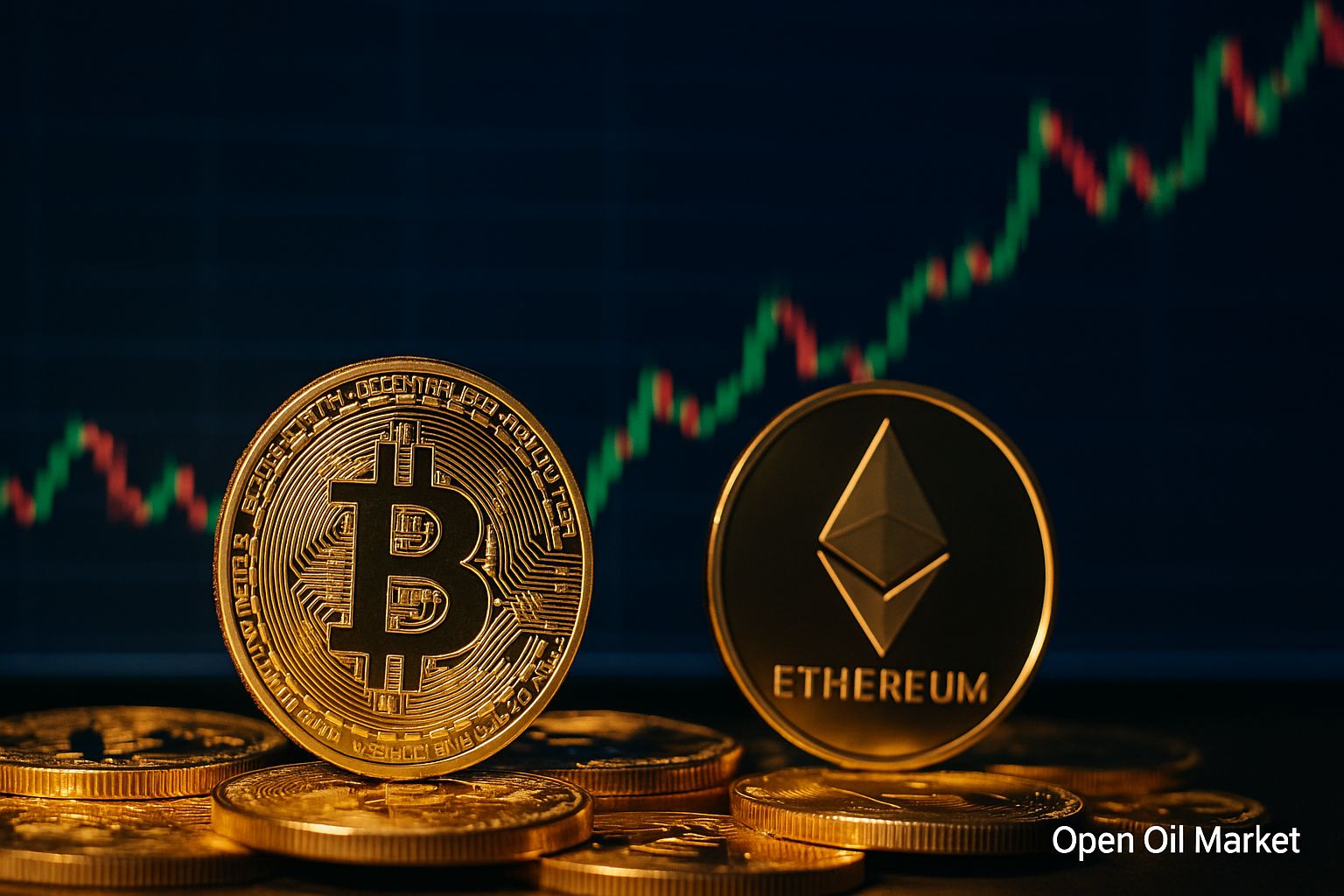
Current Cryptocurrency News for Sunday, September 21, 2025 – Bitcoin Near Record Levels, Altcoins Rise Amid Fed Rate Cuts and Optimism Surrounding Crypto ETFs
By the morning of September 21, 2025, the cryptocurrency market is holding near its historical highs following a series of significant events last week. Bitcoin's price is consolidating around ~$117,000 (only a few percent below the record peak of ~$124,000 reached in August), while Ethereum (ETH) is trading near its multi-year high (around $4,700 after updating the historical record of ~$4,900 a month prior). The total cryptocurrency market capitalization exceeds $4.2 trillion, reflecting sustained high interest in digital assets from both retail and institutional investors. The largest altcoins are also demonstrating growth: several coins within the top 10 are approaching their peaks from recent years. Market participants' optimism is bolstered by favorable macroeconomic signals (including the recent easing of monetary policy in the United States) and an improved regulatory environment, which stimulates further capital inflows into cryptocurrencies.
Market Overview: Momentum After Fed Rate Cuts
In mid-September, the U.S. Federal Reserve lowered the benchmark interest rate by 0.25% for the first time in a long while, validating market expectations around a shift towards a more accommodative monetary policy. This decision provided a new impetus to the cryptocurrency market: on the day of the announcement, Bitcoin briefly surged above $117,000, while leading U.S. stock indices also marked gains. Even before the Fed's decision, the digital asset market had been rising confidently at the beginning of the month, fueled by a series of positive news and a softened regulatory stance from U.S. authorities. Now, with the Fed effectively moving to lower rates, bullish sentiment has only strengthened—cheaper capital and improved liquidity typically favor riskier assets, including cryptocurrencies. Simultaneously, Bitcoin's market share has declined to approximately 53%, indicating an active reallocation of funds into altcoins and the formation of a full-fledged "altcoin season" in the market.
Bitcoin: Consolidation Ahead of a New Surge
The flagship Bitcoin (BTC) set a new price record in August, rising above $124,000. In recent weeks, following a rapid rally, the largest cryptocurrency has transitioned into a phase of healthy consolidation, trading within the range of $115,000 – $118,000. The current price is roughly 5-7% below peak levels, which has become a natural correction: some investors took profits at the highs. However, the overall market sentiment remains positive. Even considering the recent pullback, BTC's value is now nearly twice what it was at the beginning of the year, and its market capitalization is approximately $2.3 trillion (around 55% of the total cryptocurrency market capitalization). In this regard, Bitcoin firmly ranks among the top 5 largest financial assets globally, surpassed only by giants like Google and Amazon.
Experts note that the current pause in price growth is a necessary "breather" before a potential new upward trend. The factors that fueled BTC's rally are still in place: investors welcome the onset of easing monetary policy in the U.S., institutional players continue to increase their investments through exchange-traded funds, and regulators are increasingly sending positive signals to the crypto industry. Nevertheless, macroeconomic risks remain: unexpected inflation spikes or overly hawkish statements from Fed officials could temporarily cool the market. For instance, last week, a stern comment from a Fed official briefly pushed BTC's price below $113,000, but buying demand quickly restored prices. Overall, Bitcoin demonstrates high resilience: long-term holders of the coins are not in a hurry to sell, viewing BTC as "digital gold." Major corporations and funds are continuing to accumulate the asset—well-known companies collectively added several thousand BTC to their balances during the recent decline. Such capital inflows from "big players" support the market and strengthen confidence that the bullish trend is far from over.
Ethereum: Close to Record and Institutional Demand
The second largest cryptocurrency by market capitalization, Ethereum (ETH), is moving in an upward trend and holding around its maximum values in recent years. Ether is consistently trading near $4,700, just shy of the historical peak (~$4,900 reached at the end of August). Attempts at partial profit-taking by some investors during the uptrend only temporarily hinder a more significant price jump, but overall sentiments surrounding Ethereum remain optimistic. This is largely due to the growing interest from institutional and corporate investors in this platform.
Recently, a record influx of funds into Ethereum-based funds was recorded: following the launch of the first spot ETFs on Ethereum in the U.S., investments in these products exceeded $3 billion in just August, highlighting increased attention from large capitals to ETH. Major banks and investment houses have also improved their forecasts for Ether: for example, some analysts on Wall Street now expect ETH prices to reach $7,000–$8,000 in the coming quarters. Ethereum's attractiveness to investors is explained by a combination of growth potential and yield from staking: ETH holders receive 3-5% per annum by participating in transaction validation on the network. Ether is increasingly seen as a kind of "digital oil" of the modern crypto-economy—a key resource necessary for the operation of countless decentralized applications, DeFi protocols, and NFT platforms.
In addition to price dynamics, Ethereum shows a strengthening of fundamental network indicators. A significant portion of the coins is in staking or long-term storage, reducing supply on the market and creating scarcity that supports price. The Ethereum network continues to evolve; regular technological upgrades are being implemented to enhance scalability and efficiency (including further development of sharding and protocol optimization). There is also a noted increase in activity—approximately 2 million transactions are processed daily on the ETH network, reflecting the robust development of the application ecosystem. All these factors—institutional inflows, reduced available supply, and constant technical development—provide a strong foundation for Ethereum's continued leadership in the market.
Regulatory and Institutional Trends
In the U.S., a series of measures have been adopted that are forming a more favorable environment for the crypto industry. Regulations governing stablecoins have been simplified, and legislation reforms are being prepared to clearly define the legal status of digital assets. One of the key steps was the official approval to include cryptocurrencies in retirement savings (401(k) accounts), opening up new investment tools to millions of Americans. Additionally, U.S. regulators are demonstrating greater leniency towards cryptocurrency-based exchange products: the market has already seen the debut of approved SEC spot ETFs tied to Bitcoin and Ethereum. Following these leading assets, regulators are reviewing applications for funds related to other cryptocurrencies (including XRP, Solana, and Cardano), indicating an expanding interest from large capital in the sector.
In Europe, the MiCA regulatory framework came into effect this year, establishing unified requirements for cryptocurrency transactions across all EU countries. Such global initiatives by authorities reduce legal risks for investors and attract new institutional players to the sector. Notably, even central banks are starting to explore the integration of digital assets: a recent report from the Federal Reserve presented potential approaches to reassessing gold reserves to support future financial initiatives, including the creation of a national Bitcoin reserve. This indicates a growing recognition of cryptocurrencies as a strategically important asset class at the highest level.
Top 10 Most Popular Cryptocurrencies
- Bitcoin (BTC) – the first and largest cryptocurrency (around 55% market share by capitalization). BTC is trading near $117,000, serving as "digital gold" and the foundation of most investment crypto portfolios.
- Ethereum (ETH) – the second-largest token by capitalization and the leading smart contract platform. The ETH price is around ~$4,700 (close to its historical maximum); Ether underlies the DeFi ecosystem and numerous dApps, playing a key role in the crypto economy.
- Tether (USDT) – the largest stablecoin pegged to the U.S. dollar 1:1. Widely used in the market for trading and storing capital; with a capitalization of about $80 billion, USDT is one of the key sources of liquidity in the ecosystem.
- Binance Coin (BNB) – the native token of the global cryptocurrency exchange Binance and the BNB Chain. BNB holders enjoy discounts on fees and access to ecosystem products; the coin trades near $900 (around its historical maximum). Despite regulatory pressures on Binance, BNB remains among the most valuable crypto assets due to its widespread application in trading and DeFi.
- XRP (Ripple) – the cryptocurrency of the Ripple payment network for fast cross-border transfers. XRP is holding around $3.00, close to multi-year highs following legal clarity regarding the token's status in the U.S.; this progress has returned XRP to the top three market leaders and attracted increased interest from banks and funds.
- USD Coin (USDC) – the second most popular stablecoin from Circle, fully backed by dollar reserves. Known for high transparency and compliance with regulations; widely used by investors and companies for transactions and in DeFi (capitalization around $30 billion).
- Solana (SOL) – a high-performance blockchain platform known for low fees and transaction speed. SOL surpassed the $200 mark this summer, reviving investor interest in the project after overcoming the technical challenges of the past year; Solana is seen as a competitor to Ethereum in the DeFi and Web3 spaces.
- Cardano (ADA) – the cryptocurrency of the Cardano platform, developed with a scientific approach to blockchain design. ADA remains in the top 10 due to a large market capitalization (tens of billions of tokens in circulation) and an active community, although its price (~$0.90) is significantly below its all-time high.
- Dogecoin (DOGE) – the most famous "meme" cryptocurrency, originally created as a joke but later entering the ranks of the largest digital assets. DOGE is holding around $0.25, its price supported by community loyalty and periodic attention from celebrities. Despite increased volatility, Dogecoin continues to be a market leader, demonstrating remarkable resilience in investor interest.
- Tron (TRX) – the token of the Tron blockchain platform, aimed at decentralized applications and digital content. TRX (~$0.36) is in high demand for issuing and transferring stablecoins (a significant portion of USDT circulates on the Tron network due to low fees), allowing it to remain among leaders alongside other top assets.
Outlook and Expectations
In the short term, sentiments in the cryptocurrency market remain predominantly positive; however, such rapid price growth compels investors to exercise caution. The Fear and Greed Index for cryptocurrencies is deep in the "extreme greed" zone, which historically often precedes periods of correction. Experts warn that market euphoria could turn into profit-taking—market participants must maintain composure and adhere to risk management principles, resisting the general frenzy. Nevertheless, the vast majority of analysts still maintain a bullish outlook and predict further capitalization growth. The major British bank Standard Chartered recently significantly raised its price targets for cryptocurrencies: according to the updated forecast, Bitcoin’s price could reach $200,000, while Ethereum could reach around $7,500 by the end of 2025. If these expectations materialize, BTC and ETH have substantial potential for further growth from current levels.
Some experts note that the cryptocurrency market may be entering the "second phase" of a long-term bullish cycle: after reaching new peaks, interim consolidation is likely, but in the medium term, the trend is viewed as firmly upward. Notably, some market participants accurately predicted the current price levels in advance. For instance, the investment fund Pantera Capital had predicted around $120,000 for BTC by August 2025 a year ago—and this scenario has fully materialized. Overall, with a favorable macroeconomic environment and an influx of institutional investments, most specialists expect a further increase in the total value of the cryptocurrency market in the last months of the year, while allowing for the possibility of short-term volatility and pullbacks.