Cryptocurrency News for Saturday, March 28, 2026: Bitcoin Maintains Dominance as Market Awaits New Regulatory Signals
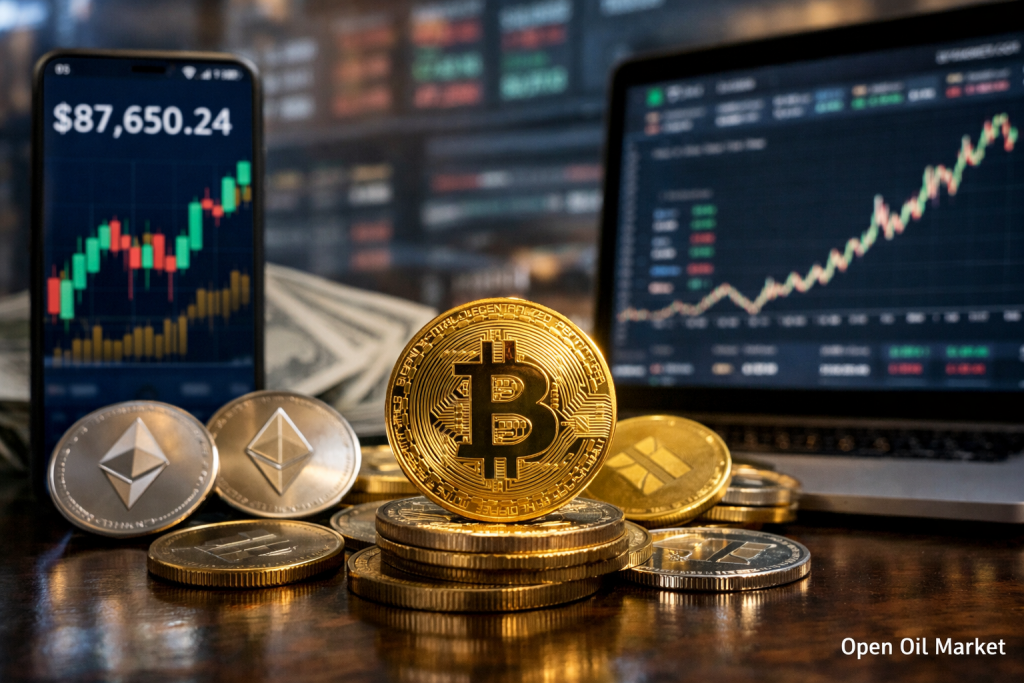
As we head into Saturday, March 28, 2026, the cryptocurrency market continues to attract significant attention from investors across the globe. Bitcoin remains the leading force within the digital asset segment, with institutional participants viewing it as the primary benchmark for assessing risk appetite. The market remains sensitive to regulatory news, liquidity data, and signals from major financial institutions.
For a global audience, this signifies one key reality: cryptocurrencies no longer exist in isolation from macroeconomic factors. They move in tandem with expectations regarding interest rates, bond yields, dollar liquidity, and news about regulation in the U.S., Europe, and Asia.
Bitcoin Remains the Core Asset for Investors
Bitcoin retains its status as the dominant digital asset in the market. It sets the overall tone: when BTC is strong, capital more readily flows back into riskier segments; when Bitcoin weakens, selling pressure often intensifies for altcoins. Currently, investors are primarily focused on the resilience of BTC demand, the behavior of large holders, and the market's willingness to rebound from dips.
In terms of market structure, this is more significant than short-term spikes in volatility. Bitcoin remains not merely a cryptocurrency but a vital indicator of confidence in digital assets as an investment class.
Ethereum and Smart Contract Assets: The Market Awaits Demand Confirmation
Ethereum continues to be the second key platform in the crypto ecosystem, although its agenda is noticeably different from that of Bitcoin. Investors are monitoring not only price dynamics but also the actual activity on the network: volumes in DeFi, growth of stablecoins, asset tokenization, and the development of Layer 2 infrastructure.
At present, Ethereum and related tokens are particularly sensitive to the question of whether stronger user demand will return to the market. If network activity accelerates, it typically supports not only ETH but also the entire segment of smart contract platforms.
Stablecoins Emerge as the Leading Infrastructure Narrative of the Year
One of the strongest trends of 2026 is the growing significance of stablecoins. For the global investor, they are no longer just a technical tool for transactions between exchanges but a fully-fledged layer of crypto infrastructure. Stablecoins are being used for cross-border transfers, DeFi settlements, trading, and liquidity storage.
This is why the market is increasingly focused on the regulation of dollar-pegged tokens, reserve requirements, and how major banks, exchanges, and payment companies will integrate stablecoins into their products. This is not a peripheral issue but one of the main drivers behind future industry growth.
Regulation Remains the Key Factor in Market Reevaluation
The regulatory news backdrop continues to be more significant than many short-term technical signals. In the U.S., the market is closely watching the fate of the Clarity Act and whether Congress can provide clearer definitions for the status of digital assets. In this context, Citi has already lowered its expectations for Bitcoin and Ethereum, citing the weakness of the regulatory momentum as a pressure factor on the market.
The U.K. is proceeding more cautiously, discussing revisions to rules surrounding stablecoins. On the contrary, China is tightening restrictions on virtual currencies while leaving space for more formal regulation of asset tokenization. For global investors, this means that the crypto market in 2026 is evolving not within a singular regulatory environment but across several.
Institutional Demand Remains a Long-Term Bullish Factor
Despite short-term nervousness, institutional interest in cryptocurrencies continues to grow. Major banks, brokers, and asset management firms are expanding access to digital assets through ETFs, custodial services, and trading infrastructure. This reinforces the idea that cryptocurrencies are gradually becoming entrenched within the traditional financial market.
For investors, this is particularly important for one reason: the wider institutional access becomes, the more sustainable demand is likely on a long-term basis. In practice, this reduces the likelihood that the cryptocurrency market will revert to being exclusively a retail story.
Top 10 Most Popular Cryptocurrencies for Investor Focus
In the daily market landscape, investors frequently monitor the following set of assets. These are not just the most well-known names but cryptocurrencies that exert the strongest influence on liquidity, sentiment, and capital allocation.
- Bitcoin (BTC) — the foundational benchmark for the entire market and a digital analog to macro assets.
- Ethereum (ETH) — the core of the smart contract economy and DeFi infrastructure.
- Tether (USDT) — the primary transactional asset in the crypto market and a source of liquidity.
- BNB — a key token within a major exchange ecosystem.
- XRP — an asset monitored for its potential in cross-border settlements.
- USDC — an important dollar-pegged stablecoin for institutional infrastructure.
- Solana (SOL) — one of the most notable high-throughput platforms for applications and tokens.
- TRON (TRX) — a strong player in the stablecoin transfer segment and cost-effective transactions.
- Dogecoin (DOGE) — a highly volatile retail asset with a strong media effect.
- Cardano (ADA) — a project that continues to attract the attention of long-term holders.
What Investors Should Watch for on Saturday
In the near term, the market will react not to a single headline but to the cumulative factors at play: the flow of regulatory news, Bitcoin's relative strength dynamics, the behavior of stablecoins, and activity in altcoins. During such times, discipline becomes more important than emotions.
Key Signals of the Day
- Is Bitcoin's leadership holding, or is capital beginning to shift toward altcoins?
- Are there signs of increasing demand for Ethereum and infrastructure tokens?
- Is there growing interest in stablecoins as foundational payment infrastructure?
- Is the regulatory landscape changing in the U.S., U.K., European Union, and Asia?
Practical Conclusion
For short-term investors, this is a market of selective ideas rather than broad-based unconditional growth. For long-term investors, this is a market where fundamentally strong assets are progressively being integrated into the traditional financial system.
Conclusion: Cryptocurrencies Remain a Market for Those Who Can Read Risk
The cryptocurrency news for Saturday, March 28, 2026, leads to one conclusion: the market remains large, liquid, and global, but still relies on regulatory clarity and the strength of institutional demand. Bitcoin maintains its central role, Ethereum seeks confirmation of user activity, stablecoins are becoming the infrastructure standard, and altcoins continue to operate in a selective manner.
For investors, this is not a time for superficial optimism. It is a time for precise analysis, position management, and a keen focus on those assets that truly shape the new architecture of the digital market.