The Global Cryptocurrency Market as of March 18, 2026: Bitcoin Maintains Its Position Amid Strengthening Institutional Demand, While Ethereum and Altcoins Remain in Investors' Spotlight
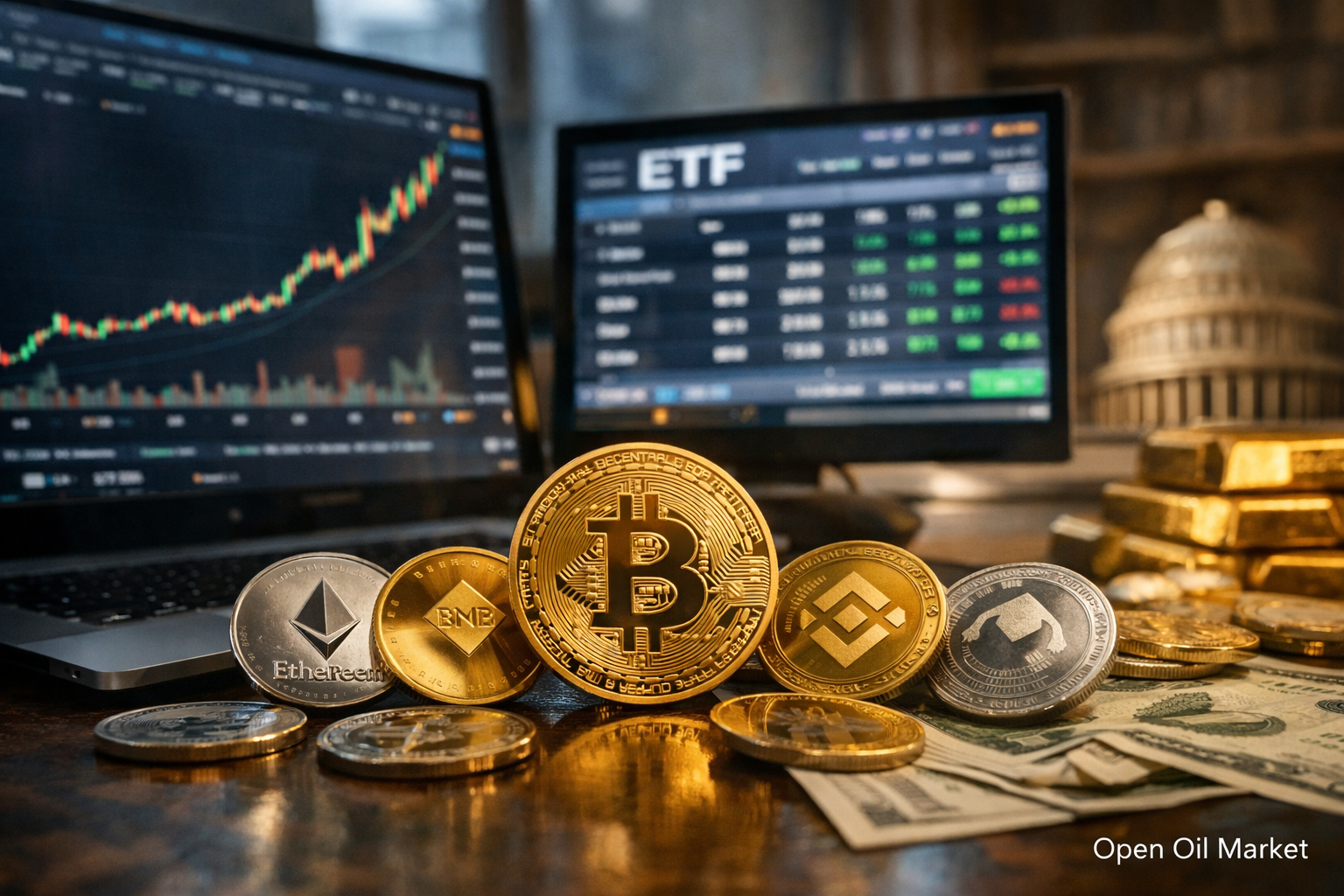
The cryptocurrency market is entering Wednesday, March 18, 2026, under heightened scrutiny from global investors. The main topic is Bitcoin’s resilience at elevated levels amidst expectations surrounding U.S. monetary policy, ongoing institutional interest, and persistent uncertainty in the regulation of digital assets. This moment is significant for the global investment community: cryptocurrencies remain not only a speculative asset class but also part of a broader discussion on new financial infrastructure, the role of stablecoins, tokenization, and the transformation of payment systems.
In recent days, the crypto market has demonstrated its ability to recover quickly from local sell-offs. This strengthens the thesis that demand for major digital assets is increasingly driven not just by retail traders but also by funds, corporate entities, and large market players. It is essential for investors to distinguish between short-term impulses and long-term drivers: the current market phase revolves around liquidity, regulation, and the quality of capital flowing into the sector.
Bitcoin Remains a Central Focus for the Global Crypto Market
Bitcoin retains its status as the main benchmark for the entire digital market. The performance of BTC now dictates sentiment in altcoins, the activity of institutional players, and the direction of capital flows. Bitcoin's current positioning indicates that even amid volatility, it is perceived as the foundational crypto asset for global portfolios with a heightened risk appetite.
For investors, this suggests the following:
- Bitcoin continues to be the primary indicator of risk appetite within the digital asset segment;
- Institutional flows are still more significant than short-term news noise;
- Any signals from the U.S. Federal Reserve, major ETF providers, and regulators directly influence the trajectory of the cryptocurrency market.
Against this backdrop, the market is closely evaluating whether Bitcoin can establish itself as a mature macro asset that competes not only with technology stocks but also partially with gold in stress scenarios.
Institutional Demand and ETFs Remain Key Drivers
One of the critical factors for cryptocurrency growth in 2026 is institutionalization. This process distinguishes the current cycle from earlier market phases. Exchange-traded products focused on Bitcoin and Ethereum remain in the spotlight, as they make digital assets more accessible to traditional capital.
For the global investor, this creates several implications:
- The cryptocurrency market is becoming increasingly integrated into the classical financial system;
- Liquidity is deepening, and the structure of demand is becoming more resilient;
- The reaction to macroeconomic events is intensifying, as crypto assets are increasingly traded in the same arena as stocks, bonds, and commodities.
Even amidst ongoing debates around regulation, it is precisely ETFs and institutional investments that form the foundation underpinning the bullish narrative for the largest digital assets.
Ethereum Holds Strategic Importance for Market Infrastructure
Ethereum remains the second most significant asset in the industry and a key infrastructural platform for DeFi, tokenization, stablecoins, and smart contracts. Unlike Bitcoin, Ethereum's investment case is closely linked not only to price but also to actual network usage, application activity, and the scale of financial infrastructure being deployed atop the blockchain.
Ethereum's strengths in the current market phase include:
- A dominant role in the stablecoin and digital financial services segment;
- High institutional recognition;
- A direct link between the growth of tokenization and interest in the network.
For investors, Ethereum is more than just the second-largest cryptocurrency by market capitalization; it represents a bet on the development of the entire blockchain economy as a distinct technological layer of the global financial system.
Regulation in the U.S. Remains a Key Factor in Sector Revaluation
One of the most critical issues for the cryptocurrency market is political and regulatory uncertainty in the U.S. Market participants are watching closely for whether American lawmakers can establish a clearer regulatory framework for digital assets, including the status of tokens, exchange requirements, and stablecoin regulations.
Currently, the market sees a mixed picture. On one hand, the probability of clearer rules supports long-term interest in the sector. On the other hand, delays in legislative decisions limit the potential for a swift market revaluation.
For investors, this means the necessity to view cryptocurrencies through two horizons:
- Short-term — the market may remain sensitive to political news;
- Medium-term — even partial clarification of rules can act as a catalyst for new institutional inflows;
- Long-term — projects that integrate into the regulated financial architecture will emerge as winners.
Stablecoins Are Emerging as a Separate Global Topic
Whereas the cryptocurrency market used to focus primarily on Bitcoin and volatile altcoins, it is now increasingly addressing stablecoins. The reason is simple: they are becoming the bridge between traditional finance and digital assets. Regulators in the U.S., Europe, and the UK are actively assessing their impact on the banking system, monetary circulation, and cross-border payments.
The rising role of stablecoins is essential for several reasons:
- They enhance the practical applicability of blockchain in payments and transfers;
- They support the liquidity of the crypto market;
- They serve as a foundation for tokenized financial products;
- They can alter the competition among banks, fintech, and digital platforms.
For the global market, this is no longer a niche topic but part of the discussion on the future of money and payment infrastructure.
Top 10 Most Popular Cryptocurrencies: What Investors Are Watching
As of March 17, 2026, the most popular cryptocurrencies by market capitalization include:
- Bitcoin (BTC)
- Ethereum (ETH)
- XRP
- BNB
- Solana (SOL)
- TRON (TRX)
- Dogecoin (DOGE)
- Cardano (ADA)
- Bitcoin Cash (BCH)
- Monero (XMR)
This list is significant not just as a ranking by capitalization; it indicates which directions are currently in highest demand in the market:
- Bitcoin — as the foundational reserve crypto asset;
- Ethereum and Solana — as infrastructural blockchains;
- XRP and TRON — as networks focused on transfers and transactional efficiency;
- Dogecoin — as an indicator of retail demand and speculative interest;
- Monero — as an asset retaining significance in the privacy segment.
For the investor, the top 10 cryptocurrencies represent not a ready-made portfolio but a market map. It helps to understand where liquidity, capital attention, and key technological bets of the industry are concentrated.
Altcoins Receive Support, But the Market Remains Selective
Despite the strengthening of major cryptocurrencies, the altcoin market is not demonstrating uniform growth. This is an important distinction at the current stage. Funds are not being distributed automatically across all tokens, as often occurred in previous cycles. Investors are becoming more demanding regarding fundamentals, liquidity, team quality, and regulatory risks.
Today, the segments that are performing best are those with a clear investment logic:
- Major blockchain platforms;
- Infrastructure for payments and tokenization;
- Projects that can integrate into the regulated financial environment;
- Crypto assets with a robust community and deep liquidity.
This suggests that the global cryptocurrency market is maturing: investors are moving away from a model of indiscriminate risk and are increasingly opting for quality narratives.
What This Means for Investors on March 18, 2026
As the next session approaches for cryptocurrency investors, three blocks of observations are essential:
Macroeconomic Level
- Expectations surrounding U.S. Federal Reserve interest rates;
- Dynamics of the U.S. dollar and bond yields;
- Overall risk appetite in global markets.
Industry Level
- Any news related to ETFs and institutional flows;
- Progress or delays in crypto regulation;
- Discussion of rules for stablecoins and digital payments.
Market Level
- Bitcoin's resilience as the market leader;
- The ability of Ethereum and major altcoins to confirm demand;
- Maintenance of liquidity within the top 10 cryptocurrencies.
A key takeaway for the global investor audience is that the cryptocurrency market remains strong but is no longer chaotic. The primary struggle is no longer for short-term hype but for a place for digital assets within the architecture of global finance. That is why Bitcoin, Ethereum, stablecoins, and the largest infrastructural projects continue to capture capital's attention.