Key Cryptocurrency News for March 14, 2026: Bitcoin Strengthens Market Dominance, Dynamics of Ethereum and Altcoins, Role of Stablecoins and Major Trends for Investors
The main topic of the day is the strengthening role of Bitcoin as the foundational asset of the crypto market. Following a nervous sell-off in February, interest in risky segments is recovering unevenly: institutional and large private capital are returning first to the most liquid digital asset. This reinforces Bitcoin's market and psychological role as a benchmark for the entire sector.
Practically, this translates into the following:
- capital first flows into Bitcoin, before being distributed among altcoins;
- investors increasingly view BTC as the primary tool for accessing the crypto market;
- the dynamics of Bitcoin dominance are becoming more significant than the local movements of individual tokens.
For the global market, this signals a transition from a speculative phase to a more selective one. In such an environment, the importance of liquidity, transparency, and institutional demand increases, traditionally favoring Bitcoin.
The Crypto Market Recovers Yet Remains Macroeconomically Dependent
Despite improved sentiment compared to early February, the cryptocurrency market remains closely tied to expectations regarding inflation, interest rates, global liquidity, and geopolitical risks. This is a key distinction of the current cycle compared to previous years: cryptocurrencies are becoming part of a broader system of risk assets and are increasingly moving in line with the logic of global capital redistribution.
Currently, investors are evaluating several factors:
- the resilience of the global economy amid commodity market volatility;
- the likely trajectory of rates from major central banks;
- the willingness of institutional players to increase their positions in digital assets;
- regulatory frameworks for trading, custody, and issuance of crypto assets.
Therefore, crypto news tomorrow should logically be viewed not in isolation but in conjunction with the overall investment climate. For the professional audience, this means that the crypto market remains of interest but requires discipline in risk management.
Ethereum Retains Strategic Importance but Lags in Momentum
Ethereum remains the second most significant asset in the digital economy and is a key infrastructure for DeFi, tokenization, NFTs, stablecoins, and smart contracts. However, in the short term, its market momentum appears more restrained compared to Bitcoin. This reflects the overall market sentiment: participants currently value straightforward and comprehensible investment narratives over complex technological ones.
Nevertheless, Ethereum remains important for three reasons:
- it is the foundation of the largest ecosystem of decentralized applications;
- the infrastructure for digital finance is largely built on Ethereum;
- its dynamics remain an indicator of appetite for a broader class of altcoins.
While Bitcoin reflects trust in the crypto market overall, Ethereum exhibits confidence in its applied segment — the infrastructure, applications, and smart contract economy.
Stablecoins Emerge as a Distinct Investment and Infrastructure Narrative
One of the most significant trends of 2026 is the growing importance of stablecoins. For many market participants, stablecoins are no longer merely an auxiliary tool but rather a standalone financial infrastructure that connects crypto exchanges, international payments, DeFi, and corporate digital services.
The increasing role of stablecoins implies several things:
- the market is becoming more mature and less solely tied to speculative trading;
- digital dollar and euro instruments are increasingly used as the settlement layer;
- regulation of this segment is becoming critically important for the entire industry.
For investors, this signals that in the coming quarters, the battle will not only be for the growth of Bitcoin or Ethereum but also for control over the infrastructure of digital money. This is why stablecoins, cryptocurrency regulation, and banking integration are taking center stage in the global agenda.
Cryptocurrency Regulation in Europe Enhances Quality Filtering
The European market continues to operate within the framework of MiCA — a unified regulatory base for crypto assets, issuers, and service providers. This presents a dual factor for the industry. On one hand, regulation increases transparency and establishes clearer rules for major players. On the other hand, it raises the entry threshold, intensifies compliance requirements, and may accelerate market consolidation.
In the near term, the following factors are important for the crypto industry in Europe:
- acceleration of licensing and registry formalization;
- culling of weak and opaque players;
- increased interest in platforms and tokens that better fit into the new regulatory architecture.
For global investors, this is a positive signal over the medium term: the higher the legal certainty, the greater the likelihood of attracting larger and long-term capital.
Altcoins Remain Interesting, but the Market Has Become Much More Selective
The altcoin segment retains its potential; however, in 2026 it no longer appears as a unified front. Capital is being directed selectively — towards projects with strong ecosystems, high liquidity, clear use cases, and robust communities. A simple bet on “broad altcoin growth” currently seems less reliable than in previous cycles.
The most sustainable interest remains in the following directions:
- first-layer infrastructure blockchains;
- payment and settlement tokens;
- ecosystems closely linked to DeFi and stablecoins;
- projects capable of attracting institutional capital.
This indicates that crypto news for investors should be read not as a general ensemble of loud headlines but as a map of capital redistribution within the industry.
Top 10 Most Popular Cryptocurrencies: What the Market is Watching
In terms of global recognition, liquidity, and market capitalization, the following cryptocurrencies remain in the spotlight:
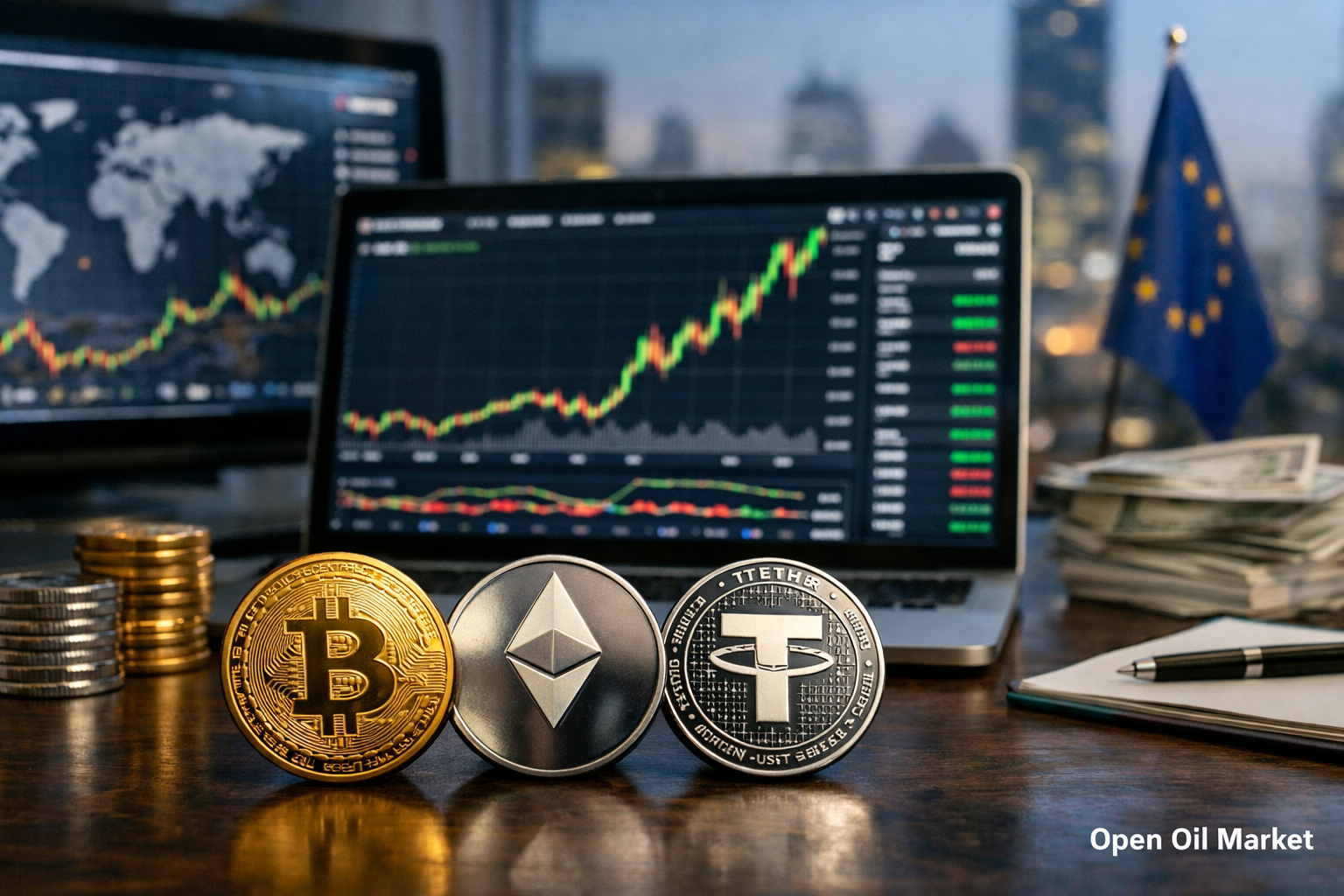
- Bitcoin (BTC) — the primary market benchmark and key liquid asset.
- Ethereum (ETH) — the foundational infrastructure for smart contracts and DeFi.
- Tether (USDT) — the most significant stablecoin of the global crypto market.
- BNB — a major exchange and ecosystem asset.
- XRP — one of the most recognizable payment tokens.
- USDC — one of the key regulated stablecoins.
- Solana (SOL) — one of the leaders among high-performance blockchains.
- TRON (TRX) — a notable player in payment and stablecoin infrastructure.
- Dogecoin (DOGE) — a meme asset with high recognition and liquidity.
- Cardano (ADA) — a long-term infrastructural bet for some investors.
It is important to understand: “popularity” in cryptocurrencies today increasingly signifies not just brand recognition, but also liquidity depth, institutional accessibility, regulatory compliance, and the ability to maintain market attention during stressful phases.
What This Means for Investors This Weekend
As of Saturday, March 14, 2026, the crypto market approaches with a moderately constructive but still cautious sentiment. The focus remains on Bitcoin, dominance of major assets, dynamics of stablecoins, and regulatory changes. For investors, this generates several practical conclusions.
- Liquidity and asset quality remain at the forefront of the market.
- Bitcoin appears stronger than the broader altcoin market.
- Ethereum is important as an infrastructural bet, but its short-term momentum is weaker.
- Stablecoins are becoming not just a backdrop, but one of the pillars of the crypto economy.
- Cryptocurrency regulation elevates the significance of compliance and legal transparency.
The day’s takeaway for the global audience is that the cryptocurrency market has not lost its growth potential but has become noticeably more professional and demanding. It is not the loudest stories that prevail, but the assets and ecosystems capable of combining liquidity, scalability, infrastructural value, and resilience to external shocks.