Cryptocurrency News for July 24, 2026: Bitcoin Consolidating Around $65,000, Ethereum Near $1,900, Market Capitalization at $2.23 Trillion, Analyzing the Stalemate Surrounding the CLARITY Act, Top 10 Cryptocurrencies, and Scenarios for Investors
The digital asset market enters the final trading session of the week in a state of fragile equilibrium. The total cryptocurrency market capitalization hovers around $2.23 trillion, with Bitcoin consolidating near the $65,000 mark after pulling back from local highs of $66,990, while the Fear and Greed Index remains at 31 points—a zone of fear. For investors, Friday, July 24, 2026, represents a confluence of three forces: geopolitical escalation in the Middle East, a legislative deadlock surrounding the U.S. CLARITY Act, and a cautious yet noticeable return of institutional capital through exchange-traded funds.
Main Topic of the Day: CLARITY Act Stuck in Ethical Stalemate
The key theme shaping attitudes in the global crypto market at the end of July 2026 is the fate of the U.S. law on the market structure of digital assets, known as the CLARITY Act. A new draft of the bill presented by Senate Republicans on July 22 has instead of the expected breakthrough ignited a new round of disputes.
The crux of the disagreement is not technical but institutional in nature:
- Republican Position: The enforcement of the ethical norms of the bill should be centralized at the federal level under the U.S. Department of Justice.
- Democratic Position: Oversight power should belong to state attorneys general, creating a distributed and potentially stricter model of regulation.
For investors, it is not the legal nuance itself that matters, but its consequences: each week's delay lowers the probability of passing the law in the calendar year 2026 and prolongs the period of regulatory uncertainty. This uncertainty has been, according to analysts, one of the reasons why major banks—including Citi—lowered their price targets for Bitcoin and Ethereum earlier in July and effectively abandoned forecasts for inflows into cryptocurrency ETFs.
At the same time, industry support for the bill is broadening: Goldman Sachs' leadership has publicly spoken in favor of the CLARITY Act, despite ongoing objections from the banking sector regarding the yields of stablecoins. This points to the fact that the structural demand from traditional finance for regulatory clarity remains unresolved—the only question is the timeline.
Macroeconomic and Geopolitical Background: Oil as a Risk Channel
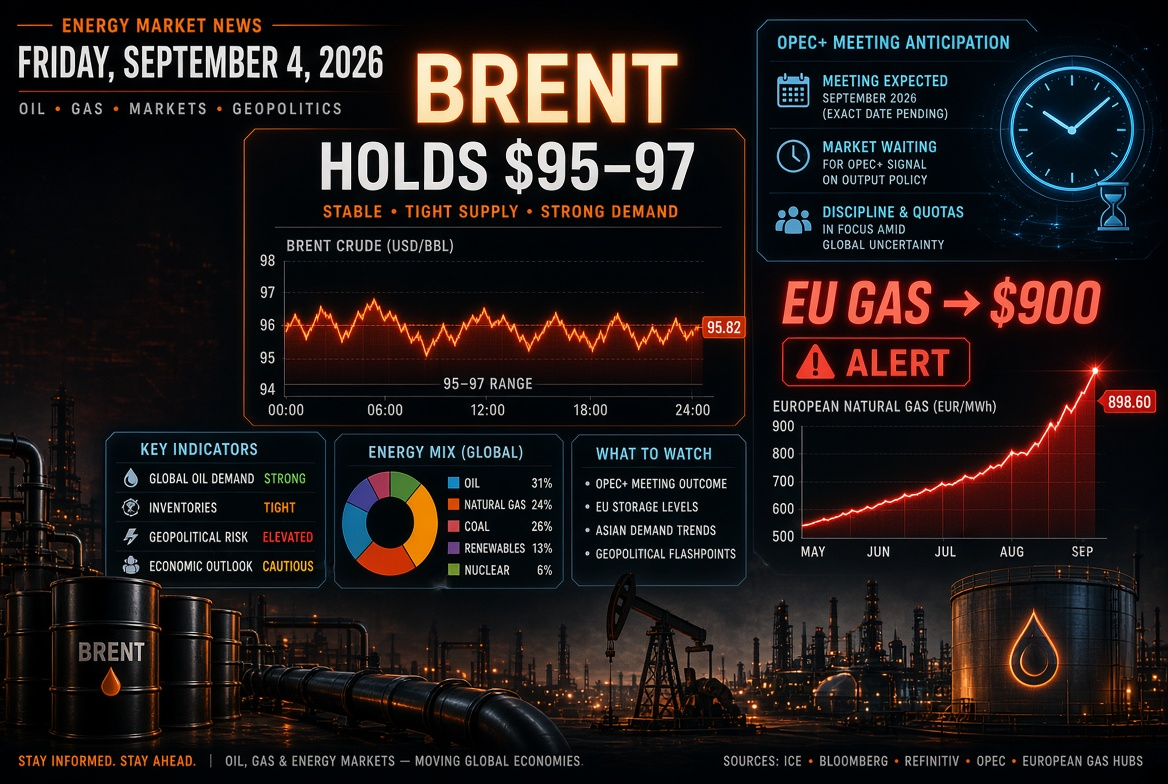
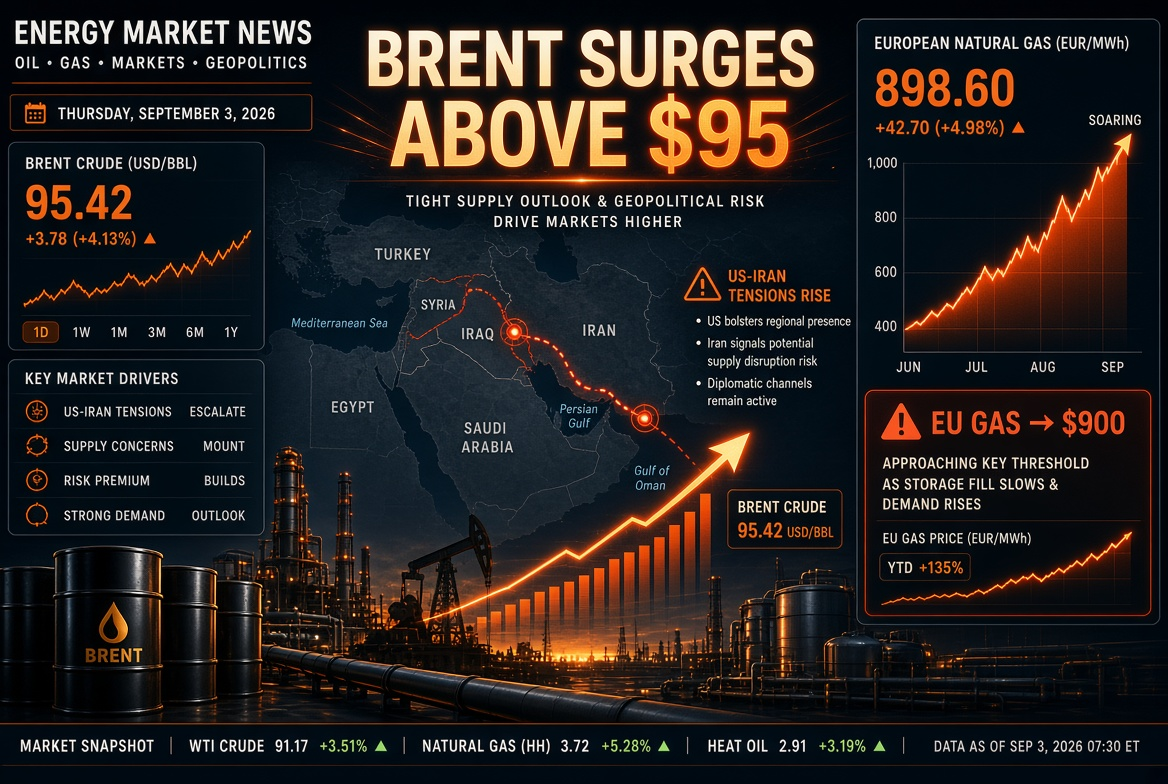
The second most significant driver of cryptocurrency news this week is the sharp rise in energy prices. Brent crude oil is trading at around $99 per barrel, reaching a peak not seen since late May after attacks on two Saudi tankers in the Red Sea. The escalation of conflict in the region has triggered a classic chain reaction:
- Rising inflation expectations. Higher oil prices directly translate to consumer inflation, reducing the room for monetary policy easing.
- Pressure on the long end of the yield curve. Thirty-year U.S. Treasury bonds remain above 5%—the market does not believe in the sustainability of the soft inflation data from June.
- Outflow from risk assets. Cryptocurrencies, despite the "digital gold" narrative, are still trading as high-beta instruments relative to global risk appetite.
Labor market statistics in the U.S. are also noteworthy: jobless claims dropped more than expected, paradoxically playing against cryptocurrencies—a strong labor market reduces the likelihood of an interest rate cut by the Fed in the coming months.
Institutional Flows: Reversal in Ethereum ETFs
The most encouraging news for long-term investors in July 2026 is the turnaround in exchange-traded funds (ETFs). After eight weeks of continuous outflows, during which more than $8.2 billion was withdrawn from American spot Bitcoin ETFs since May, the picture is beginning to change.
Key observations on capital flows:
- Ethereum ETFs: From July 14 to July 21, net inflows amounted to approximately $196.4 million, with a significant portion attributed to the ETHA fund from BlackRock—about $58.3 million on July 14 and $52.8 million on July 21.
- Bitcoin ETFs: The week ends with a positive balance, with notable inflows recorded by iShares Bitcoin Trust, Ark 21Shares Bitcoin ETF, and Grayscale Bitcoin Mini Trust.
- Solana Products: The Bitwise Solana Staking ETF attracted about $5.8 million in the session—a modest figure in absolute terms but significant as an indicator of product line expansion beyond the two largest assets.
Vanguard, the asset manager with $12 trillion under management, has garnered particular attention for its decision to ease its stance toward digital assets. For the conservative segment of the investor community, this event signals structural rather than speculative developments.
Top 10 Most Popular Cryptocurrencies: Status at the End of July 2026
Below is an overview of the ten largest and most liquid digital assets, which account for the overwhelming majority of market capitalization. For investors, not only the current quotations matter, but also the investment thesis of each asset.
1. Bitcoin (BTC)
Trading in the range of $64,000–$66,800, with a market capitalization of about $1.32 trillion and a dominance of 58%. Since the beginning of 2026, Bitcoin has lost over a quarter of its value, retreating from its October 2025 peak near $126,000. Bitfinex analysts note that the recovery to $66,990 was not driven by fresh capital inflows, but rather by a shortage of sellers and positioning in the derivatives market—such a rise in a "thin market" is vulnerable in both directions. Standard Chartered, meanwhile, has reaffirmed its target of $100,000 by the end of 2026.
2. Ethereum (ETH)
Quoted around $1,900–$1,925 with a market capitalization of approximately $200 billion. The primary paradox of the year: despite Bitcoin's negative performance, Ethereum is demonstrating superior results year-to-date. Drivers include record-low exchange reserves of ETH, record staking volumes, increased activity on Layer-2 (including the Robinhood Chain launched on July 1), and the narrative of tokenizing real assets.
3. Tether (USDT)
The largest stablecoin and the primary liquidity tool on global exchanges. The dynamics of its issuance remain one of the most reliable leading indicators of capital inflows into the market.
4. XRP
Trading around $1.11–$1.14 with a market capitalization of about $70 billion. The year has been challenging; the asset is showing one of the weakest performances in the top ten. The investment thesis continues to be based on cross-border payments and Ripple's institutional partnerships; however, the risk factor remains with the concentration of supply with the issuer.
5. BNB
Trading around $569–$610, with a market capitalization of approximately $82 billion. The token of the exchange ecosystem, whose value is structurally linked to trading volumes and activity in the BNB Chain.
6. Solana (SOL)
Quoted around $77 with a historical high of $253.21 reached in September 2025. The network remains a leader in practical applications: tokenized stocks, on-chain prediction markets, and a new mechanism for on-chain governance. Notably, trading volumes for tokenized stocks on Solana have exceeded activity in the meme coin segment—indicating a shift from speculation to utility.
7. USDC
The second-largest stablecoin, focused on regulated market participants. Its share is growing as the industry institutionalizes and will directly benefit from the adoption of the CLARITY Act.
8. Dogecoin (DOGE)
Quoted around $0.072. The largest meme coin remains a barometer of retail risk appetite: its relative dynamics traditionally improve in the later stages of a bull cycle.
9. TRON (TRX)
The network processes a significant share of the world’s stablecoin turnover, especially in emerging markets. In July, TRON was included in the S&P Pantera Digital Asset Index—a step towards institutional benchmarking of blockchain networks.
10. Cardano (ADA)
Rounding out the top ten by market capitalization. The asset employs an academic approach to development and is sensitive to the overall liquidity level of the altcoin segment.
Corporate Sector: Consolidation and Washout of Weak Players
The bearish phase of 2026 is fulfilling its cleansing function. The main corporate news of the week is the closure of BitMEX, one of the oldest cryptocurrency derivatives exchanges founded by Arthur Hayes. The platform will cease operations on September 23 after eleven years in the market; users are instructed to withdraw their funds by the deadline, or a monthly service fee of $50 will be charged. The BITMEX token plummeted by approximately 90%, from $0.06 to $0.005.
Simultaneously, the story of companies that built their balance sheets around Bitcoin continues to unfold. Satsuma's shares have dropped by over 99% since the October 2025 peak, forcing Pantera Capital to demand the complete liquidation of Bitcoin reserves. Previously, the firm had already sold 579 BTC for $40 million to service its debt.
In contrast, the creation of a consortium by Coinbase, ARK Invest, Strategy, and BlackRock aimed at enhancing Bitcoin network security serves as a signal for institutional investors: major players are investing in infrastructural resilience rather than withdrawing their presence.
Technical Analysis and Market Structure
Current market configuration for Bitcoin:
- Consolidation Range: $64,000–$66,800 after a recovery of about 13% from July’s lows.
- Critical Support: The $63,000 area. Breaching it opens the path to $58,000–$60,000.
- Resistance: $66,800–$68,000. Holding above this level would indicate the end of the downward trend.
- Liquidations in 24 hours: Approximately $207 million, with $151 million attributable to long positions—the market remains vulnerable to cascading movements.
- Daily Volumes: Around $58 billion, which is below average values for a bullish phase and confirms the "thin" market thesis.
Funding rates on perpetual contracts are close to zero. This indicates that the long positions overloaded and triggered the June liquidation cascades are already washed out of the system—a factor that reduces the likelihood of a sharp collapse but also deprives the market of fuel for a quick upward surge.
Trends Defining the Market in the Second Half of 2026
Beyond daily volatility, four structural directions are emerging that are relevant for investment horizons of one year or more:
- Tokenization of Real Assets (RWA). Mubadala Capital from Abu Dhabi is moving one of its private market funds on-chain through Base, Solana, and Sui networks, and Coinbase has acquired a stake in the project. Sovereign capital is entering tokenization not as an experiment but as a distribution channel.
- Staking within Regulated Wrappers. Funds with built-in staking are altering the economics of owning ETH and SOL, adding an income component to price exposure.
- Autonomous AI Agents on the Blockchain. Franklin Templeton positions transactions between autonomous agents as one of the most promising applications of public networks, where Ethereum serves as a likely accounting layer.
- Shift from Narratives to Product-Market Fit. Industry research indicates a shift in investor focus from future stories to verifiable metrics of revenue and usage.
What Investors Should Consider: Scenarios and Risk Management
To form a position for the upcoming weeks, it makes sense to keep three scenarios in focus.
Base Scenario
Bitcoin continues to consolidate in the $62,000–$68,000 range amid moderate inflows into ETFs. Altcoins move directionally, with Ethereum maintaining a relative advantage due to institutional demand. A likely trigger for breaking out of the range will be the outcomes of the discussion on the CLARITY Act and Federal Reserve decisions.
Positive Scenario
Inflows into Bitcoin and Ethereum ETFs transition from daily to sustainable weekly amounts, the market structure bill is agreed upon, and the geopolitical premium in oil declines. In this case, a return to $75,000–$80,000 for Bitcoin by the end of the year becomes realistic, and Standard Chartered's target of $100,000 is plausible.
Negative Scenario
Continued escalation in the Red Sea keeps oil prices above $100, inflation expectations rise, and the Fed maintains a hawkish tone. Breaching $63,000 opens the zone of $55,000–$58,000, while weakness in altcoins intensifies due to increasing Bitcoin dominance.
Practical principles for investors under current conditions:
- Diversification within the asset class. Concentration in one altcoin during a period of low liquidity historically yields worse risk-reward ratios.
- Attention to flows rather than headlines. Data on ETF flows and exchange reserves are more reliable indicators than news noise.
- Assessing counterparty risk. The story of BitMEX serves as a reminder: even platforms with eleven years of history can cease operations. Self-custody of large positions remains a fundamental practice.
- Planning horizon. The Fear and Greed Index at 31 historically correlates with accumulation phases but requires patience measured in quarters, not weeks.
Calendar: What to Watch for Next Week
- Federal Reserve Meeting on July 28–29. Markets estimate a roughly 70% probability of the rate being maintained; however, low chances for movement suggest more likely an increase than a decrease.
- Progress on the CLARITY Act. Any signal of compromise on the ethical positioning can reassess the entire sector.
- Earnings Reports from Major Tech Companies. The correlation of cryptocurrencies with the Nasdaq index remains high; results from Alphabet and Tesla set the tone for risk appetite.
- Dynamics of Oil and the Situation in the Red Sea. A direct channel influencing inflation expectations and, consequently, Fed policy.
- Weekly Statistics on ETF Flows. Confirmation of the reversal requires continued inflows for at least another two to three weeks.
Conclusion: The Market Seeking Confirmation
The cryptocurrency market on July 24, 2026, presents a familiar picture from previous cycles: price stabilization, speculative leverage washed out, weak corporate structures exiting the market, and institutional flows cautiously reversing. At the same time, two unresolved external factors remain—the regulatory deadlock in the U.S. and the geopolitical premium in energy prices.
For long-term investors, the current phase is characterized by a combination of heightened uncertainty and relatively attractive valuations after a drop of more than 25% since the beginning of the year. For short-term traders, the key remains the $63,000–$68,000 range for Bitcoin. A strong week of inflows does not confirm a cycle reversal—but it does change the conversation from "how deep" to "when."
The material is informational and analytical in nature and does not constitute investment advice. Cryptocurrencies are considered high-risk assets; quotes are listed as of the time of publication and should be independently verified before making investment decisions.