Recent Cryptocurrency News for Monday, February 2, 2026: Global Market Trends, Top 10 Cryptocurrency Dynamics, Institutional Interest, and Key Factors Influencing the Cryptocurrency Market.
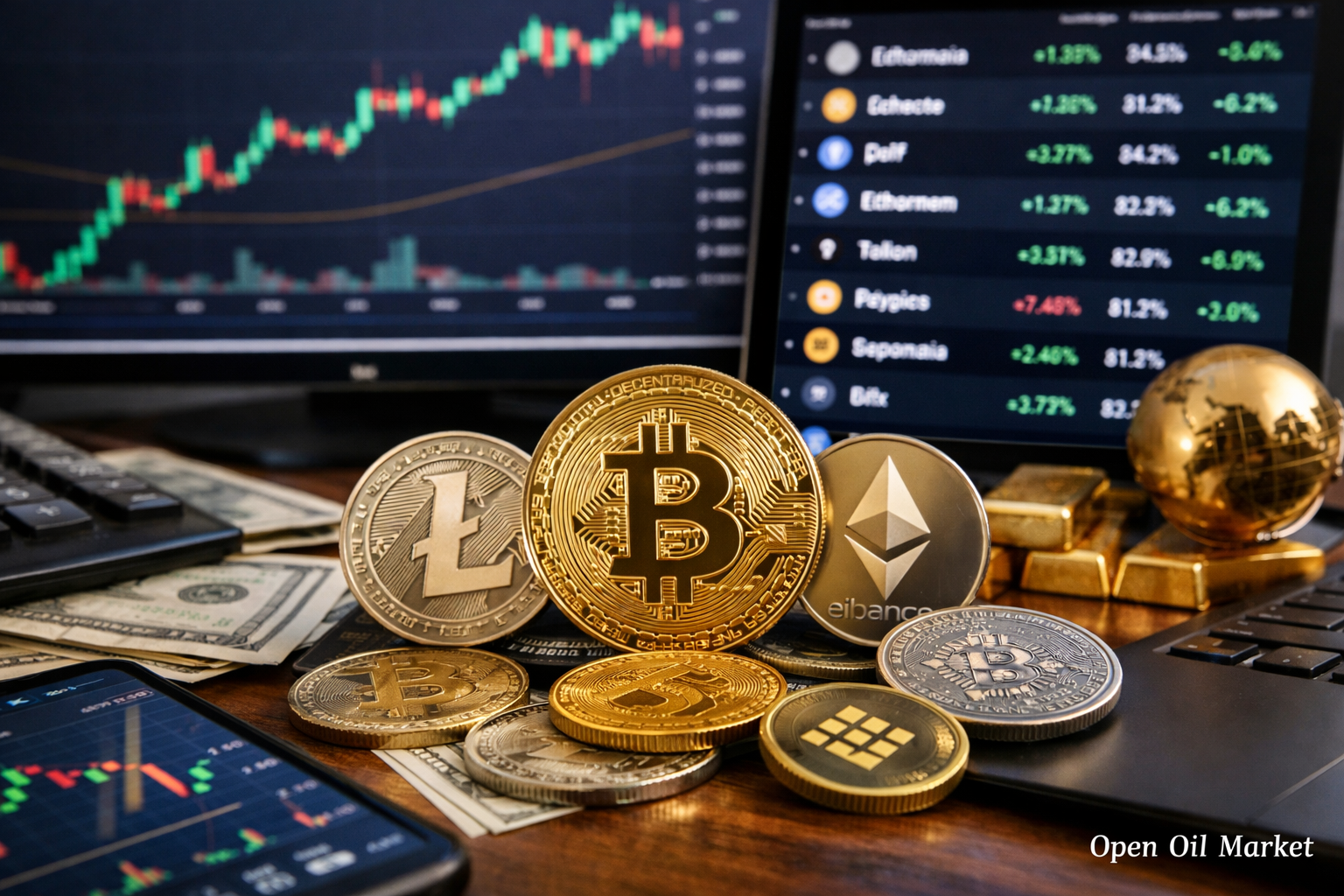
As of the morning of February 2, 2026, the cryptocurrency market has retreated to multi-month lows following significant sell-offs in recent weeks. Bitcoin's price hovers around $80,000 (having lost about a third of its value from the record high of approximately $120,000 reached in October 2025), while Ethereum (ETH) has dropped to roughly $2,500 (nearly half its peak of about $5,000 last year). The total market capitalization of cryptocurrencies, which recently exceeded $4 trillion, is now estimated to be below $3 trillion, reflecting increased caution among investors. Major altcoins have also incurred substantial losses: many coins in the top 10 have retraced by 30-50% from recent highs. Market sentiment has cooled amid unfavorable macroeconomic signals (the hawkish rhetoric from the U.S. Federal Reserve, threats of trade conflicts) and changes in the regulatory environment. These factors have triggered a temporary capital outflow from riskier digital assets in favor of traditional "safe havens" like gold.
Market Overview: Correction Amid Global Uncertainty
The last quarter of 2025 found the crypto market at historic peaks; however, since then, the dynamics have reversed. The rapid tightening of external conditions has diminished risk appetite among global investors. Following a series of record highs for Bitcoin and Ethereum last year, the price plunge in January 2026 has posed the most significant challenge to the market in recent months. The industry's total capitalization has shrunk by about a quarter from peak values. Stablecoins have once again emerged as leaders in trading volume, with many traders temporarily shifting funds to stable assets. As we head into February, cautious sentiments dominate the market: participants are awaiting clarification on monetary policy and regulations before resuming active cryptocurrency purchases.
Bitcoin: New Annual Low and Search for Support
Recently, Bitcoin (BTC) fell to its lowest level since spring last year, breaching the $80,000 mark. From its October record (~$120,000), BTC has declined by approximately 35%, partly due to profit-taking by early investors and reduced market liquidity. The sharp drop last Friday – down to ~$78,000 at its lowest – was triggered by news of Kevin Warsh's selection as the head of the U.S. Federal Reserve: investors fear that his potentially hawkish monetary policy could lead to decreased liquidity. These concerns have reminded the market of inherent risks, exacerbating the selling wave.
Despite the correction, Bitcoin remains the largest crypto asset, accounting for approximately 60% of the total market capitalization and ranking among the largest financial assets in the world. Long-term holders of BTC ("whales") are largely not inclined to part with their coins, viewing Bitcoin as a strategic asset akin to "digital gold." Moreover, some large corporations holding BTC have stated their intention to take advantage of the dip to increase their reserves. This interest from "big players" supports the market and reinforces confidence that Bitcoin's fundamental value remains high despite short-term fluctuations.
Ethereum: Price Pressure Despite Upgrades
The second largest cryptocurrency by market capitalization, Ethereum (ETH), is also experiencing significant declines. In recent months, ETH's price has fallen approximately to $2,500, nearly half its peak of ~$5,000. Last week, Ethereum witnessed a sharp decline of over 10% in a single day – a wave of automatic liquidations on derivatives exchanges intensified the price fall. Despite this correction, Ethereum remains a key platform in the crypto ecosystem with actively developing technology.
In January, the Ethereum network successfully conducted another hard fork (protocol upgrade known as BPO), aimed at enhancing the scalability and efficiency of the blockchain. The use of Layer-2 solutions is also on the rise, allowing the main network to lighten the load and reduce transaction fees. A significant portion of all issued ETH is engaged in staking or held long-term, which decreases the token's supply in the market.
Institutional interest in Ethereum remains strong. In 2025, the U.S. saw the launch of the first exchange-traded funds (ETFs) linked to Ethereum, which facilitated an inflow of over $3 billion within the first months of operation. Major investment firms and funds continue to view Ethereum alongside Bitcoin as a core asset for long-term crypto portfolios, even amidst current price fluctuations.
Altcoins: In the Eye of the Sell-off
The broad altcoin market has found itself at the center of a recent sell-off. Many tokens that had previously surged in value have lost a significant portion of their worth at the beginning of 2026, as investors are reducing their most risky positions. Capital is flowing from volatile altcoins into more stable assets or leaving the crypto market altogether – this is evident from the growth of stablecoins' share and the increased dominance of Bitcoin. Currently, Bitcoin’s share of total market capitalization surpasses 60% once again, signaling a relative reallocation of funds from altcoins to the flagship crypto asset.
Just recently, tokens like XRP, Solana, and BNB were in the spotlight, showing outperformance on positive news. XRP (Ripple) soared to $3 last summer following a legal victory for Ripple in the U.S., returning to the list of market leaders. However, XRP has since retraced about half of those highs, following the overall downward trend. A similar dynamic is seen with Solana (SOL): after an impressive rise above $200 amid the network's recovery in 2025, SOL has corrected but remains significantly higher than last year's lows and continues to be one of the leading protocols for DeFi and Web3. Binance Coin (BNB), which reached record highs of ~$880 in 2025 despite regulatory pressure on the Binance exchange, has also seen a price decline (to around $500), reflecting a broader contraction in market activity.
Other major altcoins, such as Cardano (ADA), Dogecoin (DOGE), and Tron (TRX), are also under pressure, trading significantly below their peaks. Nonetheless, they maintain their places in the top 10 thanks to still substantial market capitalization and support from enthusiast communities. During times of high uncertainty, many market participants prefer to ride out market turbulence in stablecoins (USDT, USDC, etc.) or Bitcoin, limiting the inflow of new capital into the altcoin segment until the broader situation clarifies.
Regulation: Aiming for Clear Rules
Regulatory changes are rapidly gaining momentum worldwide – governments are attempting to keep pace with industry developments. In the U.S., the administration seeks to advance the Digital Asset Market Clarity Act, which aims to clearly delineate the powers of the SEC and CFTC and establish clear rules for the crypto market. This bill, along with accompanying measures to oversee stablecoins (100% reserve requirements for digital dollars), is intended to end the practice of "regulation through enforcement" and ensure transparency for legal crypto companies. However, consideration of the bill has faced some delays: in January, the Senate postponed a planned discussion following disagreements within the industry (e.g., regarding yield restrictions in DeFi). Nonetheless, it is expected that work on legislation will continue in the coming months, given the high level of government support for the initiative.
While Congress debates new rules, U.S. regulatory bodies are actively monitoring the market. At the end of 2025, the SEC took a series of high-profile actions against fraudulent schemes ("AI Wealth," Morocoin, etc.), demonstrating its commitment to cleaning the industry of outright fraud. Meanwhile, courts and regulators are gradually clarifying the legal status of key crypto assets – a notable example is Ripple's victory in the XRP case, which confirmed that XRP is not a security. Such precedents reduce legal uncertainty for investors and companies in the U.S.
In Europe, a unified MiCA regulation has come into effect at the beginning of the year, establishing clear rules for the circulation of crypto assets across EU countries. The European Union is also preparing to implement tax reporting standards for cryptocurrency transactions (DAC8 rules, effective in 2026) to enhance transparency and combat tax evasion. In Asia, regulators are also becoming more active: for example, Japan plans to ease the tax burden on crypto trading (reducing the tax rate to ~20%) and is considering launching the first crypto ETFs, aiming to strengthen the country's competitive position as a hub for digital assets. Globally, a trend can be noted shifting from prohibitive measures to integrating the crypto market into the existing financial system through clear regulatory frameworks and licensing. It is expected that as clearer rules emerge, institutional investors' trust in the industry will grow.
Institutional Trends: A Pause in Capital Inflow
After a record inflow of institutional capital into crypto funds in 2025, the beginning of 2026 has marked a pause. Market volatility has led to a temporary outflow of funds from some crypto ETFs and trusts: funds have partially taken profits and reduced risk until the situation stabilizes. Nonetheless, major players are not abandoning their strategic initiatives in the field of digital assets. For example, the exchange operator Nasdaq lifted position size constraints on options for crypto ETFs (including funds for Bitcoin and Ethereum) in January, equating them to rules for traditional commodity ETFs. This move expands hedging and trading opportunities for institutions and signals the further integration of crypto products into mainstream markets.
Public companies that have invested in cryptocurrencies are also holding their positions despite the pullback in prices. For instance, one of the largest corporate holders of Bitcoin (an American company with thousands of BTC on its balance sheet) has signaled that it maintains long-term confidence in BTC, even as the market price temporarily dropped to their average cost basis. The management of this firm hinted at potential further purchases of BTC amid declining prices. Overall, many institutional investors have adopted a wait-and-see approach: some have reduced exposure in the short term, but strategic interest in crypto assets remains high. Major banks and asset managers continue developing crypto products and infrastructure, expecting that as macro conditions improve and regulatory clarity is achieved, client demand for digital assets will resume.
Macroeconomics: Hawkish Fed and Flight to Safe Assets
Macroeconomic factors in early 2026 are not favoring risk assets, and cryptocurrencies have felt this pressure. In the U.S., a leadership change at the Federal Reserve is expected; candidate Kevin Warsh is known for his commitment to a hawkish monetary policy. Expectations of higher interest rates and the Federal Reserve’s balance sheet reduction have heightened investors' concerns, as the excessive liquidity in recent years has significantly fueled the crypto rally. Simultaneously, political uncertainty has complicated the landscape: by the end of January, there was a threat of a U.S. government shutdown due to budget disagreements, which undermined risk appetite until a temporary agreement in Congress prevented the shutdown.
On the international stage, trade and economic risks have increased. The U.S. administration threatened new tariffs on the EU, reigniting fears of escalating trade wars. In Japan, there was a sharp spike in government bond yields, destabilizing the local market and pulling some global liquidity from risk assets. These events triggered a classic "flight to quality": investors rushed to safe instruments. The price of gold soared to a historic high, surpassing $5,000 per ounce, while the U.S. dollar index strengthened significantly. Against this backdrop, Bitcoin and other crypto assets temporarily lost their status as "digital gold" – at least in the perception of investors urgently seeking refuge from risks. Instead of cryptocurrencies, capital was briefly redirected to traditional safe-haven assets and highly liquid instruments. However, once macroeconomic clarity begins to return (for example, if the Federal Reserve stabilizes its policy or geopolitical tensions decrease), interest in the crypto market may revive.
Top 10 Most Popular Cryptocurrencies
- Bitcoin (BTC) – the first and largest cryptocurrency (~60% of the market by capitalization). BTC trades around $80,000, remaining the "digital gold" and the foundation of most investors' crypto portfolios.
- Ethereum (ETH) – the second-largest token by market capitalization and the leading smart contract platform. The price of ETH is currently around $2,400; Ethereum underpins the DeFi ecosystem and numerous dApps, playing a key role in the crypto economy.
- Tether (USDT) – the largest stablecoin, pegged 1:1 to the U.S. dollar. Widely used in the market for trading and capital storage; with a capitalization of approximately $80 billion, USDT is one of the key sources of liquidity in the ecosystem.
- Binance Coin (BNB) – the native token of the global cryptocurrency exchange Binance and the BNB Chain. Holders of BNB receive discounts on fees and access to ecosystem products; the coin is currently trading around $500 after correction. Despite regulatory pressure on Binance, BNB remains in the top 5 due to its wide application in trading and DeFi.
- XRP (Ripple) – the cryptocurrency of the Ripple payment network for fast cross-border transactions. XRP currently trades at about $1.50, which is roughly half its recent peak (last summer, the token surged above $3 in light of legal clarity in the U.S.). Nevertheless, XRP retains positions among the largest coins and attracts increased attention from banks and funds.
- USD Coin (USDC) – the second most popular stablecoin from Circle, fully backed by dollar reserves. Known for its high transparency and regulatory compliance; widely used in trading and DeFi (with a market capitalization of about $30 billion).
- Solana (SOL) – a high-performance blockchain platform known for its low fees and speed of transactions. SOL surged above $200 in 2025, rekindling investor interest in the project, and is currently trading about half as much (slightly above $100) after market correction. Solana is viewed as a competitor to Ethereum in the fields of DeFi and Web3 due to its scalability.
- Cardano (ADA) – the cryptocurrency of the Cardano platform, developed with a scientific approach. ADA retains its place in the top 10 thanks to its large market capitalization (tens of billions of coins in circulation) and an active community, although its price (~$0.50) is significantly below its historical high.
- Dogecoin (DOGE) – the most well-known "meme" cryptocurrency, originally created as a joke, but it has grown to be a top 10 asset. DOGE holds around $0.10, supported by community loyalty and occasional celebrity attention. Despite high volatility, Dogecoin remains one of the largest coins, demonstrating remarkable resilience in investor interest.
- Tron (TRX) – the token of the Tron blockchain platform, aimed at decentralized applications and digital content. TRX (~$0.25) is widely used for issuing and transferring stablecoins (a significant portion of USDT circulates in the Tron network due to low fees), allowing it to remain among the market leaders alongside other top assets.
Outlook and Expectations
In the short term, sentiments in the cryptocurrency market remain cautious. The "fear and greed" index for digital assets has shifted into the "fear" zone, sharply contrasting with the euphoria just a few months ago. Many analysts warn that the correction may deepen if macro risks persist: there are predictions of a potential decline in Bitcoin to the $70,000-$75,000 range if current support levels are breached. High volatility and recent price plunges serve as a reminder to investors about the necessity of careful risk management.
Nevertheless, the medium- and long-term view of the cryptocurrency market remains predominantly positive. Technological innovations and new projects continue to be implemented in the industry, and major players have not lost interest in digital assets, viewing the current downturn as an opportunity to strengthen their positions. Historically, after periods of frenzied growth (like in 2025), the market often transitions into a cooling and consolidation phase before resuming an upward trend. Fundamental drivers – from the mass adoption of crypto technologies to the integration of blockchain into the traditional financial sector – have not disappeared, and many experts remain optimistic.
Some investment firms maintain ambitious targets for cryptocurrency prices. For instance, there are predictions that with an improving macroeconomic environment, Bitcoin could once again surpass the $100,000 mark and reach new heights within the next couple of years. Of course, much depends on the actions of regulators and central banks: if the Federal Reserve does indeed move towards easing policy amid slowing inflation, and legislative clarity reduces legal risks, the inflow of capital into the crypto market could resume at an accelerated pace. For now, however, investors are advised to maintain a balance between caution and strategic vision, keeping in mind that volatility is an inherent part of the development of the cryptocurrency market.