Current Cryptocurrency News for Monday, December 22, 2025: Bitcoin at Key Levels, Ethereum Dynamics, and Market Perspectives for Investors
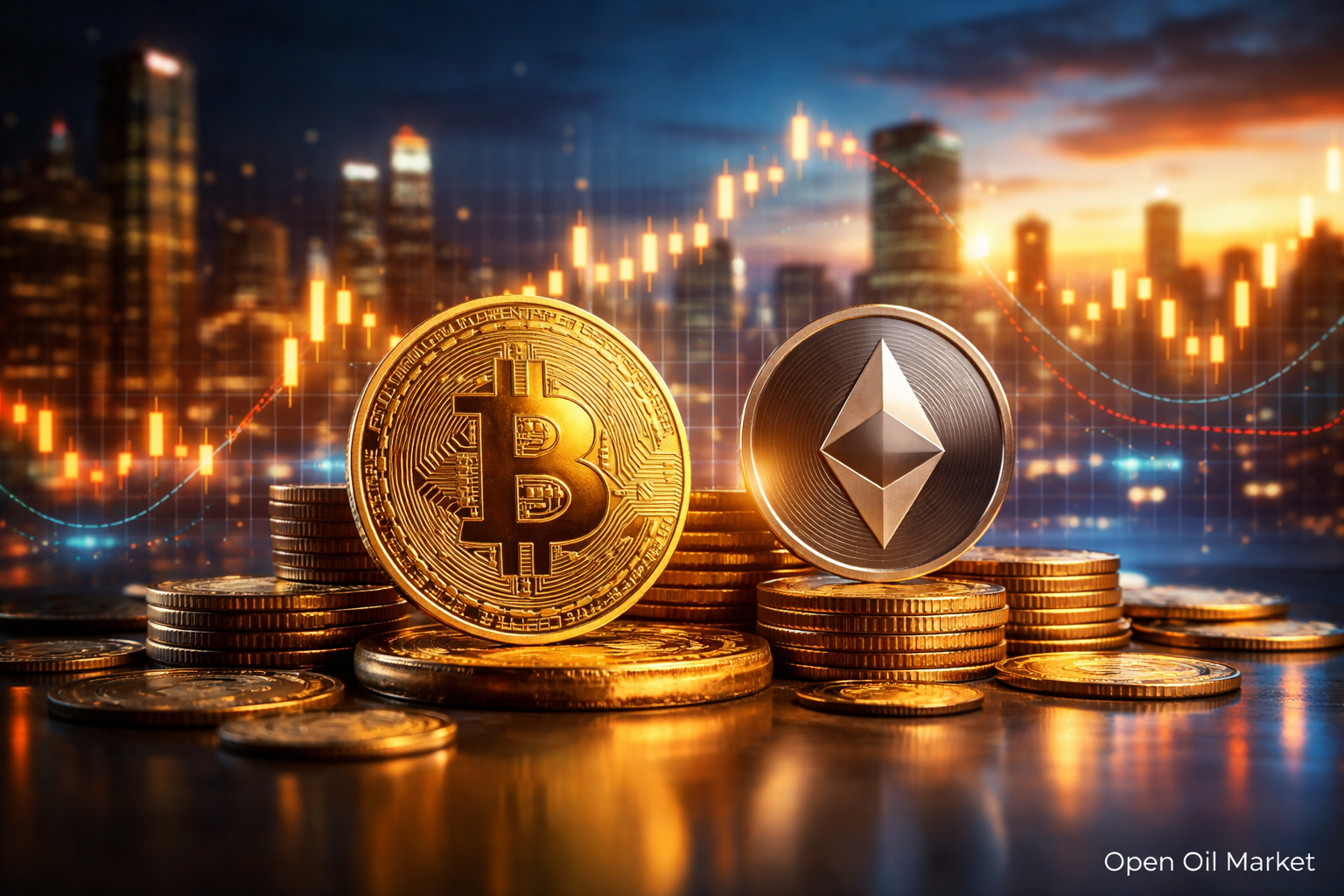
The cryptocurrency market shows a mixed dynamic as the new week begins. Investors around the world are closely monitoring how leading digital assets respond to the conclusion of a volatile 2025. The global market capitalization of cryptocurrencies is approximately $3 trillion, with Bitcoin accounting for about 60% of the total capitalization. Amid macroeconomic uncertainty and institutional inflows, the market is balancing between caution and hopes for growth.
Market Overview: Bitcoin Stability and Altcoin Volatility
As of Monday, Bitcoin (BTC) is consolidating near the $85,000 mark. In recent days, its price has fluctuated between $85,000 and $90,000, demonstrating relative stability after a tumultuous decline in October and subsequent recovery. Meanwhile, Ethereum (ETH) is trading around $3,000, attempting to recover from its recent dip. Many major altcoins – from BNB to Solana (SOL) – remain under pressure, with their prices dropping over the past week amid Bitcoin's increasing dominance. However, technical indicators suggest that several altcoins are oversold, which may signal a short-term rebound.
Bitcoin: The Market Leader at a Crossroads
In 2025, Bitcoin experienced a true rollercoaster ride: historical highs in the fall (with BTC reaching a record $126,000 in early October) were followed by a sharp crash after the announcement of new trading tariffs in the U.S. and the resulting surge in market tension. Currently, the flagship cryptocurrency is holding at high levels by historical standards – around $85,000 to $88,000 – although this is significantly lower than its peak. Analysts note that for the first time since 2022, Bitcoin could end the year with negative returns if a powerful rally does not occur in the last days of December. Nevertheless, long-term investors remain confident: BTC accumulation continues, with expectations for future growth drivers such as potential easing of monetary policy and new capital inflows through exchange-traded funds.
Ethereum and Other Leading Altcoins
Ethereum (ETH), the second-largest cryptocurrency by market capitalization, is in a recovery phase following a correction. The current price of ETH is around $3,000, below levels from a month ago, but the network continues to attract users due to its key role in decentralized finance (DeFi) and NFTs. Similar trends can be seen among other top altcoins: BNB (the token of the largest cryptocurrency exchange) is trading around $850, Ripple (XRP) is holding around $1.90 after significant growth earlier this year, Solana (SOL) has stabilized around $125 despite the crisis it faced in 2022, and Cardano (ADA) is trying to maintain its position above $0.37. Many altcoins are currently lagging behind Bitcoin in terms of growth, reflecting an increase in BTC's dominance. Investors are becoming selective, preferring more capitalized and fundamentally robust projects, while less liquid tokens are experiencing a decline in interest.
Institutional Investments and ETF Launches
One of the key drivers of the market in 2025 has been the active participation of institutional investors. Major financial firms have entered the crypto sphere: in the U.S., the first spot Bitcoin ETFs have been approved, including a fund from BlackRock that attracted a record $25 billion in investments over the year. The influx of funds through exchange-traded funds has increased Bitcoin's liquidity and strengthened its status as "digital gold." Moreover, analysts report that annual capital inflows into Bitcoin funds have surpassed those of gold ETFs, indicating a shift in preferences among certain investors. The banking sector is also taking steps toward cryptocurrencies: some international banks have introduced custodial services and blockchain-based investment products (for instance, JPMorgan recently launched its own investment fund on the Ethereum blockchain). This institutional involvement enhances trust in the industry and generally dampens market volatility. At the same time, high-profile events, such as the October mass liquidation of positions amounting to about $19 billion, remind us that the market remains high-risk.
Regulation and Global Factors
The regulatory environment for cryptocurrencies continues to evolve. In the U.S., lawmakers are advancing a comprehensive bill on digital assets that could establish clearer rules for the market in 2026. In the European Union, the MiCA regulations have come into force, unifying requirements for crypto assets and increasing transparency for investors. Globally, central banks are paying increased attention; for example, the Bank of Japan raised interest rates for the first time in decades, symbolically marking the end of an era of "free money". These macroeconomic moves influence investor sentiment – cryptocurrencies have become more correlated with stock indices. In 2025, Bitcoin's correlation with the performance of tech company shares (especially in the artificial intelligence sector) has noticeably increased, as the crypto market responds to similar overheating risks as Nasdaq. Positive macro signals, such as a slowdown in inflation in the U.S. to 2.6% and expectations for a rate cut by the Fed in 2026, support hopes for a new wave of cryptocurrency growth in the long term.
Top 10 Popular Cryptocurrencies
Despite the turbulence, investors continue to focus on the top ten cryptocurrencies that define market sentiment:
- Bitcoin (BTC) – the first and largest cryptocurrency, a digital analog of gold with a market capitalization of approximately $1.8 trillion. Bitcoin serves as a barometer for the entire market and attracts institutional investors as a storage medium.
- Ethereum (ETH) – second in capitalization; a blockchain platform for smart contracts, on which DeFi and NFT ecosystems are built. Ethereum remains a key altcoin due to its widespread use in applications and the network's transition to PoS.
- Tether (USDT) – the largest stablecoin pegged to the dollar. USDT provides liquidity in the markets, allowing investors to park funds in dollar equivalents within the crypto ecosystem.
- Binance Coin (BNB) – the native token of the Binance exchange and related blockchain platforms. BNB is used for fee payments and participation in exchange services, strengthening its position through the ecosystem of one of the market leaders.
- Ripple (XRP) – the token of the Ripple payment network, designed for fast international transfers. XRP has regained attention from investors after the company's legal victories in disputes with regulators, reducing some uncertainty.
- USD Coin (USDC) – the second-largest stablecoin, issued by the Centre consortium (Circle and Coinbase). USDC is transparently backed by reserves and widely used in trading and DeFi as a reliable digital dollar.
- Solana (SOL) – a high-performance blockchain platform known for its transaction speed and low fees. Solana faced challenges in 2022 but has recovered by 2025 and attracted developers due to its scalability.
- Tron (TRX) – a blockchain platform popular in Asia and known for active use in stablecoins and entertainment content. TRX retains a place in the top ten due to the continued growth of its user base and the expansion of its DApp ecosystem.
- Dogecoin (DOGE) – the most famous "meme cryptocurrency", which began as a joke but has become a significant asset due to community support and backing from some well-known entrepreneurs. DOGE maintains its value due to network effects and periodic spikes in interest.
- Cardano (ADA) – a smart contract platform developed with a focus on a scientific approach and code reliability. ADA has a dedicated following and remains in the top ranks, although the spread of applications built on its platform is progressing slower than developers expected.
Outlook: Cautious Optimism
As the new year 2026 approaches, the crypto market displays cautious optimism. Many participants anticipate the so-called "Santa Claus rally" – the traditional price increase at the end of December – however, the volatility of recent months teaches investors prudence. Options markets estimate the likelihood that Bitcoin will exceed $95,000 by the end of the year at about 30%, while the chance of falling below $80,000 stands at around 20%. These assessments indicate a moderately positive sentiment, although record highs are still a distant prospect. Investors are looking towards 2026; it is expected that easing by central banks and continued institutional capital inflow will create conditions for new market growth. At the same time, experts warn that the market structure is changing – Bitcoin's dominance may remain high while global risks persist and trust in altcoins has yet to be restored. In this context, diversification of portfolios focusing on fundamentally strong assets and long-term planning becomes the strategy for many. Cryptocurrencies are entering the new year, maintaining their status as one of the most dynamic and discussed areas of the financial market. Global investors are set to seek a balance between high potential returns and the associated risks.