Current Cryptocurrency News as of April 9, 2026: An Analysis of Bitcoin, Ethereum, the Top 10 Cryptocurrencies, and Global Investment Trends
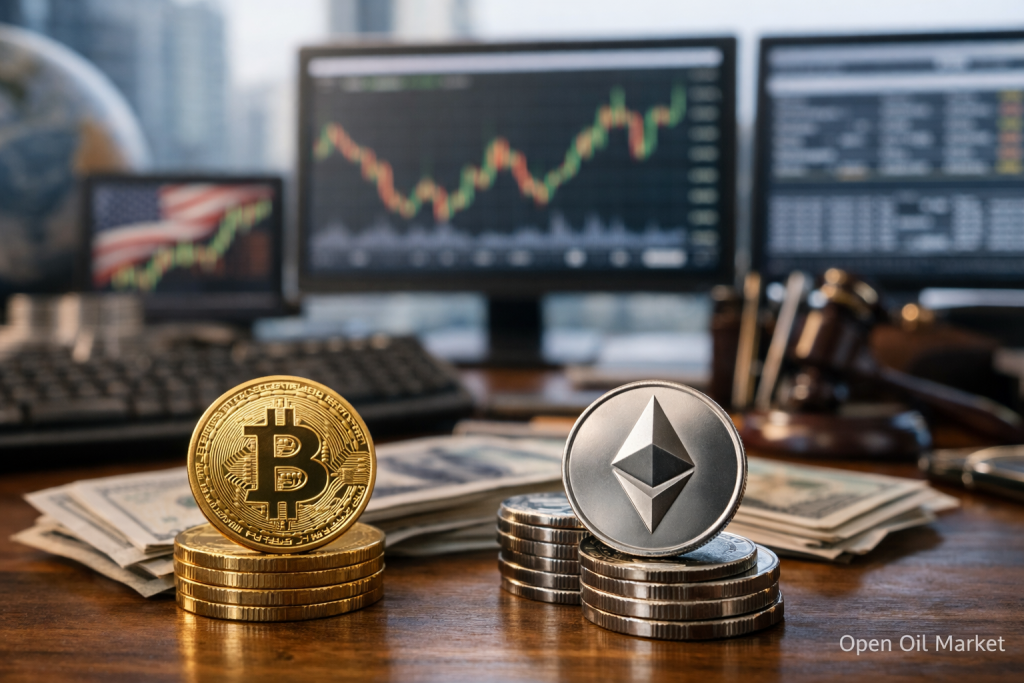
The cryptocurrency market approaches Thursday, April 9, 2026, with heightened investor attention. After recent fluctuations, digital assets are once again gaining support due to a combination of factors: a resurgence of interest in Bitcoin, renewed activity in Ethereum, the increased influence of institutional participants, and a gradual clarification of the regulatory agenda in the U.S. and Europe. For the global market, this means that cryptocurrencies are being perceived not just as a speculative segment, but as part of a broader investment architecture.
For investors, the current moment is especially significant, as the market balances between macroeconomic risks, shifting interest rate expectations, geopolitical factors, and internal industry drivers. Against this backdrop, the main topic of the day is not simply the rise of individual coins, but the changing structure of demand: capital is flowing back primarily into the most liquid and recognizable digital assets.
Bitcoin Reaffirms Its Status as the Market Benchmark
Bitcoin remains the central asset of the cryptocurrency market and the main indicator of sentiment for global investors. Recent movements show that market participants continue to use BTC as a foundational tool for entering digital assets during periods of uncertainty. When risk appetite begins to recover, Bitcoin is typically the first to receive a capital influx, followed by interest in Ethereum and major altcoins.
The current situation is especially indicative for several reasons:
- Bitcoin retains its leadership in capitalization and liquidity;
- Institutional demand continues to concentrate primarily in BTC;
- The market perceives Bitcoin as the primary benchmark for assessing the entire crypto industry;
- The range of recent movements indicates that the level of interest in buying on dips remains high.
Therefore, cryptocurrency news on April 9 should be viewed through the lens of Bitcoin's behavior: as long as it maintains its leading role, the overall market has a chance for further stabilization and increased demand.
Ethereum Returns to the Spotlight but Requires Confirmation of Strength
Ethereum appears as the second most significant asset of the day, yet its position is notably more complex than that of Bitcoin. On one hand, ETH benefits from the overall market recovery and sustained interest in smart contract infrastructure, asset tokenization, and stablecoins. On the other hand, investors are still awaiting more convincing signs that the Ethereum ecosystem can demonstrate an acceleration in user and transaction activity.
For investors, this means the following:
- Ethereum remains a strategically important asset in the crypto market;
- Its dynamics are more closely tied to the fundamental utilization of the network compared to Bitcoin;
- A rise in ETH could be sharper in the case of increased demand for infrastructure-related crypto assets;
- In periods of negative sentiment, Ethereum's volatility is generally higher.
Globally, Ethereum continues to be regarded as the primary infrastructure asset of the digital economy, but investors remain cautious and prefer to see not only market momentum but also confirmations from network activity.
Institutional Capital Regains Its Role as a Key Driver
One of the most crucial themes for the cryptocurrency market as of April 9, 2026, is the expanding presence of traditional financial players. For the industry, this is fundamental, as the participation of major banks, brokers, and investment platforms alters the very structure of demand. The market is not only gaining new funds but also a more stable audience that views digital assets as part of a diversified portfolio.
Currently, this is manifested in several areas:
- The expansion of crypto products by traditional financial institutions;
- Increased demand for exchange-traded instruments linked to Bitcoin and major tokens;
- More active engagement of European investors through familiar brokerage platforms;
- The strengthening thesis that cryptocurrencies are gradually transitioning from a niche segment to mainstream financial markets.
For investors, this is a positive signal. The wider access to cryptocurrencies through regulated infrastructure significantly increases the likelihood that the market will receive a more stable and predictable capital influx.
Regulation Shifts from Being a Risk to a Sector Revaluation Factor
Regulatory issues remain one of the most sensitive topics for cryptocurrencies, but in 2026, the tone of the discussion has begun to change gradually. The market is increasingly responding not only to bans and investigations but also to efforts to establish clearer rules for digital assets. This is particularly important for institutional investors who require a clear legal framework.
A few key lines can now be noted:
- In the U.S., there is ongoing movement toward clearer classification of crypto assets;
- Stablecoins are being increasingly viewed as a separate regulated segment;
- In Europe, there is enhanced integration of crypto services into the traditional brokerage environment;
- The market is starting to differentiate regulatory risks for various types of tokens rather than viewing the sector as a unified whole.
For the global crypto market, this is an important transitional phase. In previous years, any increase in regulatory scrutiny was perceived as a pressure factor, but now the clarity of rules can become a positive driving force for sector evaluation.
Top 10 Most Popular Cryptocurrencies: Shifting Investor Interest
If we look at the market through the lens of the largest cryptocurrencies by capitalization, the core of demand remains quite predictable. Investor focus is on Bitcoin, Ethereum, Tether, XRP, BNB, Solana, USDC, TRON, Dogecoin, and Cardano. This group forms the main liquidity of the market and often serves as the first entry point for both retail and institutional participants.
Within the top 10, several notable features can currently be observed:
- Bitcoin retains its status as the primary macro asset of the crypto market;
- Ethereum remains a key bet on infrastructure and smart contracts;
- Tether and USDC affirm that stablecoins have become a systemically important part of the digital financial environment;
- XRP and Solana continue to be among the main objects of interest for investors seeking growth beyond BTC;
- BNB, TRON, Dogecoin, and Cardano maintain attention due to their large ecosystems, brand recognition, and high turnover.
For this article on cryptocurrencies as of April 9, it's important to note: capital is not currently dispersed evenly across the market. The greatest interest is concentrated in the largest assets, which usually indicates a more cautious yet constructive phase in the market.
Stablecoins Evolve into a Standalone Investment Theme
Another significant shift is that stablecoins are no longer perceived solely as technical tools for trading. They are transforming into a distinct market segment closely tied to payment infrastructure, international settlements, and the tokenization of traditional financial instruments.
Why is this important for investors:
- The growth of stablecoins increases the overall depth of the cryptocurrency market;
- The development of this segment supports liquidity for Bitcoin and Ethereum;
- Regulators are paying special attention to stablecoins, making them an indicator of the future of the entire sector;
- The proliferation of tokenized settlements could become one of the main bridges between the crypto market and traditional finance.
For this reason, cryptocurrency news increasingly incorporates discussions not only about prices but also about digital dollars, reserves, transparency of issuers, and the role of stablecoins in the global financial system.
Macroeconomics and Geopolitics Remain External Triggers for Cryptocurrencies
Despite its own industry drivers, the cryptocurrency market remains sensitive to the global macro landscape. Changes in interest rate expectations, movements in the dollar, oil dynamics, fluctuations in stock markets, and geopolitical signals directly impact risk appetite. This means that even strong internal news from the sector does not operate in isolation from the broader picture of global markets.
Investors should primarily watch for three factors:
- Changes in expectations regarding U.S. monetary policy;
- The dynamics of risk demand in stocks and commodity assets;
- The maintenance or easing of geopolitical tensions.
If the external environment stabilizes, cryptocurrencies may gain additional room for growth. Conversely, if volatility in global markets re-emerges, investors will revert to a more defensive model of behavior even within digital assets.
What This Means for Investors on April 9, 2026
As Thursday begins, the cryptocurrency market looks constructive but not unequivocally bullish. The key feature of the moment is that positivity is grounded not in a single local news item but in a combination of several elements: the recovery of Bitcoin, more robust dynamics in Ethereum, the increased role of institutional players, and the gradual clarification of the regulatory environment.
A practical takeaway for investors can be formulated as follows:
- The main market focus remains on Bitcoin and Ethereum;
- The top 10 cryptocurrencies continue to be the main centers of liquidity and attention;
- Institutional demand becomes a key quality filter for the entire sector;
- Stablecoins and regulation transition from background themes to primary market evaluation factors;
- In the upcoming sessions, the movement direction of cryptocurrencies will depend on both internal industry agendas and the state of global risk appetite.
This is why April 9, 2026, may become a significant checkpoint for the entire digital market. If the current momentum persists, cryptocurrencies will have a strong argument for continued recovery. However, if the market faces a new wave of external pressure, investors will again focus on the largest and most liquid assets. In both cases, the structure of demand is already changing — and this, arguably, is the main takeaway for the global crypto market today.