Cryptocurrency News for Sunday, January 25, 2026: Bitcoin and Ethereum Dynamics, Altcoin Market Status, Global Trends, and Top 10 Most Popular Cryptocurrencies for Investors.
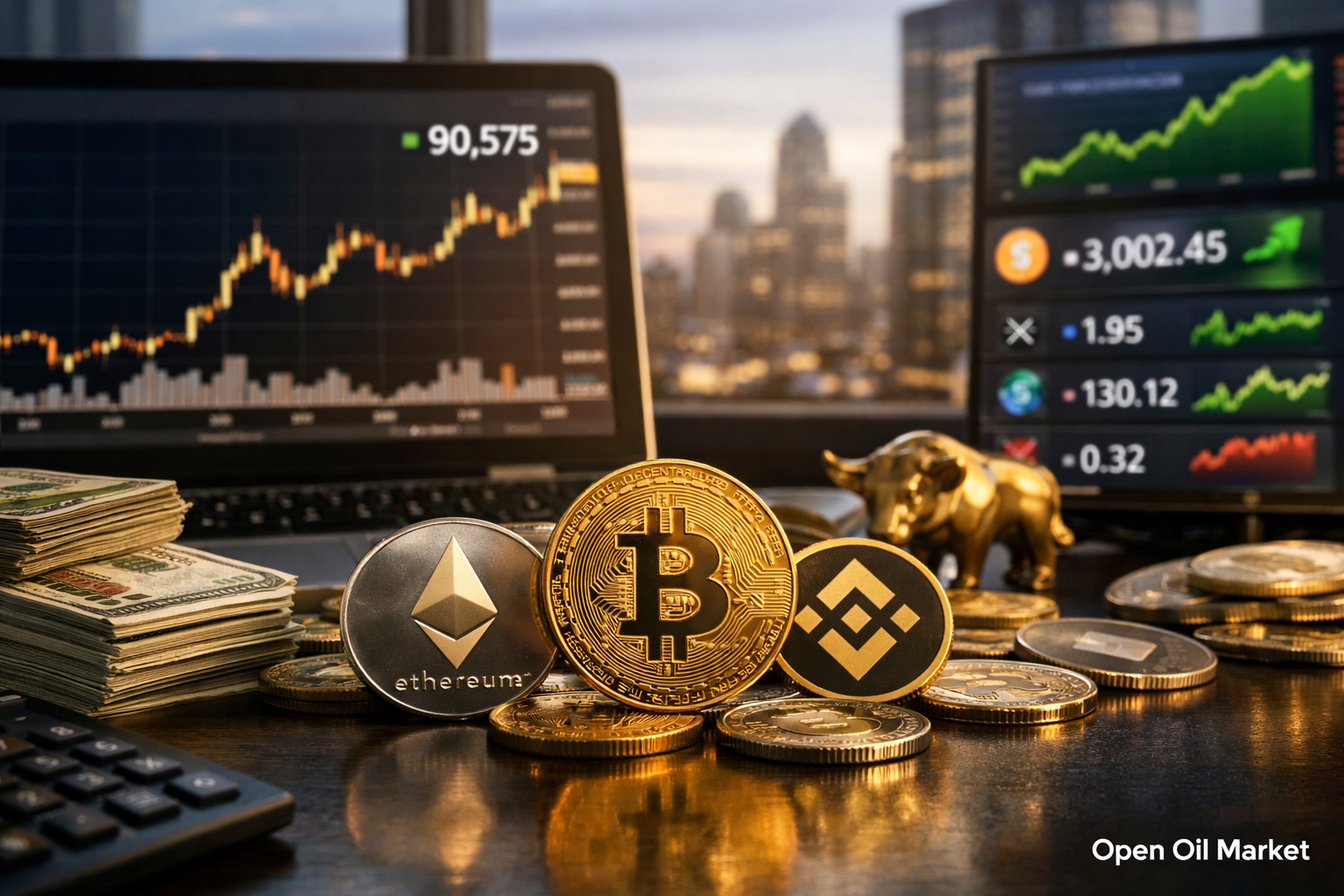
As of the morning of January 25, 2026, the global cryptocurrency market is showing relative stability after the volatility of the past week. Bitcoin (BTC) is consolidating around the $90,000 mark, remaining close to previously reached historical peaks. Ethereum (ETH) is holding around $3,000, while many leading altcoins exhibit mixed dynamics – some assets are gradually recovering recent losses, while others are stagnating. The total cryptocurrency market capitalization has once again surpassed $3 trillion. Investors maintain cautious optimism, taking into account macroeconomic signals and industry news when assessing further prospects.
Cryptocurrency Market Overview
The total capitalization of the crypto market currently exceeds $3 trillion, having gained about 1.5% in the past 24 hours. Bitcoin traded in the range of approximately $89,000 to $91,000 over the last 24 hours and is presently valued at around $90,500, which is about 1–2% higher than the level of yesterday morning. Ethereum is fluctuating around $3,000, having recovered approximately 2% in a day. Among other major assets, the dynamics are mixed: Binance Coin (BNB) is trading around $900 (+1% for the day), Ripple (XRP) is near ~$1.95 (+2.5%), and Solana (SOL) is around $130 (+2%). Meanwhile, Tron (TRX) continued to grow nearly by 3% (to ~$0.32), remaining one of the few altcoins with a daily increase among the top 10. At the same time, stablecoins Tether (USDT) and USD Coin (USDC) maintain their peg to the dollar at $1, providing the market with necessary liquidity.
Bitcoin Nearing a Key Level
The flagship cryptocurrency Bitcoin has recently exceeded previous record highs and is now approaching the psychologically significant mark of $100,000. Currently, BTC is consolidating around $90,000, and market participants are assessing the chances of a further breakout. Analysts note that a confident breakthrough of the $100,000 level could pave the way for Bitcoin to enter a new growth phase, although short-term fluctuations are possible due to profit-taking by some investors. Support for BTC is provided by the inflow of institutional capital following the launch of the first spot Bitcoin ETFs at the end of 2025, as well as expectations for easing monetary policy by the U.S. Federal Reserve. The fundamental indicators of the network remain strong: the total computing power of miners (hashrate) has recently set a new all-time high, indicating the resilience and security of the blockchain. On-chain data shows that long-term holders continue to accumulate coins, demonstrating confidence in Bitcoin's future.
Ethereum and Other Market Leaders
Ethereum (ETH), the second-largest cryptocurrency by market capitalization, is trading around $3,000. Despite impressive growth in 2025, Ether has not yet reached its historical peak (around $4,800 in 2021), but investors remain optimistic due to the ongoing development of the Ethereum ecosystem. After the network transitioned to a Proof-of-Stake mechanism, millions of ETH are locked in staking, yielding holders approximately 5% annually and reducing the supply of coins in the market. Ethereum continues to serve as the foundation for most DeFi applications and NFT platforms, sustaining high demand for ETH among developers and users.
Binance Coin (BNB), the fourth-largest digital asset (approximately $900), shows relative stability. The token continues to play a key role in the Binance ecosystem – from paying fees on the largest cryptocurrency exchange to being used in applications on the Binance Smart Chain – which sustains interest in BNB from traders and investors. XRP (~$1.95), ranking fifth in market capitalization, has strengthened its position after the legal status of Ripple's token was clarified in the U.S. in 2025. The XRP cryptocurrency benefits from the growing use of the Ripple network for international payments and transfers, especially in the Asia-Pacific region. Solana (SOL) remains among market leaders: the high-performance platform has recovered to around $130, attracting new projects due to fast and inexpensive transactions. About 70% of SOL coins are currently engaged in staking, reflecting community trust in the project and further reducing available supply in the market.
Altcoins: Mixed Dynamics and Local Rallies
While the overall market has strengthened, a wide-scale "altcoin season" is not yet observed. Bitcoin's share of the total market capitalization has risen to approximately 60% – the highest in recent years, as most alternative coins lag behind BTC in growth rates. Many investors are exercising caution and prefer the most reliable assets among market leaders. However, some altcoins are showing sharp price spikes due to speculative demand. For instance, one lesser-known DeFi token surged over 120% in the past day, while several other second-tier coins rose by tens of percent. Such local rallies indicate that some market participants are still willing to take on increased risk in pursuit of quick profits, despite overall caution in the altcoin sector.
Institutional Interest and Integration into Finance
Even amid recent volatility, the interest of large investors and companies in digital assets remains historically high. The crypto industry is increasingly integrating into the traditional financial system. Major players from Wall Street and corporations are using the market correction as an opportunity to increase positions: for example, one well-known holding company increased its BTC reserves this week, raising its share to approximately 3% of the total Bitcoin supply. Such moves demonstrate the confidence of institutional business in cryptocurrency, even during price pullbacks. Additionally, investment funds focused on digital assets continue to attract capital – last week saw inflows into crypto funds exceeding $2 billion, a significant portion of which was directed towards Bitcoin funds.
Concurrently, infrastructure and regulatory frameworks are developing. Major banks and exchanges are launching products for investing in cryptocurrencies – from spot ETFs for Bitcoin and Ethereum (with several such funds already operational in the U.S., holding assets worth tens of billions of dollars) to platforms for trading tokenized securities. Many central banks are exploring the possibilities of digital currencies: in China, the functionality of the state digital yuan (e-CNY) is being expanded, while G20 countries are discussing the development of global principles for regulating stablecoins and crypto-assets. All these trends confirm that despite short-term fluctuations, institutional and corporate interest in cryptocurrencies remains strong, laying the groundwork for future market growth.
Regulation: Global Oversight Intensifies
- U.S.: U.S. regulators are ramping up control over the crypto industry. The SEC and CFTC recently held a joint forum on cryptocurrency issues, demonstrating their intention to regulate the market in a coordinated manner. The Clarity Act, a bill aimed at establishing clear rules for digital assets (such as for crypto exchanges and stablecoins), is advancing in Congress, which should enhance market transparency.
- Europe: In the European Union, the comprehensive MiCA regulation has come into force, setting uniform requirements for crypto-assets and service providers across EU countries. The emergence of universal rules throughout the internal market simplifies the operations of crypto companies and ensures a higher level of investor protection.
- Asia and Other Regions: Financial centers in Asia and the Middle East are also enhancing oversight. Singapore, Hong Kong, and the UAE are introducing licensing for crypto exchanges and projects in a bid to attract innovation to their jurisdictions while simultaneously protecting investors. Meanwhile, international organizations (G20, IMF) are discussing approaches to global cryptocurrency regulation, which could eventually create unified standards for the industry.
The global trend is clear: governments strive to integrate the cryptocurrency market into the legal framework. Increased regulatory attention may, on the one hand, temporarily create uncertainty, but in the long term, it can enhance the trust of major players and ensure clearer conditions for industry development.
Macroeconomics and Its Impact on the Crypto Market
Macroeconomic factors continue to significantly impact cryptocurrency dynamics. Inflation in the U.S. and Europe is slowing compared to peak levels in previous years, easing pressure on central banks and reducing the likelihood of further tightening of monetary policy. The U.S. Federal Reserve is signaling the possibility of initial rate cuts in the second half of 2026, and markets are already factoring in these expectations. The prospect of a more relaxed monetary policy encourages capital inflows into riskier assets, including cryptocurrencies.
Stock indices have recently shown positive dynamics, creating a favorable backdrop for digital assets. Additionally, discussions worldwide are intensifying regarding the redistribution of roles of reserve currencies: BRICS countries are increasingly using gold and national currencies for mutual settlements, striving to reduce dependence on the U.S. dollar. In this context, Bitcoin is increasingly perceived as "digital gold" – an alternative method for hedging risks and preserving capital in a changing global economy. Improvements in the macro environment (declining inflation, rising stock markets) combined with easing geopolitical tensions support investor interest in cryptocurrencies.
Top 10 Most Popular Cryptocurrencies
As of January 25, 2026, the top 10 largest and most popular cryptocurrencies by market capitalization include the following assets:
- Bitcoin (BTC) — ~$90,000. The first and largest cryptocurrency, often referred to as "digital gold," dominates with a market share of around 60%.
- Ethereum (ETH) — ~$3,000. The leading smart contract platform that underpins decentralized finance (DeFi) and NFT ecosystems.
- Tether (USDT) — $1.00. The largest stablecoin pegged to the U.S. dollar; widely used for trading and settlements, providing market liquidity.
- Binance Coin (BNB) — ~$900. The native token of the Binance ecosystem, used for fee payments and in applications on Binance Smart Chain.
- XRP (XRP) — ~$1.95. A cryptocurrency for cross-border payments from Ripple, focused on banks and payment systems worldwide.
- USD Coin (USDC) — $1.00. The second-largest stablecoin, issued by the Centre consortium (involving Coinbase and Circle), fully backed by U.S. dollar reserves.
- Solana (SOL) — ~$130. A high-speed blockchain for smart contracts; attracts projects with fast and low-cost transactions, maintaining its place in the top 10.
- TRON (TRX) — ~$0.32. A platform for decentralized applications and the issuance of stablecoins, particularly popular in the Asia-Pacific region.
- Dogecoin (DOGE) — ~$0.13. The most well-known meme cryptocurrency; despite its humorous origins, it remains among the largest coins due to community support and periodic media attention.
- Cardano (ADA) — ~$0.36. A blockchain platform for smart contracts, developing methodically based on scientific principles; continues to expand its dApp ecosystem and maintains a position in the top 10.
Conclusion and Outlook
Thus, the cryptocurrency market approaches the end of the week of January 25, 2026, in a state of relative stability and moderate optimism. Investors are watching to see if Bitcoin can hold above the key level of $90,000 and make an attempt to scale a new peak at $100,000. Meanwhile, market participants are considering external factors – macroeconomic signals and regulatory steps – in assessing further risks and opportunities. If favorable conditions persist (low inflation, inflow of institutional money, balanced regulation), digital assets may resume their growth in the coming weeks. However, volatility remains high, making it essential to adopt a prudent approach to investments and diversify portfolios. This cautious style will allow investors to capitalize on the potential of the cryptocurrency market while maintaining control over risks.