Bitcoin, ETF and Cryptocurrency Market Charts Amid Global Financial Markets, Cryptocurrency News June 19, 2026
The cryptocurrency market approaches Friday, June 19, 2026, in a state of cautious consolidation. Following the Federal Reserve's decision to maintain a hawkish tone on inflation, investors are reassessing how prepared digital assets are for a recovery without a loose monetary policy, strong inflows into ETFs, and new regulatory catalysts. The main theme of the day for the global crypto market is not the sharp movement of any single coin, but a struggle between three forces: the pressure of high interest rates, institutional interest in Bitcoin and Ethereum, and the growing role of stablecoins and infrastructure products.
For investors, cryptocurrency news today matters not only as a short-term market overview. They indicate where capital is shifting: from speculative altcoins to liquid assets, from unregulated projects to exchange-traded products, and from the old crypto narrative model to tokenization, payments, ETFs, DeFi infrastructure, and digital dollars.
The Overall Picture of the Crypto Market: Caution Instead of Aggressive Risk
The global cryptocurrency market remains under macroeconomic influence. Even positive geopolitical signals and increased interest in tech stocks have not fully supported Bitcoin, Ethereum, and major altcoins. Investors view cryptocurrencies as a high-risk asset class that is sensitive to capital costs, dollar liquidity, and interest rate expectations.
Key factors for the digital asset market on June 19, 2026, include:
- a hawkish signal from the Fed and expectations for a prolonged period of high rates;
- weak or unstable flows into spot Bitcoin and Ethereum ETFs;
- decreased risk appetite following a volatile early June;
- increased significance of stablecoins as global liquidity infrastructure;
- investor interest in cryptocurrency regulation in the U.S., Europe, and Asia;
- development of tokenized stocks, derivatives, DeFi, and the RWA sector.
Against this backdrop, the cryptocurrency market appears not as a zone of panic, but as a market of expectation. Buyers are not departing entirely, but they are becoming more selective. For investors, this means that asset quality, liquidity, transparency of the issuer, and regulatory status become more important than short-term returns.
Bitcoin: The Main Indicator of Trust in Digital Assets
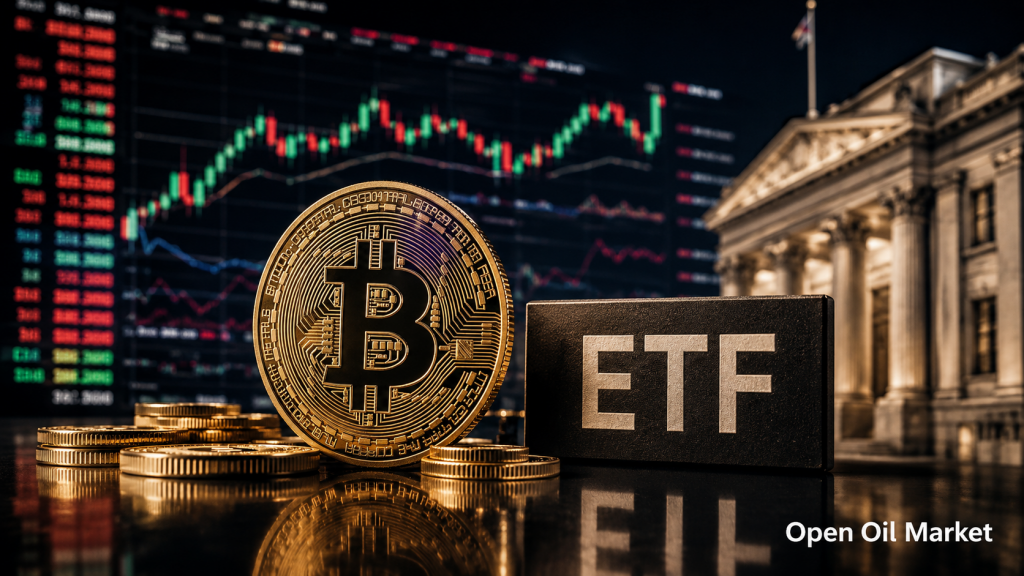
Bitcoin remains the key barometer of the crypto market. After strong volatility in early June, BTC has settled into a broad range that market participants view as a consolidation zone. Pressure from the Fed limits growth while institutional investors continue to closely monitor flows into spot Bitcoin ETFs.
For investors, it is important that Bitcoin is increasingly traded not just as a cryptocurrency, but as a macro asset. Its movement depends on:
- expectations regarding interest rates in the U.S.;
- the dynamics of the dollar and bond yields;
- inflows and outflows into Bitcoin ETFs;
- demand from corporate holders;
- the overall stock market's attitude towards risk.
If inflows into ETFs recover, Bitcoin may receive support from institutional capital. Conversely, if outflows continue, the market will remain in sideways movement as investors begin actively reallocating capital into Ethereum, Solana, stablecoins, and infrastructure projects.
Ethereum: Price Pressure but Strong Infrastructure Role
Ethereum also remains in focus for global investors. ETH is under pressure similarly to Bitcoin; however, its long-term investment narrative differs. Ethereum is not just a digital asset but a foundational infrastructure for DeFi, stablecoins, tokenization of real assets, NFTs, corporate blockchain solutions, and smart contracts.
The key question for Ethereum in the coming weeks is whether sustainable inflows into Ethereum ETFs will return and whether network activity will increase. If the market sees growth in volumes from DeFi and tokenized assets, ETH may appear stronger than many altcoins. However, with the Fed maintaining a hawkish stance, investors will be cautious regarding highly volatile assets.
Top 10 Most Popular Cryptocurrencies for Investors
As of June 19, 2026, global investor interest is centered around the most liquid and recognizable digital assets. The order of popularity may change depending on methodology, capitalization, trading volumes, and regional demand; however, for a practical overview of the crypto market, the key cryptocurrencies are as follows:
- Bitcoin (BTC) — the foundational asset of the crypto market, the main tool for institutional demand and the benchmark for ETF flows.
- Ethereum (ETH) — the largest smart contract platform and the basis for DeFi, RWA, and tokenization.
- Tether (USDT) — the largest stablecoin and a key instrument for dollar liquidity on cryptocurrency exchanges.
- XRP (XRP) — an asset associated with international transactions and expectations of regulatory clarity.
- BNB (BNB) — a token of a major exchange ecosystem with applications in fees, DeFi, and blockchain infrastructure.
- Solana (SOL) — a high-performance network for DeFi, payments, meme coins, NFTs, and consumer crypto applications.
- USD Coin (USDC) — a regulated stablecoin essential for institutional transactions and the digital dollar.
- Dogecoin (DOGE) — an indicator of retail demand and speculative sentiment in the market.
- TRON (TRX) — a network actively used for stablecoin transfers and international crypto payments.
- Hyperliquid (HYPE) — one of the notable projects in the derivatives segment and high-activity exchange infrastructure.
For investors, this list is not a recommendation for purchase but a liquidity map. It is around these assets that the main trading volumes, ETF expectations, exchange-traded products, derivatives, and institutional strategies are formed.
Stablecoins: The Digital Dollar Becomes Key Market Infrastructure
One of the main topics in cryptocurrency on June 19, 2026, remains stablecoins. USDT and USDC serve as a unit of account, a liquidity storage tool, and a bridge between traditional finance and the crypto market. For global investors, stablecoins are becoming as crucial as Bitcoin and Ethereum because a significant portion of trading activity passes through them.
The market is also seeing a selection process among experimental stablecoin models. Solutions that have not gained sufficient liquidity and demand are gradually being replaced by simpler and more scalable products. This indicates the maturation of the crypto market: investors are increasingly unwilling to fund complex constructs without clear economics, transparent collateral, and sustainable user demand.
Cryptocurrency Regulation: The U.S. Remains the Main Focus
The regulatory agenda remains one of the key drivers in the cryptocurrency market. For Bitcoin, Ethereum, XRP, Solana, and other major assets, it is crucial not only to consider market dynamics but also how authorities in the U.S., Europe, and Asia will define the status of digital assets, rules for exchanges, custodians, ETFs, stablecoins, and DeFi platforms.
For investors, three areas are especially significant:
- a distinction between cryptocurrencies as securities, commodities, and payment tokens;
- rules governing stablecoins and reserve requirements;
- approval of new ETFs and exchange-traded products for regulated markets.
The clearer the rules, the easier it will be for large funds, banks, and brokers to increase their share of digital assets in investment products. However, overly stringent regulation could increase pressure on small projects, DeFi services, and tokens with unclear legal status.
Coinbase, Tokenization, and New Competition for Investors
Major crypto platforms are increasingly moving beyond traditional exchange trading. Coinbase is betting on a financial super-platform model: cryptocurrencies, stocks, ETFs, derivatives, tokenized assets, pre-IPO instruments, prediction markets, and AI advisors are gradually being integrated into one ecosystem.
This is an important signal for the crypto market. Competition is not only taking place between blockchains but also among infrastructure platforms that aspire to be the primary interface for investors. In such a model, Bitcoin and Ethereum remain core assets, but the main margin may shift towards services: portfolio management, derivatives, lending, custodial storage, and tokenized markets.
DeFi, RWA, and Derivatives: Where Growth Continues
Despite the cautious environment in the spot market, certain segments of the crypto industry continue to develop. Investors are monitoring DeFi platforms, derivatives, tokenization of real assets, and RWA instruments. These areas are significant because they create the applied value of blockchain: settlements, collateralization, trading, lending, transparent asset accounting, and programmable liquidity.
The most promising directions to watch include:
- tokenized treasury bonds and money market funds;
- decentralized derivatives platforms;
- stablecoin payments for cross-border transactions;
- digital asset storage infrastructure for institutional clients;
- AI tools for portfolio analysis and trading strategy automation.
These segments could represent the next phase of growth for cryptocurrencies if the market transitions from a speculative model to an infrastructural one.
What is Important for Investors on June 19, 2026
As of Friday, June 19, 2026, investors should look not only at short-term movements of Bitcoin and Ethereum but also at the broader picture. The cryptocurrency market remains volatile, but its structure is becoming more mature. The focus is on liquidity, regulation, ETFs, stablecoins, and institutional products.
Key guidelines for investors:
- monitor flows into Bitcoin ETFs and Ethereum ETFs;
- evaluate market reactions to Fed signals and dollar dynamics;
- distinguish between liquid cryptocurrencies and high-risk speculative tokens;
- analyze the role of USDT and USDC as the bedrock of transactions in the crypto market;
- keep an eye on the development of regulations in the U.S. and Europe;
- consider the growth of tokenization, DeFi, and RWA as a long-term investment trend.
The baseline scenario for cryptocurrencies in the coming days is a continuation of cautious consolidation. Bitcoin may remain the primary indicator of demand for digital assets, Ethereum the infrastructural beneficiary of tokenization, and stablecoins the foundation of market liquidity. For global investors, this is a market where simply tracking price is no longer sufficient. It is more important to understand where capital is flowing, which products are receiving institutional demand, and which cryptocurrencies maintain real significance in the new financial infrastructure.