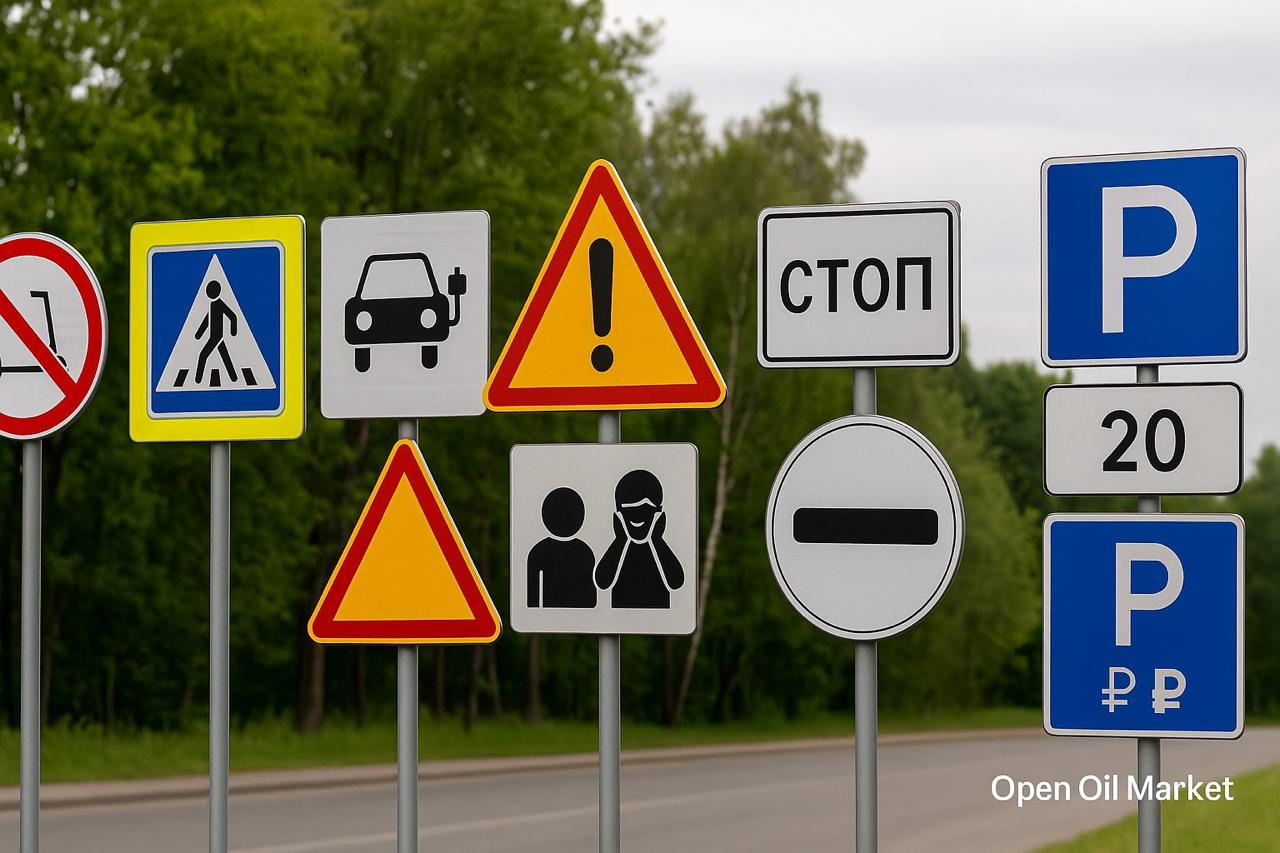
From January 1, 2026, over 60 new road signs and informational plates will be introduced in Russia according to the updated GOST. We explain the key innovations: scooters, eco-zones, a new stop line, paid parking signs, and pedestrian safety.
Starting from 2026, an updated national standard for road traffic organization will be implemented on Russian roads. This standard introduces over 60 new road signs and information plates, designed to adapt traffic rules to contemporary realities: the emergence of individual mobility devices (electric scooters, etc.), improving pedestrian safety, addressing environmental demands, and optimizing traffic in complex urban settings. Many of the innovations have already been tested in Moscow and have proven their effectiveness. Below we will examine the key changes and explain what they mean for drivers.
Reasons and Goals for Updating the Standard
The extensive update of road signs is part of the new GOST R 52290-2024, which introduces a more modern and detailed navigation system. In recent years, new types of road users have emerged—from electric scooters to unicycles—creating a need for more precise regulation of their presence. The goal of this reform is to make road infrastructure understandable and safe for all participants: motorists, pedestrians, cyclists, and users of personal mobility devices. Environmental protection and efficient use of urban space are also taken into account. The new standard has been in development for about three years with the participation of specialists from the Moscow Center for Traffic Organization, incorporating advanced practices and the unique characteristics of Russian roads.
Signs for Electric Scooters and New Types of Transport
One of the important innovations is the introduction of separate signs aimed at individual mobility devices (IMD), which include electric scooters, hoverboards, unicycles, and similar vehicles. Previously, the movement of such devices was regulated only by general rules, but starting in 2026, special designations will be introduced. For example, signs may appear that prohibit the passage of electric scooters in certain zones (pedestrian streets, parks) or, conversely, allow IMD movement on dedicated lanes. These indicators will integrate scooter owners into the overall traffic system and establish clear boundaries: where electric transport can be used and where riders need to dismount. As a result, the safety of both IMD users and surrounding pedestrians and motorists will be enhanced.
Environmental Aspects of Traffic
The updated standard also takes into account environmental factors. In light of the fight for clean air on city streets, signs related to limiting harmful emissions will be introduced. For instance, designations for “ecological zones” may emerge, where entry is permitted only for eco-friendly vehicles—such as electric cars or those with high environmental ratings. Such signs will be installed at the entrances to areas requiring special environmental protection aimed at reducing air pollution levels. Additionally, new pictograms may inform drivers of nearby charging stations for electric vehicles or other environmentally significant objects. Taking ecology into account in the road sign system aims to encourage greener habits on the road and make cities more convenient for eco-friendly transport.
Pedestrian Safety: "Deaf Pedestrians" Sign
Significant attention has been paid to protecting the most vulnerable road users—pedestrians. Starting in 2026, a new warning sign will be introduced to enhance the safety of individuals with hearing disabilities. This special plate, “Deaf Pedestrians,” will be installed before crosswalks near places where hearing-impaired individuals frequently gather (e.g., near schools for the deaf or specialized medical centers). This sign alerts drivers that some pedestrians may not hear an approaching vehicle or audio signals, thereby necessitating additional caution. Previously, there was a similar sign for “Blind Pedestrians” to alert drivers about visually impaired individuals; now, an equivalent for the hearing impaired has been added. This measure will create a more inclusive road environment and underscore drivers' responsibility for attentive behavior in areas frequented by individuals with special needs.
Solutions for Complex Urban Conditions
In intense urban conditions, the new standards are aimed at improving traffic organization and driver convenience. Among the key changes are:
- Vertical "Stop Line" Sign: This will be introduced where it is impossible to apply the usual horizontal markings. This sign consists of a plate with the word “STOP” displayed vertically, indicating where drivers should stop before a traffic light or intersection. Even in the absence of road markings, drivers will clearly understand where to halt, which is especially important at complex intersections.
- Sign 6.2.1 "Recommended Speed over Bumps": A new informational sign advising a safe speed when passing over a "speed bump" (artificial irregularity). It will be planned to be installed before an obstacle, indicating the maximum speed recommended for overcoming it (e.g., 20 km/h). This innovation will help drivers minimize vehicle wear and enhance passenger comfort by reducing speed in advance of bumps.
- New Parking Standards: The dimensions of parking spaces are being revised. The width of a single parking space along the roadway will decrease from 2.5 to 2.25 meters. This change will allow cities to make more efficient use of street space—fitting more cars in the same area. Although parking will become slightly tighter, the overall number of available spaces may increase, which is relevant for congested urban centers.
Updated Pictograms and Informational Plates
In addition to entirely new signs, there will be an expansion of several familiar indicators with additional symbols. This will primarily affect the “Paid Parking” sign. Additional pictograms explaining payment methods will be added to the existing parking designation: for instance, a special icon for payments via mobile applications, another for SMS payments, etc. These graphic elements will be displayed on plates alongside the parking sign, allowing drivers to immediately see the available payment method at that parking location. This innovation will make information more visual and reduce the likelihood of misunderstandings or payment rule violations. Similarly, other clarifying plates may emerge—all aimed at providing comprehensive information directly on the road sign without overwhelming drivers with excessive text.
Pilot Testing and Nationwide Implementation
Many of the mentioned innovations have already undergone real-world testing. In Moscow, the experimental use of some new signs began long before their official introduction—pilot projects operated under local standards to evaluate the effectiveness of the innovations. Successful trial results allowed these solutions to be included in the federal GOST and disseminated throughout Russia. From January 1, 2026, the new requirements will become mandatory for all regions: road services will begin to install updated signs in cities and on highways, gradually replacing or supplementing the old navigation.
What Changes Mean for Drivers
The introduction of over 60 new signs and symbols represents a significant change in regulations, so it is essential for all road participants to prepare. Drivers of cars, motorcyclists, cyclists, and users of electric scooters are encouraged to familiarize themselves with the new designations in advance to navigate confidently from day one. This is especially crucial for those who frequently travel in urban areas: new signs may appear along familiar routes, requiring adjustments to speed or behavior.
Here are a few tips on how to face the changes prepared:
- Study Official Materials: Familiarize yourself with the updated traffic rules or methodological guidelines from the traffic police that list and describe all the new signs. Early learning will help avoid confusion in real situations.
- Be Attentive on the Road: During the first weeks of January 2026, pay extra attention to the installation of new signs along your route. If you see an unfamiliar symbol, reduce your speed and act cautiously based on its presumed meaning (which is generally intuitive) or navigation prompts.
- Consider New Rules for IMDs: If you use an electric scooter or another personal device, find out where you are allowed to ride under the new restrictions. The emergence of special signs for IMDs means that ignoring these indicators may lead to fines or dangerous situations.
The upcoming road sign reform is a step toward a modern and safer transportation system. The new indicators will enhance road informativeness, considering today’s realities—from mobile applications and electric scooters to ecological zones. For drivers and pedestrians, this means clearer rules for navigating the road. The key is to carefully familiarize yourself with the changes and adhere to the requirements of the new signs—this way, the transition to updated standards will proceed smoothly and benefit all road participants.